Explore our high-efficiency, fully isolated half-brick power converter portfolio. Custom input voltage swings, regulated outputs, and ruggedized baseplate packaging engineered for severe thermal operating envelopes.
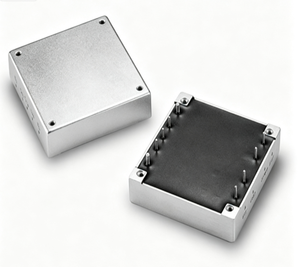
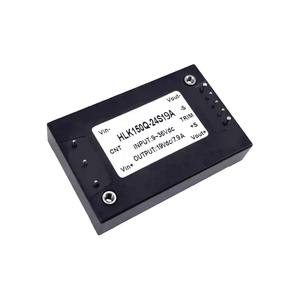
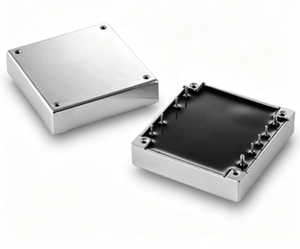
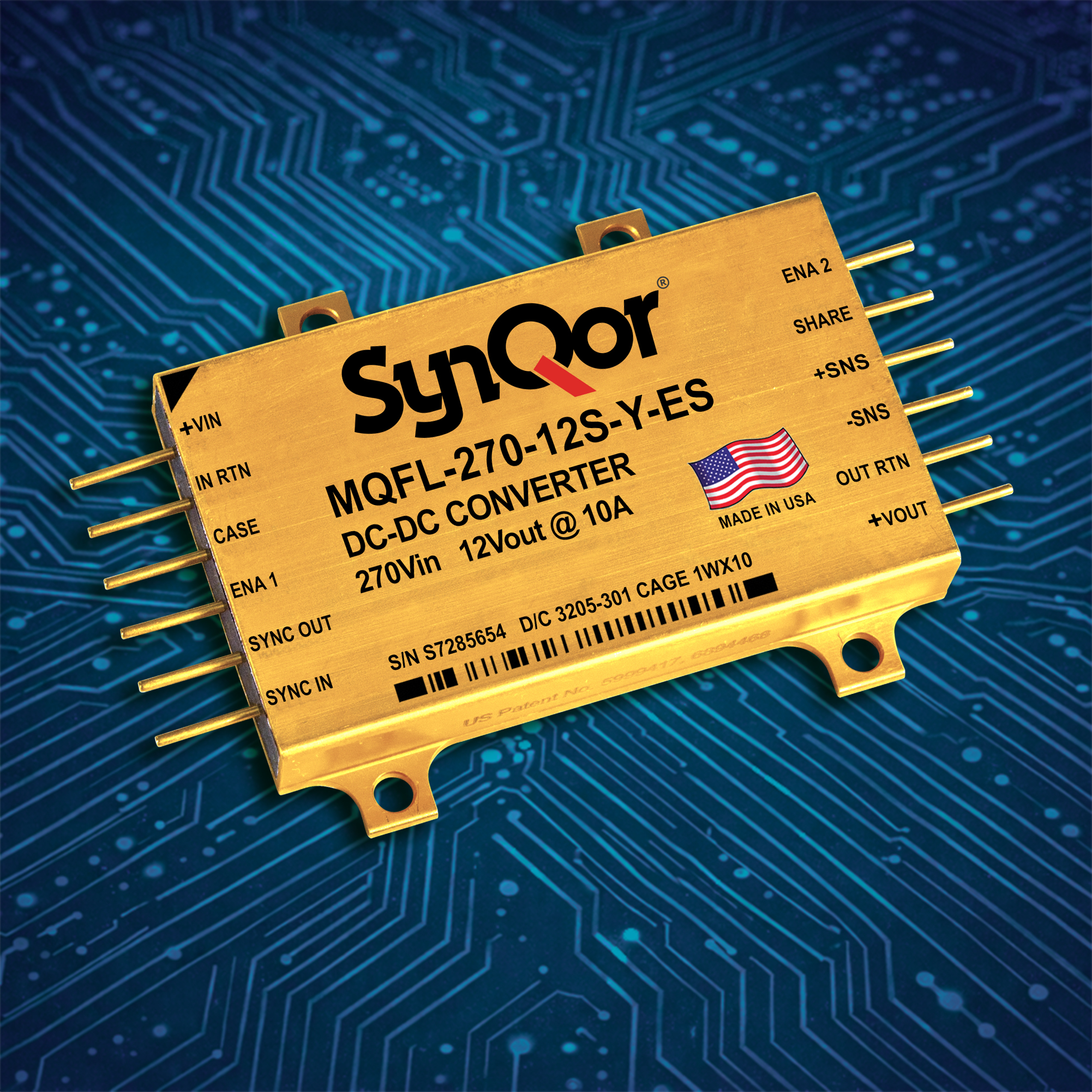
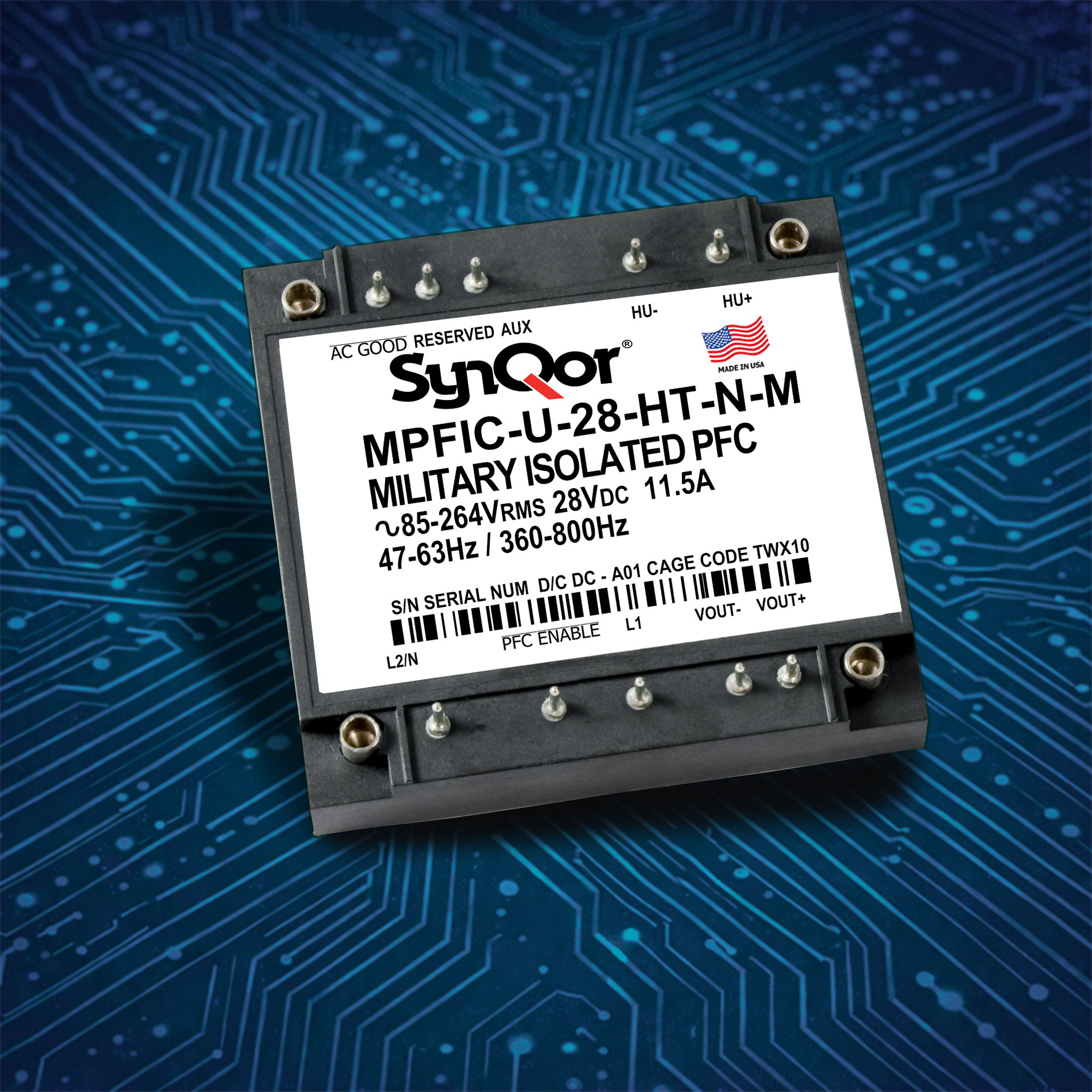
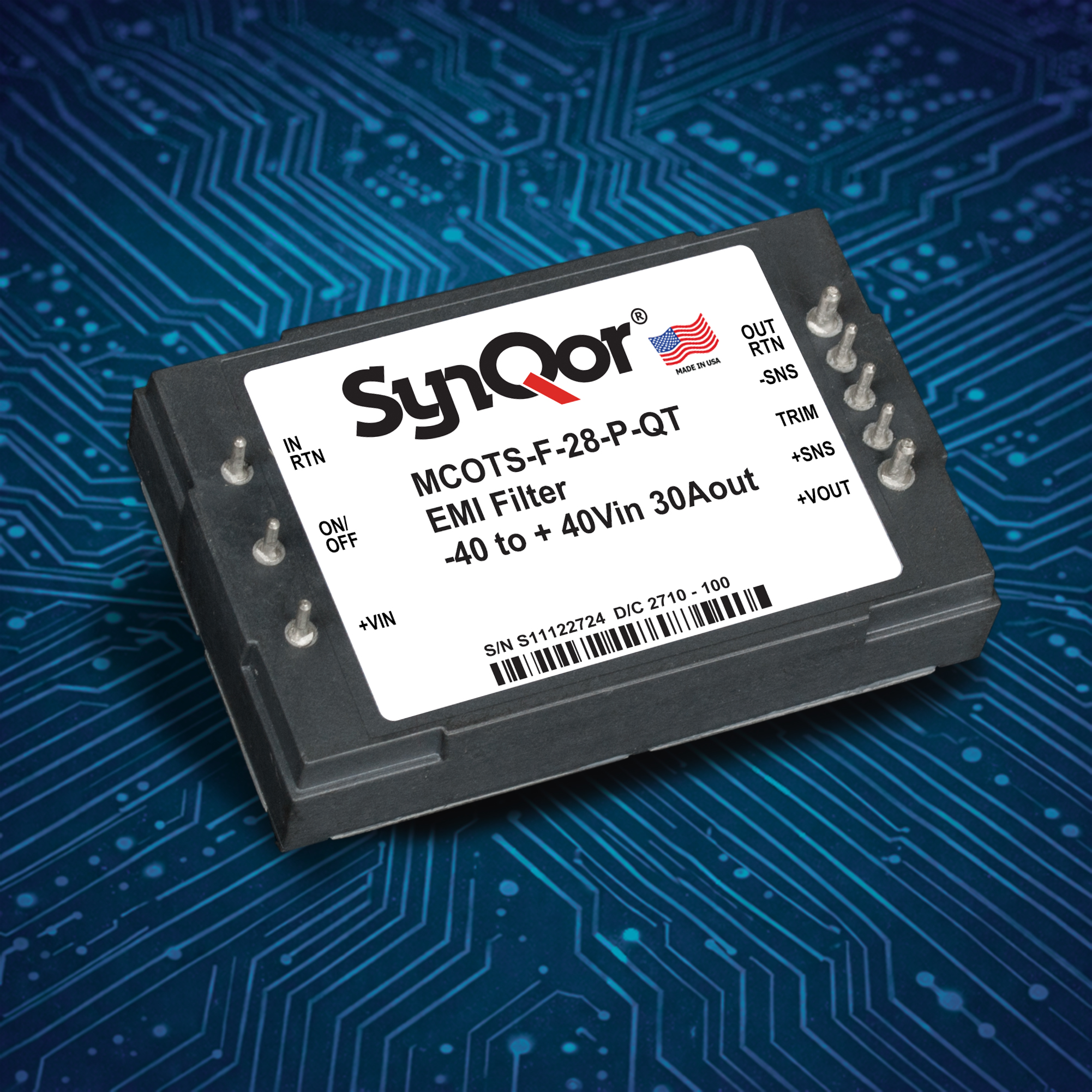
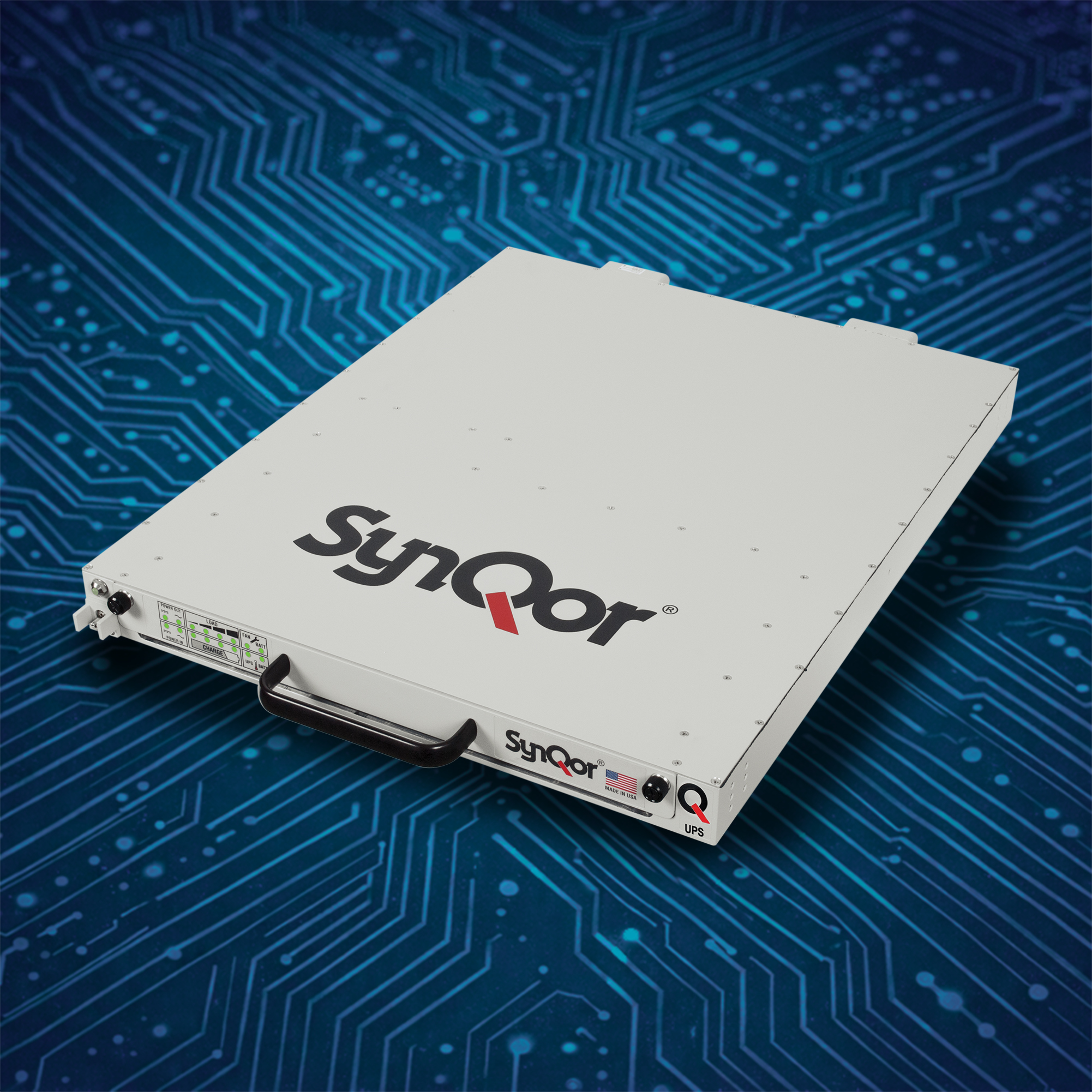
In modern high-density power distribution architectures (Distributed Power Architecture - DPA and Intermediate Bus Architecture - IBA), the standard Half-Brick footprint (2.28 in x 2.4 in x 0.5 in / 57.9 mm x 61.0 mm x 12.7 mm) represents the sweet spot between physical thermal dissipation capability and output power capacity. Leading OEM/ODM manufacturers leverage advanced topologies to maximize power output while keeping conduction losses to an absolute minimum.
Traditional isolated converters utilize Schottky diodes for secondary-side rectification. However, the fixed forward voltage drop ($V_f \approx 0.4\text{V} - 0.6\text{V}$) introduces significant conduction power dissipation ($P_{loss} = V_f \times I_{out}$), severely limiting conversion efficiency at higher current outputs.
Our OEM/ODM half-brick converters incorporate high-frequency, actively driven N-channel MOSFETs operating as synchronous rectifiers. By substituting diode conduction with low $R_{DS(on)}$ channel conduction ($P_{loss} = I_{out}^2 \times R_{DS(on)}$), power dissipation is reduced by up to 65%, elevating full-load operating efficiency beyond 95%.
| Parameter | Industrial Class (CHB Series) | Railway Class (EN 50155) | Mil-COTS Defense Class |
|---|---|---|---|
| Input Voltage Swings | 2:1 (18-36V, 36-75V) / 4:1 (9-36V, 18-75V) | 14-160V continuous (EN 50155 wide continuous) | 28V nominal (16-40V continuous, 50V/100ms transient) |
| Output Power Density | Up to 300W / Half-Brick Shell | 50W - 200W Regulated Output | 100W - 350W High-Density Core |
| Isolation Withstand | 1,500VDC to 2,250VDC | 3,000VAC Enhanced Reinforced | 2,250VDC Standard (MIL-STD-810G screened) |
| Operating Temp Range | -40°C to +100°C Baseplate | -40°C to +85°C Ambient (Class OT4) | -55°C to +100°C Baseplate Startup |
| EMC Compliance | EN 55032 Class A/B with filter | EN 50121-3-2 Railway EMC Standard | MIL-STD-461 (C-F) with external MCOTS Filter |
As electronic payloads in autonomous vehicles, 5G telecom remote radio units (RRUs), airborne radar systems, and smart grid sub-stations become increasingly space-constrained, procurement directors and hardware architects must evaluate long-term technology roadmaps when qualifying OEM/ODM factories.
Gallium Nitride (GaN) and Silicon Carbide (SiC) power switches are replacing traditional Silicon MOSFETs inside next-generation half-brick modules. GaN’s near-zero reverse recovery charge ($Q_{rr}$) enables switching frequencies above 500 kHz to 1 MHz. This drastic frequency boost reduces the volumetric size of planar inductors and ceramic filter capacitors by 40%, paving the way for 500W+ half-brick power densities.
Modern system management demands continuous health monitoring. Advanced ODM factories are equipping half-brick converters with integrated microcontrollers supporting PMBus v1.3 protocols. System administrators can remotely configure output voltage trimming, read real-time input/output current levels, monitor baseplate temperature, and set dynamic over-current warning limits.
Global component shortages have taught procurement teams to prioritize Form-Fit-Function (FFF) interchangeability. Premier OEM factories design half-brick pinouts to strictly follow DOSA (Distributed-power Open Standards Alliance) specifications, guaranteeing pin-to-pin drop-in replacement across multi-vendor sourcing matrices without requiring PCB spin-redesigns.
Future procurement trends emphasize silicone-free dielectric polyurethane and epoxy encapsulants that resist thermal shock cycles ranging from -55°C up to +125°C. Full vacuum potting prevents micro-void moisture ingress and ensures long-term insulation protection under high-altitude low-pressure environments.
Building mission-critical power supplies requires strict manufacturing discipline, fully traceable component supply chains, and state-of-the-art testing infrastructure. Here is how our production facility delivers high-yield reliability for global OEMs:
Fully audited quality management systems ensuring 100% lot traceability for defense, aerospace, and medical grade power assemblies.
Every manufactured half-brick module undergoes full-load thermal stress screening and dynamic input cycling before customer dispatch.
Dedicated R&D engineering teams capable of modifying input range, secondary trim voltages, mechanical baseplates, and pin counts within 4-6 weeks.
Our in-house reliability laboratory provides rigorous verification across all critical power parameters:
Key technical and logistics inquiries answered by our senior power design engineering team.
A 2:1 input range converter accommodates a standard narrow DC voltage swing (e.g., 18V-36V for 24V nominal, or 36V-75V for 48V telecom bus). A 4:1 broad input range converter supports an ultra-wide voltage window (e.g., 9V-36V or 18V-75V), allowing a single half-brick module to operate across both 12V and 24V battery systems or withstand severe line drop transients without losing output regulation.
The baseplate acts as an isothermal aluminum interface attached directly to the module's high-dissipation power components (MOSFETs, main transformer, planar windings). Heat travels via conduction from internal components to the baseplate. System designers can attach external extruded heatsinks, cold plates, or bolt the baseplate directly to an enclosure wall, allowing high-power operation in fanless or sealed environments.
Our ODM engineering support includes customizing output voltages (e.g., non-standard 19V, 28V, 52V), modifying voltage trim ranges (+10%/-20%), adjusting current limit setpoints, offering custom pin lengths or threaded insert baseplates, adding active current sharing for parallel redundancy, and embedding specialized EMI filter components within the half-brick shell.
While standalone DC-DC converters switch power at high frequencies, reaching strict EMC standards like MIL-STD-461G (CE102/CS101) or EN 50155 requires pairing the half-brick module with matched transient filter modules (such as our MCOTS filter series). We provide full application notes, schematic recommendations, and paired filter-converter chains characterized together to guarantee compliance.
Standard catalog half-brick samples are dispatched in 3 to 5 business days. Customized ODM prototype samples (NPI stage) typically require 3 to 4 weeks depending on PCB layout modifications. Mass production manufacturing orders have a standard lead time of 6 to 8 weeks, supported by buffer stock agreements for long-term production contracts.
We maintain an active Obsolescence Protection Strategy. For defense, rail, and industrial programs with multi-decade operating lifetimes, we select long-roadmap active components and issue formal Product Change Notifications (PCNs) at least 12 months in advance, backed by Last-Time-Buy (LTB) options and drop-in Form-Fit-Function redesign guarantees.
Contact our field application engineering (FAE) team to receive full CAD models, 3D STEP files, thermal derating curves, and direct factory pricing for volume OEM requirements.