Explore field-proven industrial UPS systems, ruggedized all-weather telecom units, and high-density power conversion modules optimized for harsh operational environments.
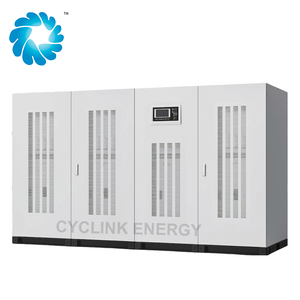
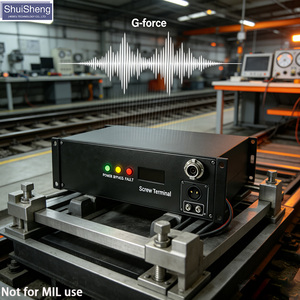
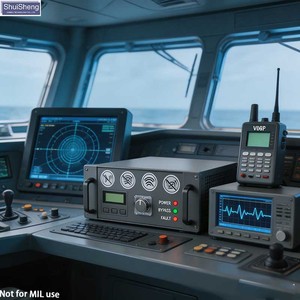
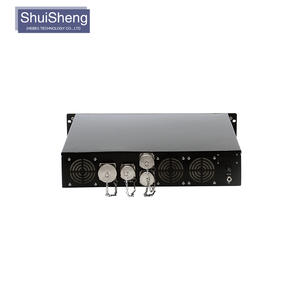
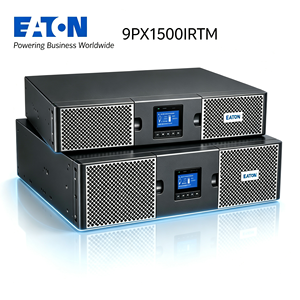
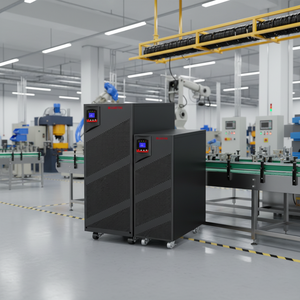
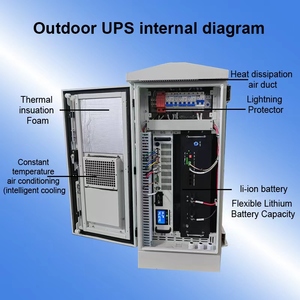
In high-stakes mission-critical applications—spanning military defense combat platforms, naval surface vessels, airborne avionics, rail transit rolling stock, and heavy industrial automation—power supply integrity underpins system survivability. The modern procurement paradigm has shifted decisively from risk-prone pure custom builds to mature Commercial-Off-The-Shelf (COTS) and Modified-Off-The-Shelf (MOTS) power converters.
OEM and ODM COTS power manufacturing bridges the gap between field-tested standard architectures and tailored application demands. By pairing patented synchronous-rectification topologies with modular internal designs, defense and industrial prime contractors drastically truncate design cycles, eliminate non-recurring engineering (NRE) cost overheads, and secure long-term lifecycle support.
Our process-centered organization combines U.S.-based engineering agility with rigorous quality assurance, solving complex electrical, thermal, and mechanical challenges for mission-critical deployments.
Pioneering the commercial implementation of synchronous rectification in isolated power topologies. Replacing lossy Schottky diodes with actively controlled MOSFETs reduces conduction losses, minimizes heat dissipation, and allows sealed conduction cooling.
Exceeding standard industrial metrics with full supply-chain traceability, strict configuration management, and documented qualification records. Every production unit undergoes rigorous burn-in and screening prior to delivery.
Unlike third-party component sourcing, our filter and converter stages are designed and characterized in unison. This eliminates parasitic impedance mismatches and ensures predictable system-level EMC compliance during platform testing.
Our OEM/ODM standard power module architectures are built to withstand severe environmental, transient, and electromagnetic conditions specified by defense and industrial mandates.
| Sector | Primary Regulatory Standard | Key Performance Requirements | Architectural Implementation |
|---|---|---|---|
| Military Defense Ground | MIL-STD-1275D/E, MIL-STD-810G | 100V/50ms transient surge immunity, high shock/vibration resistance | Active surge clamping circuits, potted shock-absorbing encapsulation |
| Airborne Avionics | RTCA DO-160G, MIL-STD-704(A-F) | 360–800Hz wide AC frequency input, low harmonic distortion (THD < 3%) | Active Power Factor Correction (PFC), synchronous power conversion |
| Naval Shipboard | MIL-STD-1399-300B, MIL-STD-461G | Unbalanced 3-phase load tolerance, stringent conducted EMI suppression | Isolated 3-phase line-to-line topologies with integrated EMI filtering |
| Railway Rolling Stock | EN 50155, EN 50121-3-2 | Continuous 24V–110V input span, Class S2 hold-up time (10ms power loss) | Wide-input DC-DC converters with internal hold-up storage management |
| Medical Equipment | ANSI/AAMI ES60601-1, IEC 60601-1-2 ed 4.0 | 2x MOPP (Means of Patient Protection), ultra-low patient leakage current (<10μA) | Reinforced double isolation barriers with low-capacitance transformers |
As electronic systems shrink while power densities surge, procurement managers and lead systems engineers face evolving supply chain and technological shifts. The following five vectors define the next decade of power electronics sourcing.
Silicon Carbide (SiC) and Gallium Nitride (GaN) power semiconductors are rapidly replacing traditional silicon switches. Procurement teams are prioritizing suppliers with mature GaN/SiC topologies to achieve higher switching speeds, up to 40% volume reduction, and higher operating temperature margins in high-density DC-DC and AC-DC modules.
Defense platforms often remain deployed for 20 to 30 years—far outlasting commercial semiconductor lifecycles. Leading COTS manufacturers now guarantee multi-decade form-fit-function (FFF) support, backward compatibility, and proactive component obsolescence mitigation to avoid expensive platform re-certifications.
Modern power architectures require intelligent monitoring. Sourcing specifications increasingly mandate PMBus or I2C communication protocols built directly into COTS power units, enabling real-time remote telemetry of voltage drops, thermal gradients, output current loads, and predictive failure diagnostics.
Industrial data centers and naval systems are moving toward balanced 3-phase utility distribution. Procurement managers favor modular, scalable 3-phase Active Power Factor Correction (PFC) modules that seamlessly pair with downstream DC-DC point-of-load (POL) converters to ensure near-unity power factor across dynamic load swings.
With fanless sealed enclosures becoming mandatory in anti-corrosion, IP68, and altitude environments, thermal design has migrated toward planar transformers, direct conduction cold-plate mounting, and integrated vapor chambers that eliminate thermal bottlenecks.
Legacy lead-acid UPS back-ups are rapidly being replaced by customized Lithium Iron Phosphate (LiFePO4) battery modules. Lithium chemisry offers 3x energy density, faster recharge rates, and extended thermal operational spans without capacity degradation.
To simplify inventory SKUs, power system engineers are demanding universal input converters (e.g., continuous 9V-60V DC or wide range 85V-264V AC inputs) that operate reliably across diverse battery voltages, catenaries, and generator sets worldwide.
Get instant clarity on custom design modifications, environmental qualifications, and lead times for COTS and MOTS power converter integration.
COTS (Commercial-Off-The-Shelf) modules are fully qualified standard products ready for immediate deployment with pre-certified datasheets and compliance metrics.
MOTS (Modified-Off-The-Shelf) takes a proven standard COTS topology and adjusts specific electrical parameters (e.g., custom output voltage trim, tailored pin lengths, specialized conformal coating, or unique thermal mounting plates) with minimal lead time and lower risk.
Full Custom ODM Engineering involves designing a ground-up power unit for unique enclosure geometries or complex multi-rail output requirements.
Conventional isolated power converters use output diodes, which incur a fixed forward voltage drop (typically 0.5V to 0.7V). At high current outputs (e.g., 50A), diode power dissipation generates significant heat (25W–35W). Synchronous rectification replaces diodes with power MOSFETs having ultra-low RDS(on) resistance. Conduction losses drop by up to 70%, translating directly into higher conversion efficiency (up to 96%), reduced internal operating temperatures, smaller heatsink volumes, and significantly longer component MTBF in sealed, fanless IP68 enclosures.
Yes. When paired with our matched transient EMI filter modules, our Mil-COTS converter chains meet MIL-STD-461 (C, D, E, F, G) conducted emissions and susceptibility standards (such as CE102, CS101, CS114, CS115, and CS116). Because we design both the filter and converter, we eliminate potential LC resonance spikes that commonly plague mixed-vendor power architectures.
We maintain strict configuration control and long product lifecycle policies. We build multi-decade defense and heavy industrial programs with form-fit-function replacement guarantees. If an internal component reaches end-of-life (EOL), our internal redesign process replaces the component while maintaining identical mechanical dimensions, pin configurations, and electrical specifications without breaking system qualification.
Our COTS modules are rated for full power operation up to baseplate temperatures of +100°C. For conduction-cooled applications, derating curves depend on baseplate temperature, cooling air velocity (if unpotted), and thermal interface material resistance ($R_{\theta \text{case-to-sink}}$). Our application engineering team provides customized thermal models and finite element analysis (FEA) assistance to ensure your layout maintains junction temperatures within safe operating margins under worst-case ambient conditions.
Discuss your electrical bus specifications, input transient constraints, thermal envelope, and compliance goals directly with senior power architecture engineers.
