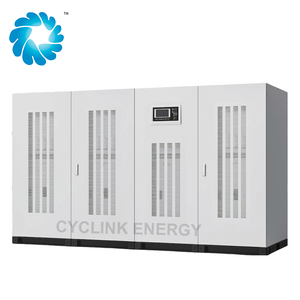
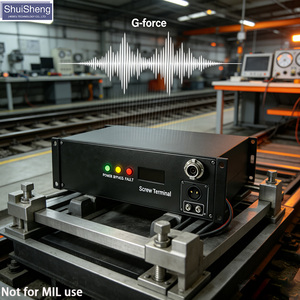
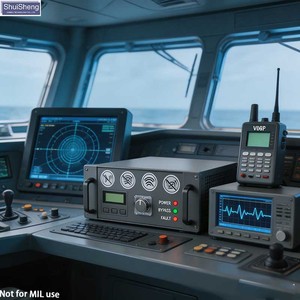
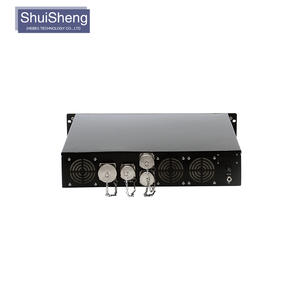
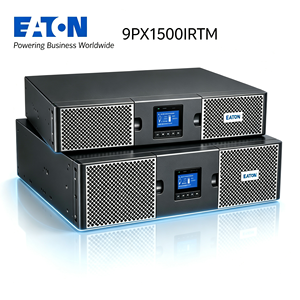
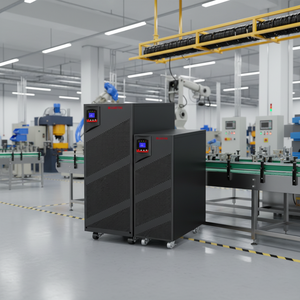
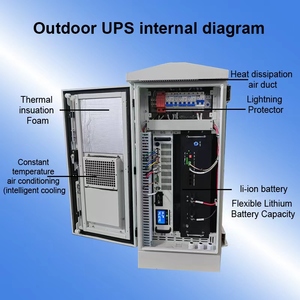
Explore our engineered line of rugged, high-efficiency uninterruptible power systems designed for transportation, defense, marine, industrial data centers, and extreme outdoor environments.
As mission-critical infrastructure transitions toward higher power density, wide-bandgap semiconductors, and complex microgrid integration, legacy double-conversion UPS architectures struggle with thermal dissipation, harmonic pollution, and dynamic phase imbalance. Custom Original Equipment Manufacturing (OEM) and Original Design Manufacturing (ODM) partners are now required to deliver higher operational resilience through advanced synchronous-rectifier power topologies, active power factor correction (PFC), and ruggedized planar magnetics.
By replacing passive silicon Schottky diodes with actively controlled MOSFETs driven by high-speed digital signal processors (DSPs), conduction losses within the secondary rectifier stage are reduced by up to 65%. This drastic reduction in thermal dissipation allows high-density 3-phase power modules to operate in sealed, NEMA 4X / IP66 conduction-cooled enclosures without relying on vulnerable forced-air fans.
Our proprietary 3-phase power factor correction (MPFIC) modules operate across a wide input frequency spectrum (47–800 Hz), supporting nominal 115 Vrms, 230 Vrms, and 400 Vrms line-to-line voltages. Integrated neutral line balancing mitigates line-to-line current imbalance issues common on naval vessels, aviation ground power carts, and mining sites.
A comparative engineering overview for system designers and procurement managers evaluating energy storage mediums for heavy industrial and defense applications.
| Technical Metric | Lithium Iron Phosphate (LiFePO4) | Advanced Valve-Regulated Lead-Acid (VRLA) | Supercapacitor / Ultracapacitor Bank |
|---|---|---|---|
| Energy Density (Wh/kg) | 140 – 180 Wh/kg (High) | 30 – 45 Wh/kg (Low) | 5 – 15 Wh/kg (Very Low) |
| Operating Lifespan (Years) | 10 – 15 Years (3,500+ cycles) | 3 – 5 Years (500 cycles) | 15 – 20 Years (1,000,000+ cycles) |
| Thermal Stability Range | -20°C to +65°C | -10°C to +45°C | -40°C to +85°C (Extreme) |
| Recharge Efficiency | > 98% (Minimal Loss) | 80% - 85% (High Loss) | > 99% (Near Instant) |
| Total Cost of Ownership (10-Yr) | Low (Zero replacement cycle) | High (Requires 2-3 replacements) | Medium-High (High upfront CAPEX) |
| Primary Target Application | Industrial IDC, Energy, Remote Telecom | Legacy Backup Power, Substation Utility | Grid Frequency Smoothing, High Surge |
Engineering custom uninterruptible power systems demands rigorous design-for-reliability (DFR) methodologies, full material traceability, and standardized environmental stress screening (ESS). As an established OEM/ODM exporter with manufacturing capabilities built on Salem, NH standards, our design framework ensures uninterrupted operations across high-vibration, high-humidity, and electromagnetically volatile platforms.
Every manufacturing batch undergoes Automated Optical Inspection (AOI), full-load thermal burn-in, and multi-stage automated electrical testing. Complete lot traceability and certified derating analyses are archived for over 20 years to support military and aviation programs.
Our systems comply with global regulatory and military standards, including MIL-STD-704 (aircraft electrical power), MIL-STD-461 (EMC emission/susceptibility), MIL-STD-1275 (vehicle power inputs), MIL-STD-1399 (shipboard power), and RTCA DO-160G.
We shield defense, rail, and industrial infrastructure from premature hardware end-of-life (EOL). We guarantee long-term availability, form-fit-function replacement drop-ins, and direct access to component-level application engineering support.
Key technical shifts driving global procurement decisions for enterprise equipment manufacturers, system integrators, and industrial infrastructure buyers over the next decade.
Traditional Silicon IGBTs are rapidly giving way to Wide-Bandgap Silicon Carbide (SiC) MOSFETs in 3-phase inverter designs. SiC technology enables switching frequencies up to 5 times higher, dramatically shrinking passive inductor and transformer volumes while reducing overall UPS footprint by 40% and increasing efficiency above 97%.
Modern enterprise buyers are mandating real-time IoT diagnostic interfaces. Standard SNMP, Modbus TCP, and CAN bus protocols are integrated into 3-phase control boards to deliver telemetry on battery cell impedance, phase harmonics, capacitor temperature degradation, and load derating—enabling predictive component servicing prior to field failure.
As compute workloads decentralize toward manufacturing edges and 5G base stations, 3-phase UPS procurement is shifting from monolithic centralized cabinets to hot-swappable rack-mounted N+X modular units. This allows seamless capacity scaling and zero-downtime maintenance without taking the entire industrial plant offline.
Global environmental regulations now require tier-1 OEMs and exporters to publish Life Cycle Assessments (LCAs). Equipment specifiers favor manufacturers using non-conflict raw materials, lead-free soldering processes, recycled aluminum heat sinks, and high-efficiency topologies that cut operational Scope 2 carbon emissions.
Detailed answers to critical technical and procurement questions asked by power system engineers, procurement directors, and OEM clients.
An online double-conversion 3-phase UPS continuously converts incoming AC mains power to DC via an active rectifier, and then reconstructs clean, isolated AC power using an internal inverter. This topology guarantees absolute zero transfer time during mains failure and isolates downstream equipment completely from line sags, spikes, harmonic distortion, and frequency fluctuations. Line-interactive systems rely on automatic voltage regulation (AVR) transformers and switch to battery power via a transfer relay (introducing a 4-10ms delay), making them unsuitable for mission-critical industrial automation, railway signaling, or medical imaging loads.
In naval surface vessels, submarines, and industrial manufacturing plants, single-phase auxiliary loads are frequently distributed unevenly across a 3-phase supply. This creates phase voltage unbalance, causing excessive neutral current, transformer overheating, and harmonic voltage distortion. Our advanced 3-phase UPS systems utilize independent phase regulation digital controllers and dedicated active power factor correction modules, allowing the system to accept up to 100% unbalanced loads without degrading output voltage regulation or tripping protection thresholds.
Our OEM/ODM engineering services provide extensive customization options for harsh environment installations. Key options include: IP65/IP66/IP68 ingress protection ratings, heavy-duty stainless steel (316L) or anodized aluminum enclosures, conformal coating on internal printed circuit boards (PCBs) for salt-spray and mold resistance, internal thermostatically controlled heating pads for sub-zero operation (-40°C), anti-vibration shock mounts meeting MIL-STD-810G, and customized input/output connectors (MIL-DTL-38999 series or heavy industrial terminal blocks).
MIL-STD-704 dictates the electrical power characteristics supplied to airborne equipment (including voltage transients, frequency drift, and phase balance). MIL-STD-1275 establishes stringent requirements for 28V DC electrical systems in military ground vehicles, requiring equipment to withstand severe voltage surges up to 100V for 50ms and high-energy spikes. MIL-STD-461 sets rigorous electromagnetic interference (EMI) and electromagnetic compatibility (EMC) limits. Designing a 3-phase UPS for these standards requires integrated input LC filter networks, shielded enclosures, low-radiation planar transformers, and robust transient voltage surge suppression (TVSS) stages.
Optimizing TCO requires looking beyond upfront capital expenditure (CAPEX). Procurement teams must evaluate: 1) Operating Efficiency Curve: High-efficiency conversion (96%+ vs 92%) saves tens of thousands of kilowatt-hours over a 10-year lifespan. 2) Battery Chemistry Life: LiFePO4 batteries offer a 10-15 year service life compared to 3-5 years for VRLA, eliminating maintenance labor and premature replacement costs. 3) Thermal Management Requirements: High-efficiency, low-dissipation modules require significantly less air conditioning in data center and electrical rooms.
Importers and OEM clients can initiate custom engineering projects by submitting detailed project specifications—including input AC/DC voltage range, nominal output kVA/kW, required runtime, target IP rating, dimensional constraints, and regulatory standards list. Our senior power application engineering team will conduct a comprehensive derating and topology review, provide an architectural schematic block diagram, and supply a detailed preliminary technical quote within 3-5 business days.
Request our full OEM/ODM product matrix, technical specification datasheets, engineering application notes, and factory qualification credentials today.
Get Catalog