
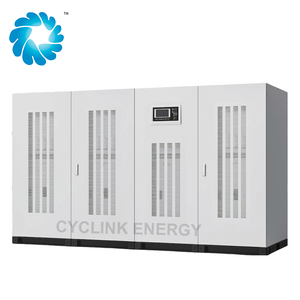
Industrial UPS for Energy & Transportation (Lithium Battery Backup)
High-density lithium backup system designed for high-stress rail signaling, aviation, and energy networks.
Explore our OEM-grade uninterruptible power supplies (UPS), ruggedized DC-DC converters, and line-interactive power systems engineered for continuous operation in signaling, TCMS, and traction systems.
High-density lithium backup system designed for high-stress rail signaling, aviation, and energy networks.
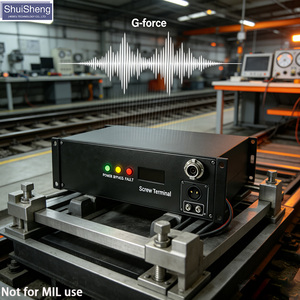
Anti-salt, anti-mold, corrosion-resistant sealed enclosure built for extreme wayside outdoor cabinets.
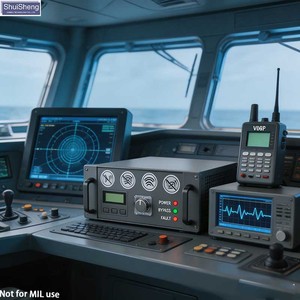
Fully fortified mechanical chassis meeting EN 61373 railway shock and mechanical vibration specifications.
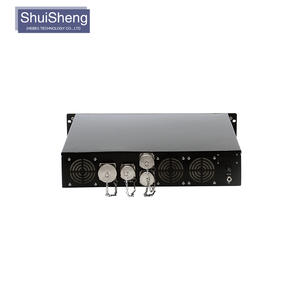
Zero-transfer time online double-conversion topology protecting critical trackside communications.
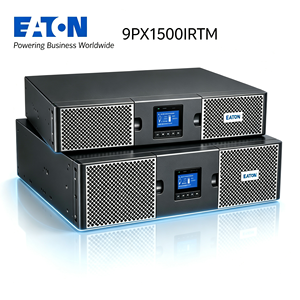
High power density unity power factor module tailored for 19-inch standardized control racks.
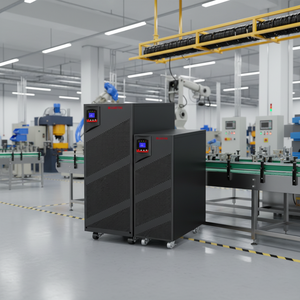
Three-phase input, wide voltage tolerance power backup for main control centers and sub-stations.
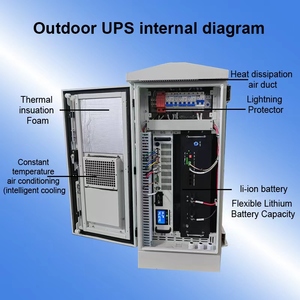
Integrated 8000Wh extended capacity battery bank built for isolated trackside surveillance.
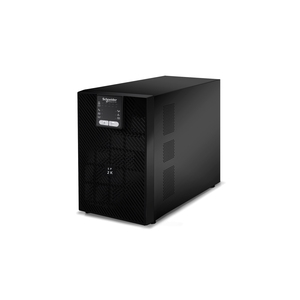
Compact footprint design with active PFC, optimized for harsh electrical noise environments.
From custom board-level DC-DC bricks to turnkey rolling stock power management racks, our end-to-end U.S. and ISO/AS9100 qualified manufacturing ecosystem ensures continuous reliability.
We commercialized multi-stage synchronous rectifier topologies in isolated power converters. Replacing traditional lossy Schottky diodes with actively driven MOSFET switches minimizes internal thermal dissipation, boosting full-load conversion efficiency up to 96% and dramatically extending component mean time between failures (MTBF).
Our state-of-the-art manufacturing facility operates under strict process-controlled protocols. Every production run undergoes automated optical inspection (AOI), full environmental stress screening (ESS), burn-in under heavy load, and complete lot traceability to safeguard mission-critical railway operations.
Railway locomotives, light rail vehicles (LRVs), and trackside signaling networks remain in active deployment for 20 to 30 years. We mitigate component end-of-life (EOL) risks through form-fit-function architectural engineering, long-term raw material sourcing, and archived qualification engineering datasets.
We understand that off-the-shelf power supplies often fail to meet non-standard mechanical footprints, specialized input voltage spikes, or unique communication protocols. Our dedicated rail application engineering team collaborates directly with system architects to design bespoke solutions:
Designing electronic power equipment for railway rolling stock demands rigorous compliance with European Standard EN 50155. Below is an engineering analysis of how our OEM designs navigate voltage fluctuations, thermal stress, and electromagnetic interference.
Railway DC distribution networks experience extreme voltage dips and surges caused by catenary switching and heavy motor acceleration. Standard nominal voltages (24V, 48V, 72V, 110V DC) can drop by 30% or surge up to 1.4 times nominal (1.25× continuously, 1.4× for 1 second). Our custom RailQor series incorporates active wide-input control loops that maintain tight output regulation across 0.6× to 1.4× continuous voltage swings, with built-in Class S2/C1 hold-up capacitors offering 10ms to 20ms full interruption immunity without dropping system buses.
Rolling stock equipment enclosures are frequently sealed against dust, water, and brake particulates, preventing the use of failure-prone air fans. Our engineering solution utilizes baseplate-cooled conduction designs combined with high-thermal-conductivity planar transformers and encapsulated potting compounds. Operating under Class OT4 requirements (−40°C start-up to +85°C operational for 10 minutes), our converters eliminate hot spots and prevent thermal derating under harsh ambient conditions.
High-voltage pantograph arcing and track switching generate severe electromagnetic interference. Integrating standalone DC-DC converters with third-party filters often results in uncontrolled LC resonance and test failures during EMC qualification. We design converter-plus-filter system chains as unified electrical assemblies, suppressing common-mode and differential-mode noise well below EN 50121-3-2 limits across 150 kHz to 30 MHz frequencies.
| Standard Code | Domain Scope | Key Engineering Requirements | Our OEM Solution Capability |
|---|---|---|---|
| EN 50155 | Rolling Stock Electronics | Operating temp, supply voltage variations, brownouts, isolation. | Fully compliant DC-DC & UPS units supporting Class OT4 and Class S2/C1 hold-up. |
| EN 50121-3-2 | Railway EMC Compliance | Conducted & radiated emissions, ESD, fast transients (EFT), surge. | Integrated active EMI filtering modules eliminating external choke requirements. |
| EN 61373 | Mechanical Vibration & Shock | Random vibration testing (Category 1 Class A/B body-mounted & bogie). | Heavy-duty structural potting, silicone dampening, and reinforced PCB pillars. |
| EN 45545-2 | Fire Safety Requirements | Material flammability, smoke toxicity, and heat release rate (Hazard Level HL3). | Halogen-free, self-extinguishing flame-retardant potting compounds and plastics. |
| MIL-STD-810G | Environmental Defense Specs | Salt fog, extreme humidity, fungus, low pressure altitude tests. | Hermetically sealed IP68 enclosures with anti-corrosion military coating. |
As global rail operators accelerate decarbonization, high-speed rail expansion, and digital automated train control (CBTC), procurement managers must evaluate key technological shifts over the next decade.
Traditional silicon MOSFETs are reaching theoretical thermal and switching frequency limits. Next-generation railway auxiliary converters are transitioning to Wide-Bandgap (WBG) Silicon Carbide (SiC) power devices. SiC semiconductors allow switching frequencies to increase by 3x to 5x, shrinking passive magnetic components (chokes and transformers) by up to 40% while raising efficiency beyond 98%. Procurement teams specifying SiC-based architectures will realize substantial weight savings on car-body structures.
Legacy VRLA lead-acid battery backup banks suffer from short operational lifespans (3-5 years) and heavy maintenance overheads. Advanced Lithium Iron Phosphate (LiFePO4) and Lithium Titanate Oxide (LTO) battery systems are becoming standard in railway tenders. LTO batteries offer extreme temperature operation (−40°C to +65°C), up to 20,000 cycle lives, and rapid recharge performance, delivering a total cost of ownership (TCO) reduction of over 50% across 20 years.
Modern TCMS (Train Control and Management Systems) require smart power supplies that communicate diagnostic telemetry in real time. Future-ready converters incorporate RS-485, CANopen, or Ethernet Train Bus (ETB) interfaces running MODBUS/SNMP protocols. Embedded microcontrollers monitor electrolyte degradation, real-time junction temperatures, dynamic load curves, and input line quality to predict system failures long before trackside disruption occurs.
Unplanned locomotive downtime carries severe financial penalties. Modern procurement specs mandate modular 19-inch sub-rack architectures featuring N+1 or N+2 parallel redundancy. Hot-swappable power modules allow maintenance technicians to replace faulted power bricks within minutes without powering down the entire vehicle control circuit or signaling cabinet.
Get immediate technical clarity on custom OEM specifications, qualification testing, delivery schedules, and warranty guarantees.
Our EN 50155 compliant DC-DC converters and UPS systems utilize built-in or modular active hold-up circuits combined with premium high-temperature electrolytic or solid-state film capacitors. Class S2 guarantees a 10ms power interruption hold-up time during supply switching, while Class C1 manages a 20ms disruption at full rated output power without dropping output voltage below regulation limits. This prevents computer resets in TCMS and signaling equipment during catenary gaps.
Yes. We specialize in custom OEM/ODM mechanical design. Whether your program requires standard 19-inch rackmount chassis (1U, 2U, 3U), sealed IP67/IP68 cold-plate chassis, or compact DIN-rail trackside enclosures, our mechanical engineering team can match exact pinouts, thermal mounting interfaces, and connector keying to ensure seamless form-fit-function retrofits.
Standard railway isolation specs demand high dielectric strength to prevent lethal high-voltage catenary transients from penetrating low-voltage control circuits. Our railway power modules provide basic or reinforced double isolation rated up to 3000V AC or 4242V DC between input-to-output and input-to-ground, easily exceeding the EN 50155 insulation test criteria.
We employ a proactive Obsolescence Management Policy. All critical active components (MOSFETs, microcontrollers, driver ICs) are selected from top-tier multi-source semiconductor manufacturers. In the event of a component End-Of-Life (EOL) notice, we maintain strategic buffer inventory and offer drop-in pin-compatible redesigns backed by updated qualification documentation.
Our industrial and railway UPS units support traditional VRLA AGM batteries as well as advanced Lithium Iron Phosphate (LiFePO4) and Lithium Titanate Oxide (LTO) battery packs. Our smart chargers feature programmable temperature-compensated charging profiles, automated cell balancing, and active battery status communication via RS485/CANbus.
For customized modifications of proven standard platforms (e.g., specific voltage trims, customized wiring harnesses, specialized connectors), prototype lead times are typically 4 to 6 weeks. Complete ground-up full-custom OEM developments range from 8 to 12 weeks, including initial EN 50155 and EN 50121-3-2 pre-compliance testing.
Connect directly with our senior power application engineers. We will analyze your input voltage profile, thermal limits, mechanical dimensions, and compliance targets within 24 hours.