Custom OEM PFC Module Manufacturers & Engineering Solutions

Next-Generation Power Factor Correction, Active Switching Topologies, and Field-Proven High-Efficiency Power Systems for Defense, Industrial, Aviation & Telecom OEMs

Enterprise Product Line

High-Reliability Power Systems & OEM UPS Products

Engineered for extreme environments, rail networks, industrial automation, and mission-critical communications.

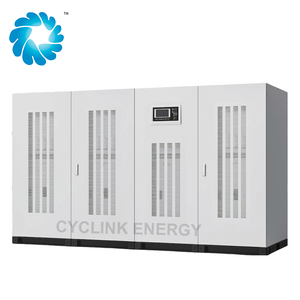
Industrial UPS for Energy, Aviation, Metallurgy
Industrial UPS for Energy, Transportation, Aviation & Metallurgy Lithium Systems
Contact Us
All-weather Rugged Power System Outdoor Telecom UPS
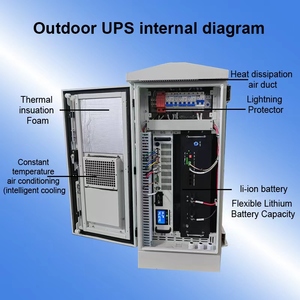
All-Weather Rugged Power System Anti-Salt Anti-Corrosion IP68 Telecom Outdoor UPS
Contact Us
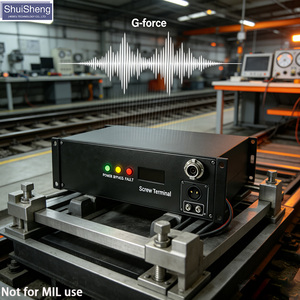
Rugged UPS System Vibration Resistance
Rugged UPS System for Harsh Environment Vibration Resistance Shockproof Design
Contact Us
Railway Signaling Power Backup UPS
Industrial UPS System Supplier for Railway Signaling Power & Communication Backup
Contact Us
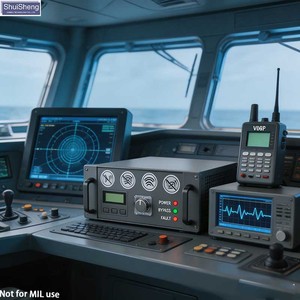
Marine Rack Mounted UPS
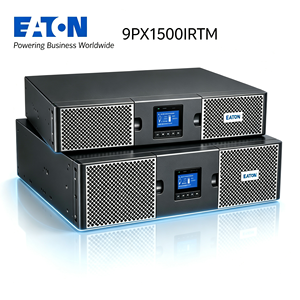
Eaton 9PX1500IRTM 1500VA/1500W Rack-Mounted Marine & Shipboard UPS
Contact Us
Industrial Data Center Online UPS
Santak Castle C10K 10kVA Online UPS 380/220VAC Industrial Data Center Power
Contact Us
Outdoor Waterproof Online UPS 1KVA
High-Quality Outdoor Waterproof Dustproof Online UPS 1KVA 8000Wh Capacity
Contact Us
Wind Power Dedicated Online UPS
APC Single Phase Online UPS Power Supply SP1K-W Wind Power Dedicated 800W/1KVA
Contact Us
96%
Peak Converter Efficiency
25+
Years Electronics Innovation
AS9100
Quality Certified Standards
< 3%
Ultra-Low iTHD Distortion
Industry Whitepaper & Technical Treatise

Designing & Manufacturing Custom OEM PFC Modules for High-Reliability Applications

In modern electronic power conversion architectures, Power Factor Correction (PFC) serves as the essential gateway between non-ideal AC power sources and sensitive downstream DC loads. For Original Equipment Manufacturers (OEMs) building defense electronics, aerospace avionics, heavy rail infrastructure, and critical medical imaging suites, standard off-the-shelf power supplies frequently fail to meet specialized form-factor, thermal, EMI, or reliability criteria. Partnering with elite Custom OEM PFC Module Manufacturers is paramount to overcoming phase distortion, operational thermal stress, and regulatory compliance bottlenecks.

Information Gain: The Architectural Superiority of Synchronous Rectification

Traditional single-stage or passive PFC circuits rely heavily on diode bridge rectifiers, introducing significant conduction losses due to fixed forward diode voltage drops (typically 0.7V to 1.2V per diode). In custom OEM PFC modules engineered with synchronous rectification technology, actively driven power MOSFETs with ultra-low $R_{DS(on)}$ replace legacy diodes. This topology dramatically lowers internal heat generation, enables conduction cooling through solid baseplates, and extends system Mean Time Between Failures (MTBF) under high ambient temperature profiles.

Core Technical Pillars of OEM Power Factor Correction Topologies

When engineering tailor-made PFC brick modules and line-replaceable units (LRUs), OEM designers must evaluate specific input voltage windows, power density targets (Watts per cubic inch), and dynamic harmonic management requirements. Custom PFC manufacturing leverages several primary architectural topologies:

Single-Phase Active Boost PFC

Ideal for 85–264 Vrms universal line inputs. Utilizes continuous conduction mode (CCM) controllers to force input current into phase alignment with line voltage, achieving power factor correction > 0.99 with low current harmonic distortion (iTHD < 3%).

Isolated 3-Phase PFC Modules

Designed for high-power naval, airborne (115Vrms line-to-neutral / 400Hz), and industrial grid platforms. Delivers balanced 3-phase power drawing without neutral line current degradation, providing galvanic isolation in a single compact module.

Buck-Boost Matrix PFC

Provides regulated intermediate DC buses over extreme input voltage variations (e.g., sag conditions down to 40V or surges up to 500V continuous) without requiring oversize magnetic components or compromising efficiency.

OEM PFC Module Standard & Custom Qualification Matrix

To assist power system architects during the procurement phase, the table below highlights standard operating envelopes and custom tailoring capabilities offered by specialized OEM manufacturers:

Specification Parameter Standard Commercial COTS PFC Custom OEM High-Rel PFC Modules Compliance Target Standard
Input Voltage Range 90 – 264 Vrms (Single Phase) 85–264 Vrms 1Φ / 115V & 440V 3Φ (Delta/Wye) MIL-STD-704(A-F) / MIL-STD-1399
Line Frequency Range 47 – 63 Hz 47 – 800 Hz (Airborne & Variable Frequency Grid) RTCA DO-160G Sec 16 / ABD0100
Power Factor (PF) 0.95 – 0.98 at Full Load > 0.99 at 10% to 100% Rated Load EN 61000-3-2 Class D
Cooling Methodology Forced Air (Fans required) Conduction Cooling (Baseplate -40°C to +100°C) MIL-STD-810G Thermal Shock
EMI Compliance Requires external heavy filters Integrated/Paired Sub-Module Filters MIL-STD-461(C-F) / EN 50121-3-2
Power Density 20 – 40 W/in³ Up to 120+ W/in³ (Full-Brick / Half-Brick) AS9100 OEM Miniaturization

Industry & Product Development Trends (2026–2030)

The global power electronics sector is experiencing a fundamental transformation driven by carbon-neutral mandates, electrification of transport, and next-generation military hardware. Custom OEM PFC module manufacturing is at the epicenter of these technological shifts:

  • Wide Bandgap (WBG) Semiconductor Adoption: Silicon Carbide (SiC) and Gallium Nitride (GaN) switching devices are rapidly superseding legacy Silicon MOSFETs. Their ability to operate at switching frequencies exceeding 500 kHz reduces inductor and capacitor footprints by up to 60%, drastically shrinking total package dimensions.
  • Digital Control Loops & Real-Time Telemetry: Microcontroller and DSP-driven PFC control loops allow dynamic tuning of switching parameters in real time. Integrated PMBus or CANbus interfaces communicate operational voltage, temperature, current draw, and total harmonic distortion back to host systems for predictive maintenance.
  • Unbalanced 3-Phase Load Compensation: Advanced 3-phase PFC modules now integrate active matrix switching capable of drawing equal line current even when downstream load profiles across phases are asymmetric—a critical demand for naval shipboard grids and industrial microgrids.
  • Encapsulated Hermetic Packaging: Complete potting with thermally conductive epoxy resin provides total immunity against moisture, salt fog, mold growth, and high-G shock/vibration in aerospace and rail applications.

Future Procurement Trends in OEM Power Solutions

Procurement directors and supply chain executives must adapt to changing market dynamics when contracting custom power supply manufacturers. Key procurement trends shaping contracts include:

1. Obsolescence Protection & Form-Fit-Function Guarantees

Programs in defense, rail, and aviation span 15 to 30 years. OEMs require manufacturers to provide non-obsolescence guarantees or drop-in Form-Fit-Function (FFF) replacement pathways to eliminate costly PCB redesigns during long production runs.

2. Pre-Qualified EMI Filter & Converter Chains

Rather than buying disparate EMI filters and PFC modules, OEMs increasingly procure pre-tested filter-plus-PFC pairings. This guarantees conducted emission compliance during full-system qualification tests.

3. Domestic Manufacturing Traceability

Geopolitical instability and semiconductor supply bottlenecks have led OEMs to mandate AS9100/ISO-9001 certified, US-based or EU-based domestic manufacturing facilities to protect sensitive defense contracts.

Enterprise Strengths: Why World-Class OEMs Trust Our Manufacturing

Our engineering organization stands at the forefront of synchronous-rectifier power conversion, providing end-to-end custom design, qualification, and high-volume fabrication services for demanding applications.

U.S.-Based Manufacturing & AS9100 Quality

Fully integrated engineering, assembly, and automated testing housed within our Salem, NH facility. Fully certified under AS9100 and ISO-9001 for complete batch traceability and prime-contractor audit readiness.

Two-Stage Synchronous Rectification Topology

Pioneers in commercializing synchronous rectifier power modules. Low internal conduction losses enable full power output in conduction-cooled, sealed enclosures operating under extreme thermal stress.

Comprehensive In-House Qualification Testing

Every custom unit undergoes Environmental Stress Screening (ESS), thermal cycling, vibration testing, and pre-compliance EMI testing against MIL-STD-461, DO-160, and EN 50155 protocols.

Engineering Knowledge Base

Custom OEM PFC Module Procurement FAQ

Answers to common technical, qualification, and procurement inquiries from systems design engineers.

Why is active power factor correction mandatory for high-reliability systems?
Non-PFC power supplies draw current in narrow, high-amplitude spikes, creating harmonic distortion on the AC power bus (high iTHD). This non-linear current causes voltage waveform distortion, excessive heat in transformers/generators, and potential nuisance tripping of circuit breakers. Active PFC forces the input current to mirror the sinusoidal voltage waveform, maximizing available real power ($P = V \times I \times \text{PF}$) and complying with standards like MIL-STD-1399 and EN 61000-3-2.
How do custom OEM PFC modules achieve compliance with MIL-STD-461 conducted emissions?
Compliance is achieved by combining balanced differential-mode and common-mode LC filter networks with high-frequency switching shielding techniques. Our custom modules are engineered and tested in paired configurations with dedicated line filters, mitigating noise spikes across the CE101 and CE102 frequency spectra (30 Hz to 10 MHz).
What is the typical development timeline for a custom OEM PFC module derivative?
Because our core power topologies are field-proven building blocks, modified electrical or mechanical derivatives (such as custom pinouts, non-standard output voltages, or specialized cold-plate mounting holes) typically move from initial design review to prototype delivery within 8 to 12 weeks. Full qualification testing schedules are tailored to client program milestones.
Can your PFC modules support 400Hz airborne AC power inputs?
Yes. Our AeroQor® and MPFIC module families are designed specifically for wide-frequency AC lines operating from 360 Hz to 800 Hz (as well as 50/60 Hz ground power), fully meeting RTCA DO-160G Section 16 requirements and Airbus/Boeing harmonic limits.
How does baseplate conduction cooling improve system-level reliability?
Conduction cooling transfers heat directly from internal power components through an aluminum baseplate into the system cold plate or chassis exterior. This eliminates fans—the primary mechanical point of failure in power supplies—and allows the module to operate safely inside sealed, dust-proof, and waterproof (IP67/IP68) enclosures across extended operating temperatures (-40°C to +100°C baseplate).

Collaborate With Our Senior Power Application Engineers

Submit your electrical parameters, target input/output voltages, thermal constraints, and standard requirements. Our application engineering team will deliver a comprehensive OEM power architecture proposal.