
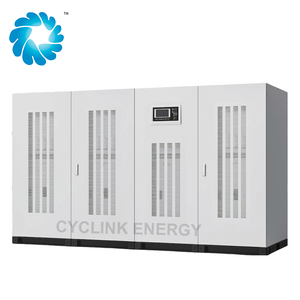
Industrial UPS for Energy, Aviation & Metallurgy (Lithium Backup)
- Low Earth Leakage Topology
- Lithium Iron Phosphate (LiFePO4)
- High Thermal Tolerance
Field-proven online UPS systems, isolated DC-DC converters, and ruggedized power modules built to comply with MIL-STD-704/461/810G, EN 50155, and medical 2×MOPP standards.
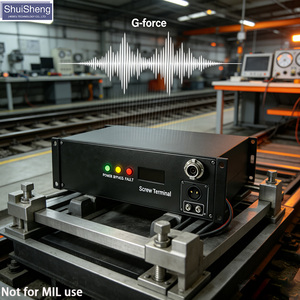
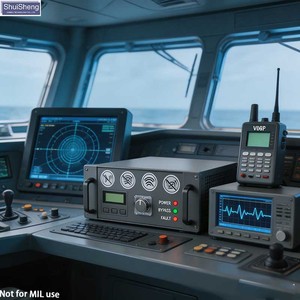
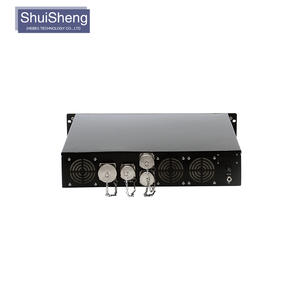
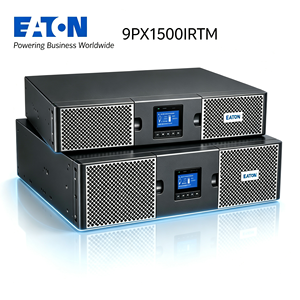
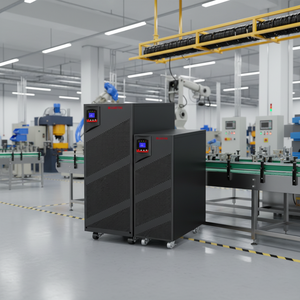
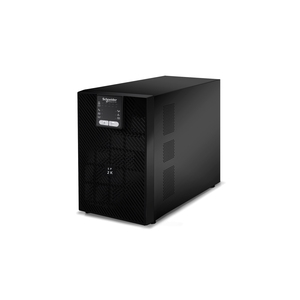
In high-reliability industrial, marine, airborne, and medical infrastructure, power conversion equipment must satisfy stringent electromagnetic compatibility (EMC) regulations while maintaining exceptionally low parasitic current conduction to ground. Low-leakage power conversion is not merely a compliance requirement—it is a baseline design philosophy necessary to prevent ground loops, eliminate sensitive signal degradation, and ensure operational safety in sealed conduction-cooled enclosures.
Traditional industrial Uninterruptible Power Supply (UPS) units and AC-DC converters often rely on bulky Y-capacitors tied directly to the protective earth ground to suppress common-mode EMI noise. However, this configuration creates path currents that can easily exceed safety limits—posing extreme hazards in patient-contact medical instrumentation (IEC 60601-1) and introducing unacceptable ground noise in sensitive naval sonar, radar, and aerospace communication systems (MIL-STD-461).
As a custom OEM factory and global exporter, our engineering facilities utilize advanced two-stage converter topologies combined with synchronous rectifier technology. By replacing lossy passive diodes with actively driven, low RDS(on) MOSFETs, we drastically lower heat dissipation while achieving up to 96% energy conversion efficiency. More importantly, our proprietary balance-winding transformer designs and optimized filter networks neutralize common-mode voltage spikes at the switching node, reducing capacitive earth leakage current to sub-100 μA levels without compromising stringent MIL-STD or EN emissions limits.
Utilizes multi-stage differential shielding and balanced magnetic structures to suppress common-mode ground currents without oversized Y-capacitance.
Eliminates traditional diode forward voltage drops. Lowers conduction loss by up to 65%, permitting fanless sealed conduction cooling in IP68 systems.
Reinforced isolation barriers up to 4000 VAC (2×MOPP compliant) protecting delicate microprocessors and human operators from high-voltage grid transients.
Every custom OEM platform built in our facility undergoes rigorous multi-point qualification testing. The table below details the performance metrics and compliance standards integrated into our core product lines:
| Application Sector | Core Standard Compliance | Earth Leakage Current Limit | Operating Temperature Range | Cooling Methodology |
|---|---|---|---|---|
| Military & Defense | MIL-STD-704 (A-F), MIL-STD-461G, MIL-STD-1275E, MIL-STD-810G | < 500 μA at 115V / 400Hz | -40°C to +85°C Baseplate | Conduction / Sealed Chassis |
| Medical Grade (2×MOPP) | IEC 60601-1 3.1 Edition, IEC 60601-1-2 4.0 EMC | < 100 μA (Touch), < 300 μA (Earth) | -20°C to +60°C Ambient | Natural Convection / Fanless |
| Railway Rolling Stock | EN 50155, EN 50121-3-2, EN 61373 (Shock/Vib) | < 1.0 mA at Nominal Input | -40°C to +70°C (Class OT4) | Rugged Aluminum Heatsink |
| Aerospace Airborne | RTCA/DO-160G Section 16-21, Boeing 787B3, Airbus ABD0100 | < 250 μA at 115V / 360-800Hz | -55°C to +85°C Extended | Cold-Plate Conduction |
| Heavy Industrial & Telecom | UL 1778, EN 62040-1, EN 61000-3-2 Active PFC | < 3.5 mA (Industrial Limit) | -30°C to +65°C Continuous | Forced Air / IP68 Outdoor Shell |
As a global exporter and turnkey manufacturing partner for prime contractors, system integrators, and Fortune 500 OEMs, our competitive advantage stems from absolute supply chain visibility, rigorous quality governance, and high-density power architecture mastery.
Our manufacturing processes adhere to aerospace-level process control. Every single converter unit undergoes automated full-load burn-in, dielectric withstand testing, and environmental stress screening (ESS) prior to dispatch.
Our dedicated application engineering teams work directly with your power system architects to provide custom derating analysis, thermal simulation modeling, and custom PCB pinout modifications, eliminating redesign cycles.
We mitigate component obsolescence through structured component selection, providing multi-decade program support with guaranteed replacement pathways for defense, railway, and utility infrastructure projects.
The global power system procurement landscape is undergoing a structural transition driven by decarbonization, electrification of mobile assets, and the decentralization of critical compute infrastructure. Procurement officers and engineering directors must account for five overarching technology trends when selecting OEM manufacturing partners:
1. Wide-Bandgap (GaN & SiC) Semiconductor Dominance: Traditional silicon MOSFETs are rapidly approaching their physical efficiency limits. Next-generation OEM designs incorporate Gallium Nitride (GaN) and Silicon Carbide (SiC) switches, enabling switching frequencies in excess of 500 kHz. This yields a 40% reduction in passive component footprint, substantially reducing enclosure size while decreasing heat dissipation.
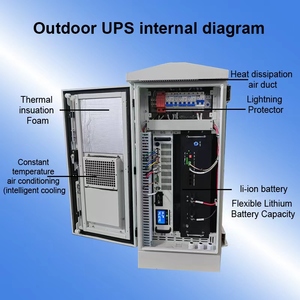
2. Solid-State and Advanced Lithium Chemistry Integration: Industrial and outdoor UPS applications are moving away from legacy Valve-Regulated Lead-Acid (VRLA) batteries. High-energy-density Lithium Iron Phosphate ($LiFePO_4$) and emerging solid-state battery modules provide 3× longer lifecycle endurance, lighter weight, and operational stability across severe temperature extremes (-40°C to +75°C).
3. Digitized Power Management & Predictive Telemetry: Modern mission-critical power supplies require real-time digital monitoring capabilities. Integration of PMBus, SNMPv3, and Modbus TCP/IP protocols allows systems engineers to monitor internal capacitor degradation, operating temperatures, and leakage currents in real-time—shifting maintenance schedules from reactive to predictive AI-driven frameworks.
4. Modular N+X Redundancy with Zero-Downtime Hot-Swappability: Unplanned outages in industrial automation lines or naval vessel control panels carry catastrophic financial and operational costs. Procurement trends show a 60% preference for modular rack systems where power modules can be swapped under live load without interrupting down-stream equipment.
Essential insights for procurement managers, compliance engineers, and system architects.
Ground leakage current is primarily driven by stray parasitic capacitance between internal switching components (high dv/dt nodes) and the grounded metallic chassis, alongside Y-capacitors fitted within input EMI filters. Our low-leakage OEM designs utilize specialized internal electrostatic shielding and active noise-cancellation topologies to minimize this conduction path.
We design and qualify the EMI filter module and DC-DC/AC-DC converter as an integrated single system. By pre-characterizing the filter-converter pair under full continuous load, we prevent resonance instability and guarantee compliance with MIL-STD-461 CE102/RE102 requirements out of the box.
Yes. As a custom OEM/ODM manufacturer, we specialize in form-fit-function replacement solutions. We can engineer custom baseplate dimensions, custom pinouts, specialized connector interfaces, and wide input voltage ranges to drop seamlessly into existing defense or industrial chassis without altering host wiring.
Synchronous rectification replaces traditional lossy diodes with low-resistance MOSFETs controlled by precise gate-drive circuits. This reduces the rectification voltage drop from ~0.7-1.0V down to millivolts, drastically reducing thermal losses, elevating converter efficiency up to 96%, and eliminating the need for noisy cooling fans.
We manufacture systems ranging from open-frame NEMA configurations to IP67 and IP68 fully hermetically sealed cast-aluminum enclosures. Our all-weather outdoor systems undergo anti-salt mist, anti-mold, and humidity testing to withstand harsh coastal, naval, or desert environments.
Standard modified OEM evaluation units are typically delivered within 2 to 4 weeks. Fully customized power systems requiring custom magnetics, tailored PCB layouts, and full compliance qualification testing generally range between 6 to 10 weeks depending on specification complexity.
Partner with an established OEM manufacturer specializing in ultra-low leakage, high-efficiency power conversion. Submit your target specifications—input range, load envelope, thermal constraints, and compliance standards—to receive a detailed engineering proposal.