Technical Whitepaper
Custom OEM Line Filter Exporter & Global Manufacturing Solutions
An authoritative guide to selecting, custom-engineering, and sourcing electromagnetic line filters, common-mode chokes, and fluidic line filtration for mission-critical applications.
1. Introduction: The Critical Role of Line Filters in Modern Systems
In an increasingly interconnected global electronics and industrial processing ecosystem, line filtering technology represents the first line of defense against electromagnetic interference (EMI), radio frequency interference (RFI), voltage transients, and fluidic particulate contamination. As a premier custom OEM line filter exporter, our engineering facilities focus on developing advanced passives and physical filtration structures that guarantee compliance with stringent operational standards, such as MIL-STD-461, RTCA DO-160G, EN 50155, and IEC 60601-1-2 ed. 4.0.
Line filters fulfill a dual-function mandate within high-performance architectures: protecting sensitive internal circuits from external power supply grid or environmental perturbations, and preventing internally generated harmonic noise or fluidic debris from discharging into external distribution lines. Whether dealing with high-current AC line noise created by fast-switching SiC/GaN semiconductors or managing particulate purity in closed-loop refrigeration lines, precise OEM customization is essential to achieving maximum system longevity and zero-defect performance.
2. Fundamental Line Filter Typologies: Electrical vs. Mechanical
OEM line filters span two distinct engineering domains—electromagnetic passive filters and physical fluidic strainer/drier elements. Achieving optimal integration requires an end-to-end understanding of both topologies:
Electrical EMI / RFI Line Filters
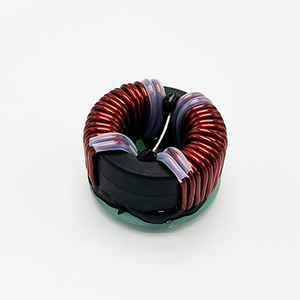
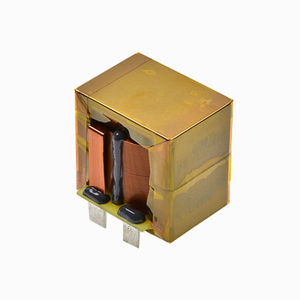
Comprising common-mode chokes, X/Y safety capacitors, and differential-mode inductors. Engineered to attenuate conducted electromagnetic emissions across 150 kHz to 30 MHz, safeguarding power buses against high dv/dt switching transients in SMPS, inverter drives, and medical electronics.
Fluidic & Porous Metal Filters
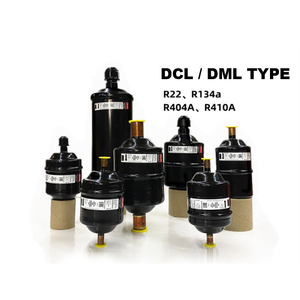
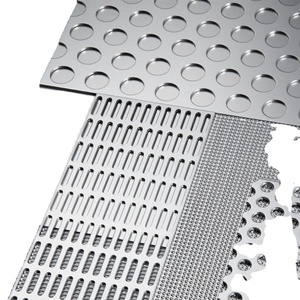
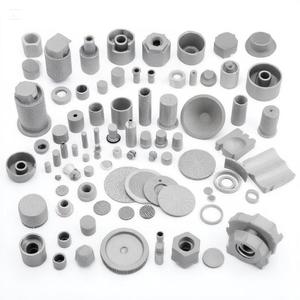
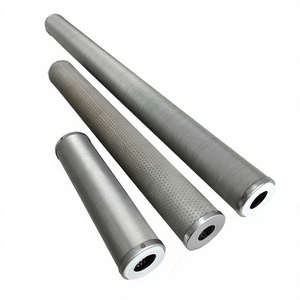
Utilizing vacuum-sintered 316L stainless steel mesh, perforated tubes, or copper solid-core desiccants. Designed to eliminate sub-micron particulate debris, moisture, and chemical sludge from hydraulic lines, solenoid valves, and HVAC refrigerant loops.
| Filter Category |
Core Component / Material |
Primary Mitigation Focus |
Target Standards & Certifications |
| AC Power Line Filters |
EE / Toroidal Ferrite Core, Nanocrystalline Winding |
Common-Mode & Differential Noise (150kHz-30MHz) |
MIL-STD-461G, FCC Part 15 Class B, EN 50155 |
| Data & Signal Line Filters |
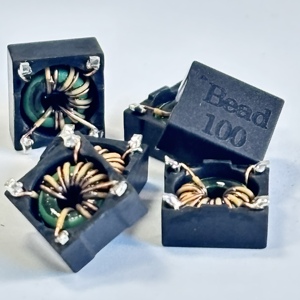
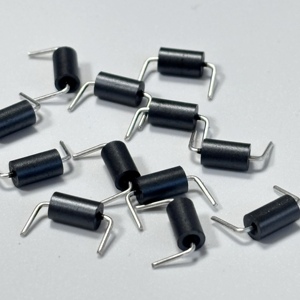
Axial Lead Ferrite Beads, Leaded Inductors |
Ultra-High Frequency (UHF) Signal Absorption |
RTCA DO-160G, IEC 61000-4-4 (EFT), IEEE 802.3 |
| HVAC Liquid Driers |
Solid Molecular Sieve Core, Copper Shell |
Moisture Absorption & Acid Neutralization |
UL 207, ISO 14903, PED 2014/68/EU |
| Porous Solenoid Filters |
Sintered Stainless Steel 316L (0.1–90 Micron) |
Particulate Retention & Cavitation Prevention |
ISO 4406 Cleanliness Standard, ASTM E128 |
3. Technical Analysis: Common-Mode vs. Differential-Mode Suppression
When selecting or custom-specifying an electrical line filter, design engineers must distinguish between common-mode (CM) noise and differential-mode (DM) noise:
- Common-Mode (CM) Noise: Travels in the same direction on both phase and neutral lines relative to earth ground. Suppressed primarily via high-permeability common-mode chokes (such as our EE core and toroidal copper-wound series) paired with Y-capacitors tied to ground. High CMRR is critical to clearing stringent military and avionics emissions tests.
- Differential-Mode (DM) Noise: Flows in opposite directions along the supply and return conductors. Attenuated via series differential inductors and X-capacitors connected across the lines. DM noise suppression prevents switching ripple from propagating back into the utility AC mains or DC bus network.
Our custom OEM design process involves precise magnetic core selection—balancing initial permeability (μi), saturation flux density (Bs), and Curie temperature—to ensure that common-mode chokes maintain attenuation effectiveness under full-load thermal stress without experiencing magnetic saturation.
4. Enterprise Manufacturing & Quality Engineering (E-E-A-T Framework)
As an established exporter built upon high-reliability (Hi-Rel) aerospace and defense standards, our production infrastructure operates under a certified AS9100D and ISO-9001 quality management framework. Every custom filter line manufactured at our facility undergoes rigorous testing and qualification protocols:
- Complete Traceability: 100% lot traceability for raw materials, copper wire, magnetic cores, sintered powders, and dielectric potting compounds.
- Automated Winding & Vacuum Impregnation: CNC toroidal winding machinery ensures uniform inductance tolerance (±10% or tighter). Vacuum pressure impregnation (VPI) eliminates micro-voids, preventing corona discharge and insulation breakdown at elevated operating voltages.
- Full EMC & Environmental Verification: In-house testing capabilities include conducted emissions spectrum scanning, thermal cycling (-55°C to +125°C), random vibration under MIL-STD-810G, and helium leak testing for hermetically sealed fluidic filters.
5. Future Sourcing & Technological Procurement Trends
Procurement executives and lead system integrators must navigate several evolving industry shifts when planning OEM line filter sourcing:
A. Integration with Wide-Bandgap (SiC & GaN) Semiconductors:
Next-generation power converters operate at significantly higher switching frequencies (500 kHz to >2 MHz) with extremely steep dV/dt slew rates. Modern line filters are transitioning toward ultra-broadband suppression designs using nanocrystalline magnetic alloys, which provide superior high-frequency attenuation with lower core loss than traditional manganese-zinc (MnZn) ferrites.
B. Harsh Environment & Extreme Reliability Standards:
Industrial automation, naval propulsion, and aerospace platforms demand extended continuous duty under high vibration, humidity, and thermal shock. OEM buyers are increasingly specifying fully potted, aluminum-housed half-brick and full-brick line filter modules capable of conduction cooling through cold plates.
C. Resilient Supply Chain & Custom OEM Flexibility:
Global OEM buyers are mitigating component obsolescence risks by partnering with custom line filter exporters who offer form-fit-function replacement guarantees, long multi-decade manufacturing lifecycles, and rapid prototyping capabilities.
6. Frequently Asked Questions (OEM Procurement FAQ)
Q: How does custom magnetic core selection affect line filter performance?
The choice of core material—such as ferrite, nanocrystalline, or iron powder—determines the filter's frequency-dependent insertion loss (dB), saturation threshold under DC bias, and thermal behavior. Nanocrystalline cores offer higher permeability and thermal stability, enabling up to 50% volume reduction compared to conventional ferrite designs for high-current applications.
Q: What is the advantage of sintered 316L stainless steel over traditional wire mesh in fluidic line filters?
Sintered stainless steel filter elements provide a rigid, fixed-pore matrix with absolute micron ratings from 0.1 to 90 microns. Unlike woven mesh, sintered metal prevents pore migration under pressure surges, withstands extreme temperatures up to 450°C, and can be repeatedly backwashed or ultrasonically cleaned, significantly lowering long-term operating costs.
Q: Can your custom OEM line filters help our equipment comply with MIL-STD-461 and RTCA DO-160G?
Yes. Our engineering team specializes in co-designing input EMI filters paired with AC-DC and DC-DC converter stages. By characterizing conducted emissions across the combined filter-plus-converter chain, we ensure fast compliance clearing for CE101, CE102, CS101, and DO-160 Section 21 standards during platform qualification.
Q: What documentation is provided with custom OEM filter export shipments?
Every export order includes full Quality Assurance documentation, including Certificates of Conformance (CoC), material trace reports, test data for insertion loss / inductance tolerances, RoHS/REACH compliance declarations, and ISO-9001/AS9100 quality sign-offs.
Q: What lead times can be expected for custom OEM line filter prototypes?
Standard prototype turnaround for custom wound inductors and modified line filter assemblies ranges from 2 to 4 weeks, including preliminary bench EMC verification. Full production ramp-up is supported with flexible buffer stock programs for high-volume contract OEMs.
7. Strategic Partner Advantages: Why Global OEMs Choose Us
Navigating global regulatory mandates while maintaining competitive unit cost requires a trusted line filter manufacturing partner. Our export services combine cutting-edge electromagnetic design, vacuum-sintered material science, and rigorous supply chain management to deliver field-proven reliability across defense, medical, HVAC, industrial, and telecommunication sectors worldwide.