Explore our field-proven power backup systems, ruggedized online UPS units, and industrial-grade isolated converter solutions engineered for zero failure tolerances.
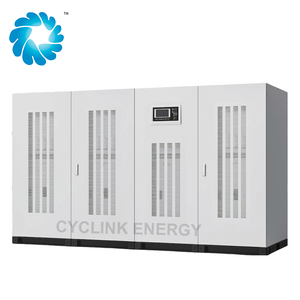
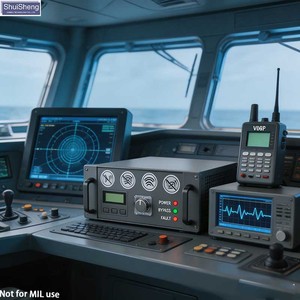
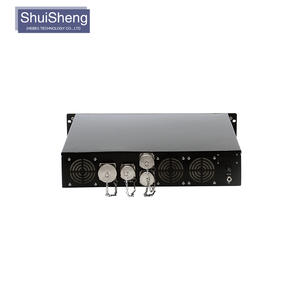
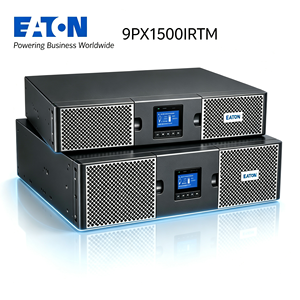
Combining U.S.-engineered precision with rigorous AS9100 & ISO-9001 quality systems to deliver custom isolated power converters with unmatched reliability.
Full-brick, half-brick, quarter-brick, and eighth-brick footprints custom-engineered with multi-layer PCB layout optimization, planar magnetics, and potted baseplates for seamless structural integration into conduction-cooled systems.
Integrated transient suppression circuitry optimized for MIL-STD-461, RTCA DO-160G, and EN 50121-3-2 compliance. Filter and converter modules are designed and qualified as a combined system to eliminate unexpected switching noise.
Pioneered high-frequency topologies that substitute lossy Schottky diodes with actively driven MOSFETs, dramatically decreasing conduction dissipation and eliminating the need for bulky forced-air cooling fans in sealed enclosures.
A comprehensive analysis of topology choices, thermal dynamics, and dielectric isolation mechanics for mission-critical electrical architectures.
In high-reliability industrial, aerospace, and defense applications, galvanic isolation is not merely a design option—it is a fundamental safety and functional requirement. An isolated DC-DC or AC-DC converter physically separates the input power ground loop from the output load ground loop using magnetic transformer coupling or opto-isolators. This barrier prevents ground currents, common-mode noise transients, and severe input-side overvoltages from propagating to sensitive downstream microprocessors, DSPs, and analog acquisition nodes.
When selecting a custom OEM manufacturing partner, system architects must evaluate several isolation metrics:
Choosing the correct power switching topology directly governs conversion efficiency, thermal footprint, transient response time, and overall unit dimensions. The matrix below contrasts primary topologies utilized in custom OEM isolated power converter manufacturing:
| Power Topology | Typical Efficiency | Input Swing Range | Power Density | Primary Application Target |
|---|---|---|---|---|
| Two-Stage Flyback (Active Clamp) | 88% - 92% | 4:1 Wide Input (9-36V / 18-75V) | Medium (25-50 W/in³) | Low-to-medium power sensor nodes, telecom micro-cells (< 150W). |
| Phase-Shifted Full Bridge (PSFB) | 92% - 95% | 2:1 / 4:1 Input Range | High (50-100 W/in³) | High-power industrial automation, naval shipboard DC buses (300W - 3kW). |
| LLC Resonant Converter | 94% - 96.5% | Narrow Input Range (Optimized) | Very High (80-120 W/in³) | Medical imaging power, high-efficiency data center server bricks. |
| Synchronous Push-Pull / Forward | 91% - 94% | Ultra-Wide 10:1 Input Range | High (60-90 W/in³) | EN 50155 railway rolling stock, wide-swing battery backup UPS systems. |
Power density advancements over the past decade mean modern custom OEM converters must operate in high ambient temperatures (up to +105°C baseplate temperature) without forced air cooling fans, which are frequent points of mechanical failure. Conduction cooling relies on transmitting internal heat dissipated by power MOSFETs, magnetic cores, and output rectifiers directly through thermal interface materials (TIM) to an integrated aluminium or copper baseplate.
Custom OEM engineering considerations include:
Custom OEM isolated converters engineered and qualified to survive extreme environmental and electrical stressors across specialized global industries.
Fully qualified against MIL-STD-704(A-F) aircraft power characteristics, MIL-STD-1275 surge immunity for ground vehicles (250V transients), MIL-STD-1399 shipboard AC power, and MIL-STD-461 conducted/radiated EMI filtering.
Custom EN 50155 compliant isolated DC-DC converters featuring ultra-wide input voltage ranges (handling 14.4V to 154Vdc dips and surges), EN 50121-3-2 EMC compliance, and Class S2/C1 hold-up capacitor integration.
Engineered for EN 60601-1 3rd/4th Edition isolation standards with 2xMOPP (Means of Patient Protection), ultra-low earth leakage current (< 300µA), and high immunity to ESD and RF fields in critical care environments.
Key technological transformations driving procurement strategies for next-generation industrial power electronics over the coming decade.
The transition from legacy Silicon MOSFETs to Wide Bandgap (WBG) materials—specifically Gallium Nitride (GaN) and Silicon Carbide (SiC)—is fundamentally altering custom OEM converter specs. WBG devices operate at switching frequencies up to 5x higher (500kHz - 2MHz) while cutting switching losses by over 60%. This frequency elevation reduces the required inductance and capacitance values, enabling transformer and inductor physical footprints to shrink by up to 50% without sacrificing power throughput.
Modern system architects no longer view power converters as passive analog black boxes. Future-proof OEM converters feature embedded 32-bit digital signal controllers (DSC) running real-time telemetry protocols over PMBus, CANopen, or Modbus. This capability enables predictive maintenance, dynamic output voltage scaling, remote fault logging, and precise thermal monitoring across distributed power networks.
Global component shortages and rapid silicon end-of-life (EOL) cycles have elevated supply chain continuity to a top-tier design requirement. A reliable custom OEM manufacturer protects long-life defense, railway, and industrial infrastructure through form-fit-function (FFF) redesign strategies, second-source silicon qualification, active component lifecycle tracking, and maintaining decade-long archived qualification databases.
Expert answers addressing customization parameters, minimum order requirements, test procedures, and qualification documentation.
We provide comprehensive NRE engineering support for custom mechanical form factors, wide input voltage ratios (such as 4:1, 8:1, or 10:1 input swing), custom multi-output voltage rails, specialized pinout configurations, rugged conformal coating, custom baseplate thickness, and pre-integrated EMI filter topologies tailored to specific MIL-STD or EN specs.
Traditional secondary rectification uses Schottky diodes, which introduce a fixed forward voltage drop (typically 0.4V to 0.7V). At high output currents (e.g., 50A), this results in 20W to 35W of pure power dissipation. Synchronous rectification replaces diodes with low RDS(on) MOSFETs (often < 2mΩ), reducing conduction losses to a fraction of a watt and significantly raising efficiency while decreasing operating thermal stress.
Every production batch undergoes 100% full-load Automated Test Equipment (ATE) verification, Hi-Pot isolation dielectric testing, and thermal Environmental Stress Screening (ESS). Customers receive Certificate of Conformance (CoC), detailed ATE test data reports, MTBF calculations (MIL-HDBK-217F / Telcordia SR-332), thermal derating curves, and full material lot traceability under ISO-9001 and AS9100 quality frameworks.
Galvanic isolation is tested using High-Potential (Hi-Pot) test rigs in accordance with safety standards such as IEC/EN 62368-1 for IT/Industrial equipment (typically 1500VDC to 3000VDC) and EN 60601-1 for medical equipment (requiring 4000VAC / 5600VDC isolation with double insulation / 2xMOPP barriers).
Our custom converters incorporate multi-stage transient voltage suppression (TVS) diodes, metal oxide varistors (MOVs), active overvoltage clamping circuits, and LC filter networks specifically tuned to absorb high-energy spikes defined by MIL-STD-1275 (250V / 50ms transients), MIL-STD-704, and EN 50155 surge profiles.
Following initial specification alignment and mechanical envelope approval, prototype engineering units are typically delivered within 6 to 10 weeks. This timeline includes 3D thermal simulation, PCB layout, planar magnetics fabrication, prototype assembly, and preliminary functional/EMC testing.
From initial circuit simulation to high-volume automated surface-mount assembly, our integrated facility delivers uncompromised quality control.
Direct collaborative access to senior power electronics design engineers, thermal specialists, and EMC field engineers throughout your product design lifecycle.
Strict component procurement policies sourcing exclusively from franchised distributors. Complete lot traceability archived for a minimum of 15 years to support defense and healthcare audits.
Guaranteed multi-decade platform support with active component end-of-life (EOL) management and transparent form-fit-function replacement paths.
Send our engineering team your target input voltage, load profiles, isolation requirements, form factor constraints, and compliance targets. We will evaluate your specs and provide a preliminary engineering design review within 48 hours.
Send an Inquiry