
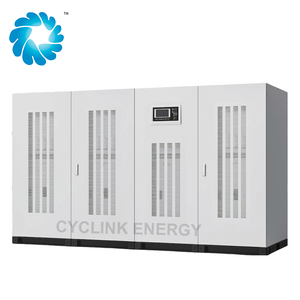
Direct OEM/ODM sourcing from China's leading noise filter factory. Engineered for harsh industrial environments, transportation networks, sub-stations, and military electronics platforms.
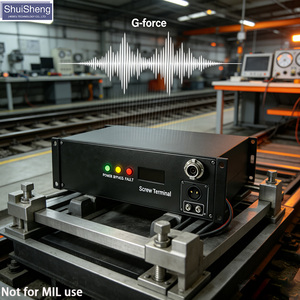
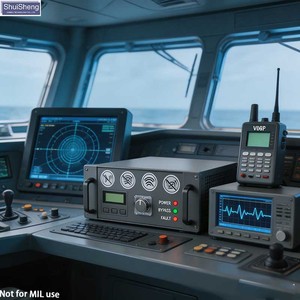
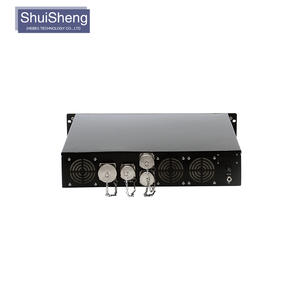
A comprehensive analysis of common-mode (CM) and differential-mode (DM) power line attenuation for modern high-frequency power electronics.
In modern industrial power systems, the rapid integration of high-switching-frequency power semiconductors—such as Silicon Carbide (SiC) and Gallium Nitride (GaN) MOSFETs—has introduced unprecedented energy density alongside severe electromagnetic interference (EMI) challenges. As a premier China wholesale noise filter factory and OEM/ODM supplier, our engineering architecture is designed to mitigate high-frequency conducted and radiated noise across sensitive critical infrastructure networks.
Core Engineering Principle: Effective noise filtering requires dual-stage attenuation targeting both Common Mode (CM) noise—conducted in phase across line and neutral relative to earth ground—and Differential Mode (DM) noise generated across line-to-line terminals. Passive LC networks combined with advanced nanocrystalline magnetic cores provide optimal insertion loss curves without triggering excessive earth leakage currents.
Industrial noise filters act as bi-directional barriers. They protect vulnerable downstream digital electronics, signal processors, and medical equipment from dirty grid transients (such as voltage spikes, lightning surges, and harmonics) while simultaneously blocking switching noise generated by variable frequency drives (VFDs), active power factor correction (PFC) stages, and uninterruptible power supplies (UPS) from bleeding back into the utility grid.
Compliance with international standards such as MIL-STD-461 (C-F), RTCA DO-160G, EN 50155, and EN 61000-6-4 demands precise impedance matching between the noise filter and the surrounding circuit topology. A mismatch in source-to-load impedance can degrade a filter's rated insertion loss by as much as 20 dB, resulting in electromagnetic compliance failure during laboratory certification.
Traditional passive EMI filters suffer from significant thermal dissipation when operated at high nominal currents due to copper losses in heavy-gauge choke windings and dielectric losses in suppression capacitors. Our China manufacturing facilities utilize high-permeability nanocrystalline chokes and multi-stage filter networks that drastically reduce magnetic volume while improving insertion loss in the 150 kHz to 30 MHz frequency spectrum.
When combined with synchronous rectifier technology—replacing lossy schottky diodes with actively driven, low $R_{DS(on)}$ power MOSFETs—our filtered power systems achieve up to 96% peak operational efficiency. This thermal optimization eliminates the need for forced-air cooling fans in sealed IP65 to IP68 outdoor equipment chassis.
Delivering end-to-end manufacturing control, rigorous derating verification, and complete supply-chain transparency for long-lifecycle programs.
Our manufacturing plant enforces strict statistical process control (SPC), 100% automated optical inspection (AOI), and multi-tier burn-in testing. Every noise filter and industrial power supply undergoes high-potential (Hi-Pot) insulation testing and transient voltage surge qualification prior to shipment.
We provide full-spectrum OEM/ODM engineering support. From custom footprint half-brick EMI filter modules to 3-phase high-current industrial filter cabinets, our internal electromagnetic research laboratory can deliver functional prototypes qualified to your mechanical and electrical constraints within 14 business days.
Defense, railway, and industrial power programs require guaranteed supply-chain longevity. We offer form-fit-function replacement guarantees, component obsolescence monitoring, and extended warranty programs to insulate project engineers from unexpected board-level redesigns.
Key technological shifts shaping global supply chains, material engineering, and compliance requirements for high-power electronics procurement.
Traditional MnZn ferrite cores are being systematically replaced by amorphous and nanocrystalline alloys. Nanocrystalline cores offer higher saturation flux density ($B_s \approx 1.2\text{ T}$) and superior temperature stability up to 120°C, permitting a 40% reduction in physical filter envelope sizes without saturation under heavy common-mode currents.
As switching frequencies exceed 500 kHz in Wide-Bandgap (WBG) power converters, passive-only filtering becomes bulkier. Procurement is pivoting toward hybrid active EMI filters (AEF) that inject counter-phase current into the power line, canceling low-frequency noise electronically while maintaining a compact physical footprint.
System integrators are moving away from discrete, board-level filter assembly toward fully enclosed, chassis-mountable half-brick and full-brick filter modules. Pre-certified modular filters drastically reduce client compliance risks during final CE, FCC, or MIL-STD certification audits.
Everything you need to know about specifying, ordering, and integrating wholesale noise filters and industrial power systems from China.
Selection depends on three primary factors: maximum continuous operating current, system operating voltage (AC or DC), and the required insertion loss (dB) across specific frequency bands (e.g., 10 kHz to 30 MHz). To guarantee compliance with MIL-STD-461G (CE101/CE102) or EN 50155 railway standards, we recommend matching our transient filter modules (such as MCOTS series) directly in front of the isolated DC-DC or AC-DC power converter. Our application engineers provide free insertion loss simulation prior to sample production.
Standard off-the-shelf noise filter modules and industrial UPS power units maintain a 1-to-2 week dispatch schedule. For custom OEM/ODM designs—including custom pinouts, specialized thermal baseplates, or tailored LC networks—prototype samples are typically delivered within 14 to 21 working days. Full mass-production runs average 4 to 6 weeks depending on volume and screening specifications.
Earth leakage current is primarily caused by Y-capacitors connected between line/neutral and earth ground within the noise filter circuit. While larger Y-capacitors improve common-mode noise suppression, they increase leakage current to ground. For medical equipment (governed by IEC 60601-1 2xMOPP) or sensitive industrial ground-fault interrupt (GFI) circuits, low-leakage noise filters must be specified to maintain safety agency compliance without tripping protection relays.
Yes. We manufacture high-voltage DC noise filters specifically rated for energy storage systems (ESS), solar photovoltaic inverters, and EV fast-charging infrastructure up to 1200VDC. These units utilize custom polypropylene dielectric capacitors, heavy-duty busbars, and potted epoxy enclosures rated for high dielectric withstand voltage (Hi-Pot tested to 3000VDC/1 minute).
All passive components experience thermal stress. High temperatures can reduce the magnetic permeability of choke cores (leading to saturation) and decrease capacitor dielectric life. Our industrial-grade noise filters are rated for operating temperatures from -40°C to +100°C baseplate temperature. Thermal derating curves are provided in every datasheet to assist engineers in selecting appropriate current margins for conduction-cooled or sealed enclosures.
Partner with China's premier wholesale noise filter factory. Submit your electrical specifications, target agency standards, or volume OEM inquiries directly to our technical engineering team.