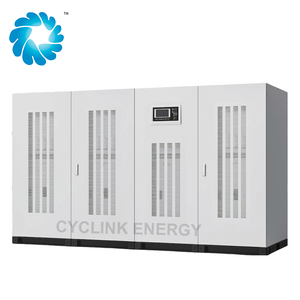
High-reliability Vertiv/Socomec architecture integrated with long-life lithium iron phosphate (LiFePO4) battery backup for extreme transient protection.
Contact Us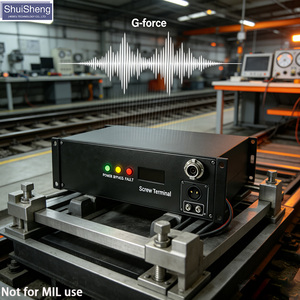
Military field-grade sealed chassis built to withstand salt spray, high humidity, and fungal attack under MIL-STD-810G environmental protocols.
Contact Us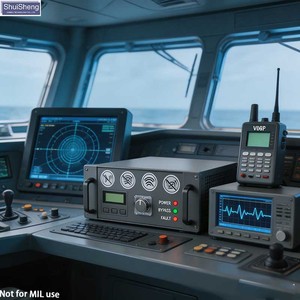
Engineered for heavy tactical vehicles and naval combatants. Features encapsulated power modules and internal mechanical dampening isolators.
Contact Us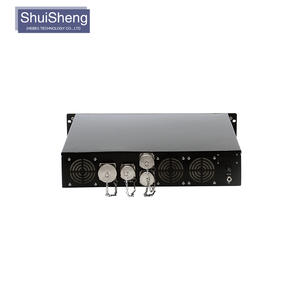
Ultra-wide DC input voltage range converter system designed for uninterrupted railway communications, trackside control, and emergency signaling.
Contact Us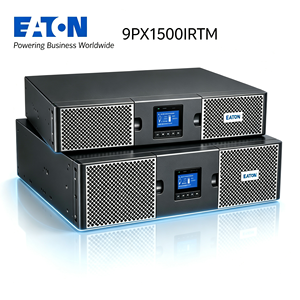
Pure sine wave 1U/2U rackmount conversion system compliant with naval shipboard power harmonics and severe line voltage distortions.
Contact Us
Industrial-grade 3-phase online power processing unit engineered for command center server clusters, radar arrays, and defense data hubs.
Contact Us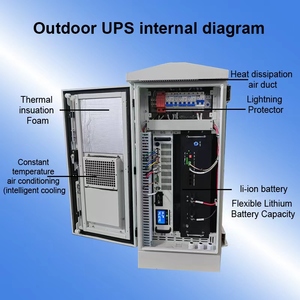
Integrated lightning arrestor protection, thermal management, and wide temperature tolerance for remote base stations and field posts.
Contact Us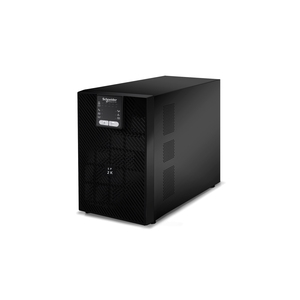
Specialized grid-interactive converter designed for off-grid military microgrids, forward operating bases, and harsh renewable installations.
Contact UsIn modern defense electronics, land vehicle systems, naval combatants, and aerospace platforms, power conversion efficiency and electromagnetic compatibility (EMC) represent the operational backbone of mission success. Sourcing defense-grade DC-DC converters, Mil-COTS AC-DC front-ends, EMI filters, and field-grade uninterruptible power supplies (UPS) from China wholesale manufacturers requires rigorous technical evaluation. Leading Chinese OEMs and original design manufacturers (ODMs) have evolved beyond high-volume consumer assembly to become dominant powerhouses in sophisticated, high-density, conduction-cooled power electronics built to international military standards.
Military power conversion architectures must withstand non-ideal, harsh electrical environments characterized by transient surge spikes, reverse polarity shocks, extended brownouts, and high harmonic distortions. As defense equipment transitions toward higher power density—driven by modern radar, electronic warfare (EW) suites, tactical communications, and autonomous unmanned vehicles—the necessity for synchronous-rectifier planar transformer topologies becomes paramount. Chinese defense power manufacturers utilize state-of-the-art automated SMT lines, military-grade potting encapsulation, and strict derating methodologies to deliver robust power conversion solutions at competitive wholesale economics.
When procuring military converters from OEM manufacturers, compliance verification against recognized international and defense standards is mandatory. The following matrix outlines the primary baseline qualifications satisfied by top-tier military converter manufacturers:
| Standard | Platform / Application | Key Technical Requirements & Testing Parameters |
|---|---|---|
| MIL-STD-704 (A through F) | Military Aircraft & Avionics | Aircraft electric power characteristics, voltage transients, frequency modulation, dropouts, and 400Hz 3-phase power factor compliance. |
| MIL-STD-1275 (D/E) | Heavy Tactical Ground Vehicles | 28V DC electrical input requirements, withstanding 100V / 50ms voltage surges, 250V spikes, and severe cranking dropouts. |
| MIL-STD-461 (C through G) | Defense Subsystems (EMI/EMC) | Conducted Emissions (CE101, CE102), Conducted Susceptibility (CS101, CS114), and Radiated Susceptibility/Emissions control. |
| MIL-STD-1399 (Sec 300B) | Naval Shipboard Equipment | Shipboard AC power interface, handling line voltage imbalance, high harmonic currents, and low electromagnetic interference. |
| MIL-STD-810 (G/H) | Harsh Environment Operations | Mechanical shock, sine/random vibration, salt fog corrosion, mold/fungus growth, and extreme operating temperatures (-40°C to +100°C baseplate). |
| RTCA DO-160G | Commercial Airborne Equipment | Environmental conditions and test procedures for airborne equipment, including high-altitude decompression and dielectric withstand. |
| EN 50155 / EN 50121-3-2 | Railway Rolling Stock | Railway electronics compliance, wide input ranges (24V, 48V, 72V, 110V nominal), S2 hold-up time, and vibration immunity. |
Top-tier manufacturing facilities in China leverage continuous process refinement under ISO-9001 and AS9100 quality management systems. By adopting two-stage power topologies with active synchronous rectification, lossy diodes are eliminated in favor of dynamically driven high-speed MOSFETs or Wide Bandgap (WBG) switches, reducing thermal output by up to 40% compared to legacy architectures.
Every military-grade converter batch undergoes full automated optical inspection (AOI), X-ray component inspection, environmental stress screening (ESS), and thermal cycling burn-in from -55°C to +105°C to ensure zero-defect shipment.
By pioneering high-frequency synchronous rectification and planar magnetics, our converters achieve efficiency figures exceeding 95-96%. Lower internal heat dissipation minimizes total weight and eliminates noisy cooling fans.
We specialize in direct OEM/ODM engineering, designing drop-in replacement bricks (quarter-brick, half-brick, full-brick) that match legacy physical dimensions while drastically improving electrical performance and lifecycle protection.
Utilizing military-spec silicone and polyurethane encapsulation, converter modules are fully sealed against water immersion, salt spray, fine dust, corrosive atmospheric agents, and extreme mechanical shocks per MIL-STD-810G.
Unlike standalone vendors, Chinese OEM leaders offer integrated power chains—combining active 3-phase Power Factor Correction (PFC) modules, transient filters, and isolated DC-DC converters designed to pass MIL-STD-461G effortlessly.
To support defense infrastructure spanning 20+ years, our manufacturing facilities guarantee long component lifecycles, transparent product roadmaps, and documented derating data for uninterrupted long-term procurement.
The global defense sector is undergoing a monumental shift in power delivery paradigms. Driven by the miniaturization of tactical electronics, high-altitude long-endurance (HALE) UAVs, and directed-energy equipment, defense OEMs are demanding higher performance parameters from wholesale power converter manufacturers. Understanding these key technological vectors is critical for procurement officers and system integrators seeking long-term strategic advantages.
Gallium Nitride (GaN) and Silicon Carbide (SiC) power switches are replacing traditional Silicon MOSFETs in high-reliability military converters. WBG devices offer higher breakdown voltage, faster switching frequencies (up to several megahertz), and significantly reduced switching losses. Chinese manufacturers are rapidly incorporating GaN-on-Silicon and SiC power modules into quarter-brick and half-brick DC-DC converters, yielding power density jumps from 50 W/in³ to over 150 W/in³ without compromising thermal margins.
Analog-controlled power conversion is giving way to fully digital control loops utilizing DSPs and ARM Cortex microcontrollers. Modern military converters feature integrated PMBus or CANbus interfaces, allowing vehicle mission computers to dynamically monitor rail voltages, thermal junction status, load current levels, and predictive failure diagnostics in real time. This digital observability enables adaptive thermal throttling and intelligent power distribution across critical defense payloads.
Modularity is standardizing around the SOSA™ (Sensor Open Systems Architecture) and VITA 62 standards. Wholesale manufacturers in China are expanding production lines for 3U and 6U VPX power supply units (PSUs). These ruggedized plug-in power units deliver high-density 28V, 12V, and 3.3V DC buses directly to VITA backplanes, featuring wedge-lock conduction cooling frames engineered for rapid field replacement without tools.
Global defense contractors are restructuring procurement strategies toward high-agility wholesale manufacturers who offer dual-sourcing capabilities, total component traceability, and independent material test reports (MTR). Wholesale procurement from established Chinese manufacturers allows defense prime contractors to mitigate supply chain bottlenecks, cut lead times from 52 weeks to under 12 weeks, and lower non-recurring engineering (NRE) costs significantly.