Engineered for high power density, synchronous rectification efficiency, extreme thermal immunity, and complete compliance with global defense, rail, avionics, and industrial automation standards.
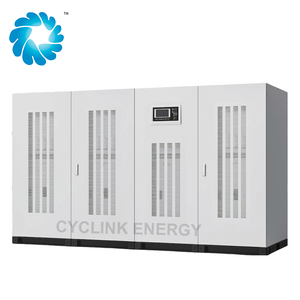
Heavy-duty online double-conversion UPS featuring advanced BMS, wide ambient temperature tolerance, and high isolation transformers.
Contact Us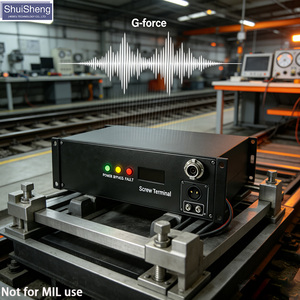
Hermetic enclosure design engineered against salt mist, high humidity, and extreme dust for harsh coastal and industrial environments.
Contact Us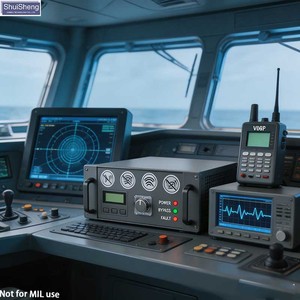
Tested to MIL-STD-810G shock and vibration thresholds. Conduction-cooled baseplate for continuous full-load uptime.
Contact Us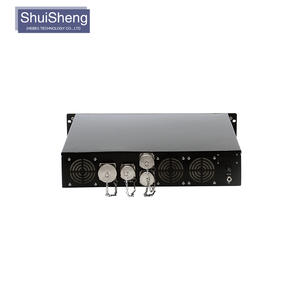
Dedicated rolling stock power conversion module supporting wide catenary input swings, Class S2 hold-up, and zero transfer time.
Contact Us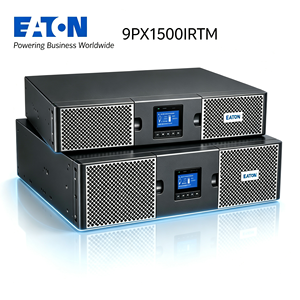
Unity power factor (1.0), 1U/2U form factor, optimized for naval shipboard racks, industrial automation control cabinets, and edge nodes.
Contact Us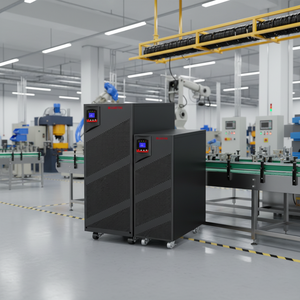
DSP digital control platform, active PFC front-end (>0.99), parallel redundant capability for high-availability IDC mission-critical loads.
Contact Us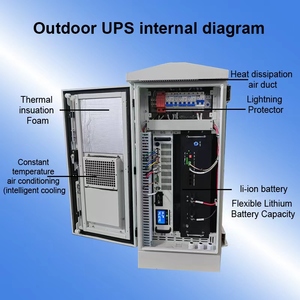
Includes multi-stage surge arrestors (MIL-STD-1275/IEEE C62.41), pole-mountable aluminum enclosure, and long-life energy storage.
Contact Us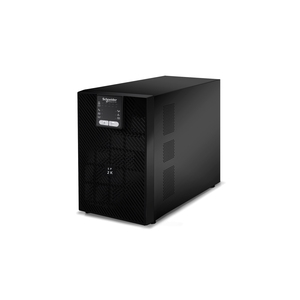
Designed specifically for nacelle climate controls, pitch adjustments, and renewable energy substations subject to grid fluctuations.
Contact UsRedefining power conversion density and reliability through synchronous rectification innovation, AS9100/ISO-9001 certified quality controls, and advanced supply chain integration.
In the modern industrial power sector, selecting a primary OEM/ODM partner for power converters is a decision that governs long-term operational uptime, thermal management overhead, and system-level compliance. As a premier China wholesale industrial converter manufacturer, our state-of-the-art facilities bridge the gap between cost-effective large-scale production and uncompromising aerospace-grade engineering standards.
Our core manufacturing philosophy centers on eliminating the thermal bottlenecks inherent in conventional power converter modules. By replacing lossy Schottky diodes with actively driven MOSFET synchronous rectification topologies, our engineering teams consistently deliver isolated DC-DC converters, AC-DC front-ends, and uninterruptible power supplies (UPS) that achieve full-load conversion efficiencies up to 96.5%. This dramatic reduction in internal thermal dissipation directly yields smaller heatsink footprints, enables hermetically sealed IP68 conduction-cooled enclosures, and extends system Mean Time Between Failures (MTBF) beyond 2.5 million hours under MIL-HDBK-217F conditions.
Equipped with high-speed Yamaha and Fuji Surface Mount Technology (SMT) lines capable of placement precision down to 0201 components, high-density planar transformers, and thick-film hybrid substrates.
Every industrial converter undergoes 100% Automated Optical Inspection (AOI), X-ray solder joint inspection, dynamic ESS environmental stress screening, and full-load high-temperature burn-in prior to dispatch.
From custom pinout brick form-factors (1/16th to full brick) to complete NEMA/IP68 cabinet power distribution systems, our R&D team executes full electrical, thermal, and mechanical design cycles.
Understanding the physics behind low-dissipation power conversion: How 2-stage topologies, active PFC front-ends, and planar magnetics redefine industrial operational limits.
In conventional high-current industrial converters, secondary-side rectification accounts for more than 50% of total power loss. The standard forward voltage drop ($V_f$) of Schottky diodes (typically 0.4V to 0.6V) creates a severe thermal bottleneck. When operating at high currents—such as 50A or 100A output—the power dissipation at the diode array quickly climbs to 30W–60W purely as conduction loss.
Our industrial converter designs replace secondary diodes with ultra-low $R_{DS(on)}$ N-channel MOSFETs, actively controlled by high-speed synchronous drivers. By reducing the conduction path resistance to micro-ohm levels ($m\Omega$), power dissipation drops exponentially ($P = I^2 \times R_{DS(on)}$). This architectural leap allows our factory to produce half-brick and quarter-brick DC-DC converters capable of delivering several hundred watts without requiring bulky external heat sinks or high-CFM forced-air fans.
Industrial power grids, rolling stock catenaries, and heavy equipment buses are notoriously noisy environments characterized by severe voltage spikes, brownouts, and inductive load dumps. To achieve stable output regulation under compliance standards like MIL-STD-1275D, MIL-STD-704F, and EN 50155, our converters utilize an optimized two-stage topology:
| Industry Sector | Target Standards | Nominal Input Range | Key Engineering Isolation & Immunity Features |
|---|---|---|---|
| Defense & Aerospace | MIL-STD-704(A-F), MIL-STD-461(C-F), MIL-STD-1275 | 28VDC, 115VAC (400Hz), 270VDC | Continuous transient immunity up to 100V; low EMI conducted signature; extreme vibration tolerance. |
| Railway Rolling Stock | EN 50155, EN 50121-3-2, RIA 12 | 24V, 48V, 72V, 110V DC Nominal | Wide 66% to 143% continuous input range; Class S2 / C1 hold-up time capability; shock/vibration proof. |
| Medical Equipment | EN 60601-1 3rd Ed, IEC 60601-1-2 ed 4.0 | 85V – 264VAC Universal Input | 2x MOPP (Means of Patient Protection); ultra-low earth leakage current (<100µA); active PFC. |
| Heavy Industrial Automation | IEC/EN 62368-1, EN 61000-6-2/4 | 9V–36V, 18V–75V Ultra-Wide DC | Conduction cooling baseplate; IP67/68 sealed option; operational temp from -40°C to +100°C. |
How global enterprise buyers and OEM engineers are restructuring supply chains, evaluating Wide Bandgap (WBG) semiconductors, and prioritizing Total Cost of Ownership (TCO).
Procurement teams are shifting specifications toward Gallium Nitride (GaN) and Silicon Carbide (SiC) based power converters. WBG switches permit 3x higher switching frequencies, reducing magnetic component volume by 40% and drastically shrinking overall cabinet size.
Rather than commissioning fully custom power supplies, enterprise buyers favor field-proven COTS (Commercial Off-The-Shelf) standard brick modules configured in parallel. This strategy shortens product development cycles from 18 months to under 8 weeks.
Global original equipment manufacturers are bypassing tier-3 distributors to establish direct OEM/ODM supply agreements with certified China factories. Direct factory collaboration secures component-level supply chain visibility, lower unit costs, and tailored engineering support.
In high-reliability sectors, the initial purchase price of an industrial converter represents less than 15% of its cumulative lifecycle cost. System failures caused by cheap, unvetted converters lead to expensive field recalls, unscheduled industrial downtime, and severe brand damage.
When sourcing from a China wholesale converter manufacturer, procurement officers must demand comprehensive engineering qualification data, including:
Where power electronics engineering is headed: Digital telemetry, intelligent thermal management, and extreme density integration.
Modern industrial automation ecosystems demand real-time diagnostics and predictive maintenance capabilities. Next-generation industrial converters are transitioning from purely analog control loops to mixed-signal Digital Signal Processors (DSP). Integrated PMBus or CANbus interfaces allow host system controllers to dynamically monitor input voltage, output load currents, internal baseplate temperature, and early signs of capacitor degradation before catastrophic field failure occurs.
Historically, power system designers were forced to stock multiple converter part numbers to support varying nominal DC voltages (e.g., 24V, 48V, 72V, 110V). Advanced converter topologies pioneered by our R&D team now deliver 10:1 ultra-wide input voltage ranges (e.g., 9V to 150V continuous input). This allows a single standardized converter module to operate seamlessly across automotive, industrial battery, and high-voltage rail catenary systems, drastically simplifying inventory management for global distributors and OEMs.
As industrial automation hardware is deployed closer to the edge—often exposed to severe outdoor weather, high dust, or chemical washdowns—traditional fan-cooled power supplies are no longer viable. The future belongs to baseplate conduction-cooled power modules encapsulated in thermally conductive epoxy resins. These units dissipate heat through aluminum enclosure walls or cold plates, achieving silent, fanless operation with zero dust ingress.
Direct technical and commercial answers for system integrators, OEM designers, and global sourcing managers.
Our industrial converters are built specifically for harsh operational environments. Unlike commercial power supplies that rely on standard diode rectification and electrolytic capacitors rated for 85°C, our industrial modules utilize active synchronous rectification, solid tantalum/ceramic planar capacitors, and heavy-copper PCB traces. Furthermore, our units undergo 100% environmental stress screening, vibration testing, and thermal burn-in, achieving MTBF ratings exceeding 2.5 million hours under demanding industrial conditions.
Yes. We offer extensive turnkey OEM/ODM customization services. Whether you require a drop-in Form-Fit-Function replacement for an obsolete competitor module or a complete custom multi-channel output power system, our engineering team can adapt mechanical enclosures, PCB layouts, connector types, and electrical pinouts within 6 to 8 weeks.
Our converters are engineered with integrated multi-stage LC filters and active transient voltage suppression circuits. When paired with our companion EMI filter modules, the complete converter chain complies fully with stringent military and industrial EMC standards, including MIL-STD-461 (C, D, E, F), RTCA/DO-160G section 22, and EN 55032 Class B conducted/radiated emission limits.
For standard off-the-shelf industrial converter bricks, our MOQ starts as low as 10 to 50 units for evaluation samples, with standard production lead times of 2 to 4 weeks. For custom OEM/ODM projects, lead times typically range from 6 to 8 weeks for prototype delivery following design freezing. We also support buffer stock agreements for long-term production contracts.
Our manufacturing facility operates strictly under AS9100D and ISO 9001:2015 quality management systems. Our product portfolio holds certifications and test verifications against CE, UL/cUL 62368-1, EN 50155 (Railway), EN 60601-1 (Medical 3rd Edition), RoHS 3.0, REACH, and IP68 dust/water ingress compliance.
Submit your input bus requirements, load profiles, mechanical constraints, and compliance target list. Our senior power electronics application engineers will deliver a comprehensive thermal, EMI, and topology review within 24 hours.
Contact Us