Field-proven power conversion solutions engineered for railway signaling, aviation, metallurgy, marine defense, and extreme harsh-environment telecommunications.
In modern mission-critical infrastructure—spanning rail transit networks, high-altitude avionics, smart grid energy storage, and industrial automated manufacturing—the requirement for high-density, ultra-reliable high-voltage power converters has evolved from standard electrical conversion to complex system-level power management.
As premier China wholesale high-voltage converter manufacturers and suppliers, our engineering standard integrates two-stage topology with active synchronous rectification. By replacing conventional Schottky lossy diodes with actively driven, low-Rds(on) MOSFETs and Wide-Bandgap (WBG) Silicon Carbide (SiC) devices, our power modules dramatically minimize internal thermal dissipation. This breakthrough allows systems to operate at peak efficiency under continuous full-load conditions within hermetically sealed, conduction-cooled IP67/IP68 enclosures without requiring vulnerable forced-air fan cooling.
Furthermore, managing complex electromagnetic interference (EMI) is paramount. High-voltage DC-DC converters and AC-DC front-end modules often suffer from high dV/dt transient spikes during fast switching cycles. Our integrated EMI filtering units ensure compliance with demanding global standards—such as MIL-STD-461 (C-F), MIL-STD-704 (A-F), RTCA DO-160G, and EN 50155—guaranteeing that input power noise, line surges, and harmonic distortion remain tightly controlled across all operational environments.
From component derating to rigorous multi-stage qualification, our industrial high-voltage conversion platforms eliminate supply chain risks and technical integration bottlenecks.
Utilizing proprietary switching control algorithms, active synchronous rectification achieves up to 96.5% power conversion efficiency, eliminating excessive heat generation and lowering total system power consumption.
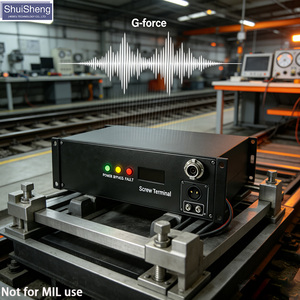
Engineered to meet IP68 ingress protection with MIL-STD-810G shock and vibration immunity. Advanced anti-salt spray, anti-mold, and anti-corrosion conformal coatings safeguard electronics in marine and tropical climates.
Supports broad input voltage swings (up to 800V DC or 3-Phase 480V AC) with active Power Factor Correction (PFC > 0.99), ensuring compliance with international harmonic emission guidelines such as EN 61000-3-2.
We solve product obsolescence for defense, railway, and industrial infrastructure programs by offering guaranteed form-fit-function replacement availability and archived qualification testing documentation for 15+ years.
Our automated production facilities feature rigorous full-load automated screening, thermal stress cycling, and 100% burn-in testing to guarantee zero-defect operational readiness before factory release.
Need custom voltage rails or specialized mechanical form factors (half-brick, full-brick, or 1U/2U/3U rackmount units)? Our engineering staff delivers rapid prototype turnaround with fully derated magnetic components.
Compare key performance parameters, compliance profiles, and structural topologies tailored for demanding enterprise deployments.
| Application Sector | Input Voltage Scope | Peak Efficiency | Isolation Rating | Primary Compliance Standard | Thermal Management Method |
|---|---|---|---|---|---|
| Railway Rolling Stock | 24V – 110V DC Continuous (14.4V–154V Transient) | 94.5% | 3000V AC / 4200V DC | EN 50155, EN 50121-3-2, RIA 12 | Conduction Baseplate / Natural Convection |
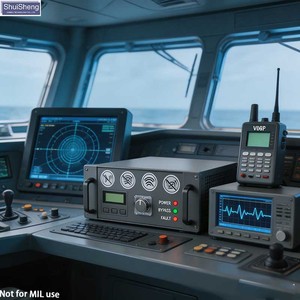
| Naval & Marine Defense | 115V / 440V 3-Phase AC (47-63Hz / 400Hz) | 95.8% | 2500V RMS | MIL-STD-1399, MIL-STD-461G, MIL-S-901D | Liquid Cooling / Sealed Heavy Plate Heatsink |
| Aviation & Defense Flight Electronics | 28V DC / 115V AC (360 Hz – 800 Hz Variable) | 96.2% | 1500V DC | RTCA DO-160G, MIL-STD-704F, ABD0100 | Cold-Wall Conduction / Low Profile Bricks |
| Telecom Outdoor Base Stations | -48V DC (-36V to -75V DC) / 220V AC Mains | 96.5% | 2250V DC | GR-63-CORE, IP68 Corrosion Resistance | Finned Anodized Aluminum Outdoor Enclosure |
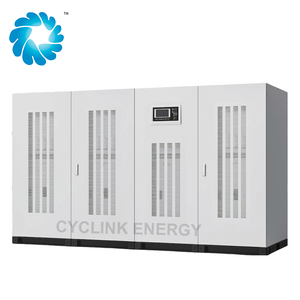
| Heavy Industrial & Metallurgy UPS | 380V / 400V / 415V 3-Phase AC Online Double Conv. | 95.0% | 4000V AC Reinforcement | IEC 62040-3, EN 61000-6-2 (Heavy Industrial) | Redundant Smart Variable-Speed Blowers |
As global buyers evaluate wholesale suppliers in China, the landscape for high-voltage power conversion is experiencing significant technological transformations driven by decarbonization, electrification, and digital monitoring needs.
Traditional silicon MOSFETs are reaching their physical limits regarding breakdown voltage and switching speed. Procurement trends indicate a rapid transition to Silicon Carbide (SiC) and Gallium Nitride (GaN) switching topologies. SiC devices allow high-voltage converters to operate at drastically elevated switching frequencies with lower switching losses, reducing the size of passive magnetic components (transformers and inductors) by up to 40% while maintaining thermal integrity at junction temperatures exceeding +150°C.
Modern industrial UPS units and DC-DC converters are increasingly required to support bidirectional energy flow. Rather than serving purely as unidirectional backup devices, next-generation high-voltage converters act as dynamic node controllers in microgrids—enabling smooth power transfer between high-voltage DC buses (400V–800V DC), battery banks, and local AC power networks during peak-shaving periods.
To reduce Mean Time to Repair (MTTR), industrial operators are phasing out monolithic, non-redundant power supplies. Global procurement mandates now demand N+1 or N+2 modular redundant systems where individual high-voltage converter bricks or UPS power modules can be hot-swapped live without dropping downstream loads. This shift significantly lowers Total Cost of Ownership (TCO) across 20-year asset lifecycles.
High-voltage converters are no longer isolated black boxes. Wholesale purchasers now prioritize smart power conversion modules equipped with PMBus, CANbus, or Modbus industrial communications protocols. Real-time telemetry monitoring of input voltage transients, internal thermal hotspots, capacitor degradation, and load profiles enables predictive maintenance algorithms before field failures occur.
Technical and commercial clarifications for OEM project managers, procurement specialists, and system integrators.
Industrial high-voltage converters feature extended input ranges (up to 800V DC or 480V 3-Phase AC), superior dielectric isolation (3000V–4200V DC), wide operating thermal envelopes (-40°C to +85°C), and rugged mechanical packaging. Unlike commercial supplies, they are fully derated for continuous full-load execution under high shock, vibration, and EMI noise stress.
Active synchronous rectification replaces traditional diodes with power MOSFETs featuring ultralow Rds(on). Because the conduction voltage drop across a MOSFET is considerably lower than a diode's forward voltage drop, power dissipation is reduced by tens of watts at high currents, increasing peak converter efficiency up to 96.5%.
Railway systems require EN 50155 (electronic equipment on rolling stock), EN 50121-3-2 (EMC), and EN 45545-2 (fire/smoke standard). Defense and avionics platforms require MIL-STD-704 (aircraft electrical power), MIL-STD-461 (EMC immunity), MIL-STD-1275 (28V DC vehicle power surges), and RTCA DO-160G.
Custom transformer winding layouts optimize coupling coefficients, minimize leakage inductance, and mitigate inter-winding capacitance. This prevents dangerous voltage spikes during rapid switching, ensuring tight voltage regulation and high immunity against transient input surges without breakdown.
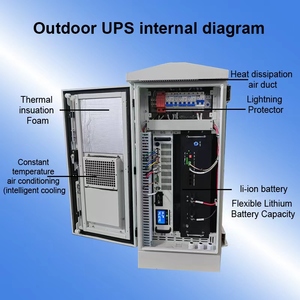
Yes. Our outdoor IP68 ruggedized UPS power systems utilize heavy-duty anodized aluminum or 316 stainless steel enclosures sealed against salt fog. Internal circuit boards are treated with multi-layer military-grade conformal coatings to prevent mold growth, salt corrosion, and moisture ingress.
Standard catalog converter modules and standard UPS systems are available for rapid sample delivery within 1 to 2 weeks. Custom OEM designs—including custom input filtering, specific pinouts, or modified mechanical enclosures—typically take 4 to 6 weeks for prototyping and full qualification testing.
Consult with our senior power application engineers to review your input voltage requirements, load profiles, thermal boundary conditions, and regulatory compliance standards.