Engineered to eliminate voltage sags, surges, harmonic distortion, and power interruptions in harsh mission-critical environments.
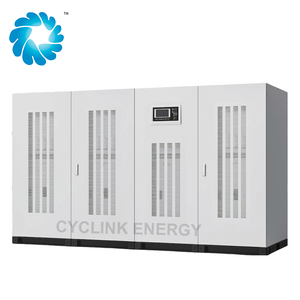
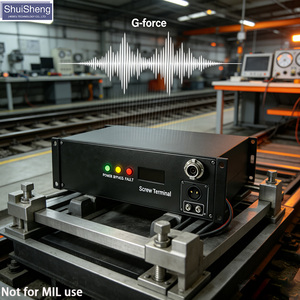
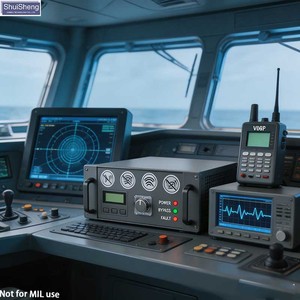
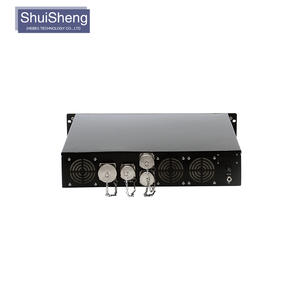
An authoritative breakdown of topologies, thermal dissipation physics, and global procurement strategies for mission-critical industrial electrical systems.
In modern industrial manufacturing, power grid volatile disturbances—such as high-voltage transients, sub-cycle sags, phase unbalance, and harmonic pollution—represent the primary cause of unplanned downtime, CNC spindle degradation, and sensitive automated equipment reset failures. Selecting the appropriate voltage regulation topology requires an engineering trade-off between correction speed, power handling efficiency, mechanical wear, and total cost of ownership (TCO).
| Performance Metric | Electromechanical Servo Voltage Stabilizer | Static Thyristor (SCR) Voltage Regulator | Solid-State IGBT-PWM Active Voltage Conditioner |
|---|---|---|---|
| Correction Speed | Slow (20 to 100 V/s) | Medium (10 to 40 ms) | Ultra-Fast (< 2 ms continuous response) |
| Voltage Output Accuracy | ± 1.0% to ± 3.0% | ± 1.5% to ± 2.5% | ± 0.5% High-Precision Output |
| Moving Parts / Maintenance | Carbon brushes, motor gearboxes (High Wear) | Solid-state static taps (No moving parts) | Fully electronic static topology (Zero maintenance) |
| Harmonic Distortion (THD) | Zero distortion introduced | Minor phase-angle switching harmonics | Actively attenuates line harmonic voltage |
| Unbalanced Load Protection | Limited by mechanical phase regulation speed | Independent 3-phase phase-angle correction | Instantaneous 100% phase-decoupled voltage balancing |
| Ideal Industrial Field Use | Non-critical continuous plants, large transformers | Heavy industrial motors, commercial building main drop | Semiconductor fabs, medical imaging, precision CNC, defense |
Engineering Gain Note: While servo-driven regulators offer low initial capital expenditure for bulk power distribution, advanced semiconductor lines, CNC machining hubs, and medical diagnostic facilities increasingly mandate IGBT-based Solid-State Static Voltage Conditioners due to their sub-2ms dynamic latency, preventing micro-cuts and voltage sags from disrupting automated assembly lines.
The primary operational limitation of sealed industrial voltage regulators and outdoor IP68 power systems stems from internal power conversion heat dissipation. Traditional rectifier-based regulators utilize Schottky or silicon diode bridges, which introduce a fixed forward voltage drop ($V_F \approx 0.7\text{V}$ to $1.1\text{V}$). Under high current loads (e.g., 200 Amperes), conduction losses within the diode bridge create substantial thermal stress ($P_{\text{loss}} = I \times V_F \approx 140\text{W}$ to $220\text{W}$ purely in diode dissipation), mandating noisy forced-air fan cooling that ingests dust, moisture, and corrosive chemicals.
Leading Chinese manufacturing partners and high-reliability engineers overcome this constraint through Synchronous Rectification Technology and a proprietary Two-Stage Converter Topology. By replacing passive lossy diodes with actively driven, ultra-low $R_{DS(\text{on})}$ N-channel MOSFETs, conduction drop is reduced to fractions of a millivolt:
This extreme reduction in internal thermal headroom enables true conduction-cooled, sealed baseplate thermal architectures. The regulator chassis can be fully enclosed without external ventilation holes, achieving IP65 to IP68 ingress protection ratings essential for railway rolling stock, marine shipboard installations, and chemical metallurgy processing plants.
Deploying industrial voltage regulators across international infrastructure requires stringent compliance with electromagnetic compatibility (EMC) and mechanical environmental shock standards. Standard commercial-grade off-the-shelf (COTS) voltage stabilizers often fail field commissioning due to conducted switching noise bleeding back into the primary utility transformer or high sensitivity to severe voltage transients on unconditioned lines.
Tier-1 Chinese exporters engineer comprehensive filter-converter integrated chains designed to meet and exceed global qualification mandates:
How global enterprise buyers and OEM engineers can future-proof their electrical power supply supply chain.
Transitioning from traditional Silicon IGBTs to Silicon Carbide (SiC) MOSFETs allows switching frequencies to increase from 20 kHz up to 200 kHz+. This drastically reduces the physical footprint of magnetic inductors and transformers by up to 50% while pushing total system energy efficiency beyond 98.5%.
Modern industrial regulators are evolving into smart grid sensors. Integrated SNMP, Modbus TCP, and CAN bus protocols transmit continuous telemetry—monitoring internal thermal rise, capacitor ESR degradation, grid THD, and transient spike counts to predict failure long before downtime occurs.
With high penetration of rooftop solar PV and wind generation, grid voltage fluctuations are becoming non-linear and bidirectional. Advanced voltage stabilizers are now engineered with fast bidirectionally isolated DC-DC stages to handle rapid power reversals and extreme frequency drift.
Enterprise data centers and railway control centers are shifting from monolithic mega-stabilizers toward sub-rack modular 19-inch topologies. Modular N+1 architecture allows live hot-swapping of individual power regulation modules without shutting down downstream critical loads.
Global demand is surging for fully sealed, anti-salt spray, anti-mold outdoor power units capable of continuous operation from -40°C arctic cold to +85°C desert heat, engineered specifically for telecom cell towers and mining operations.
Defense contractors and rail authorities require form-fit-function product longevity guarantees for 20+ years. Leading manufacturers archive complete design bills of materials (BOM) and qualify secondary semiconductor foundries to eliminate single-point supply vulnerabilities.
Delivering military-grade engineering precision, certified quality management systems, and competitive volume manufacturing capabilities.
From raw planar transformer winding and custom magnetic core sintering to automated surface-mount (SMT) component placement and 100% automated optical inspection (AOI), our facilities maintain end-to-end control over the power electronics supply chain. This eliminates subcontractor delays and ensures absolute component traceability.
Every single voltage regulator system undergoes full environmental stress screening (ESS), full-load burn-in at elevated ambient temperatures, and high-voltage dielectric withstand testing (Hi-Pot) prior to export. Quality assurance protocols mirror rigorous international aerospace and defense standards.
Whether you require a custom wide input range (e.g., 80V to 300V AC), specialized form-fit-function (FFF) mechanical drop-in replacements for legacy systems, or custom NEMA/IP rated enclosures, our dedicated power engineering team delivers complete working prototypes in as fast as 4 weeks.
Work directly with senior power electronics application engineers during your design phase. We assist with thermal derating calculations, input line filter impedance matching, PCB thermal layout review, and transient immunity simulation before hardware layout finalization.
Answers to common engineering inquiries regarding industrial voltage regulator selection, custom modification, and international compliance.
Consult with our senior voltage regulation engineers. Send us your input bus range, dynamic load profile, environmental constraints, and target compliance standards for a full technical proposal within 24 hours.