Engineered for mission-critical transportation, aerospace, defense, energy storage, and industrial automation. Qualified under extreme surge immunity and EMI specs.
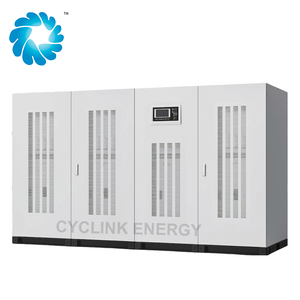
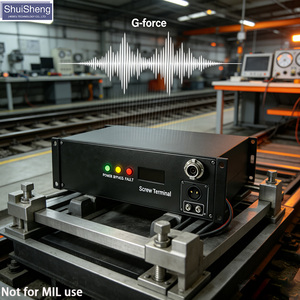
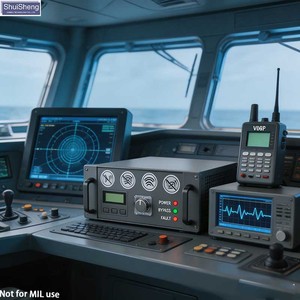
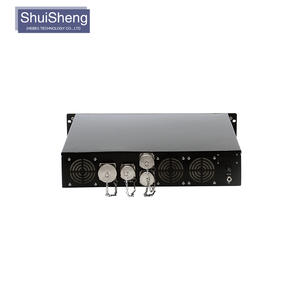
In modern electrical engineering, the distinction between a simple standard Surge Protective Device (SPD) and a heavy-duty industrial Surge Filter (also referred to as a Transient Voltage Surge Suppressor Filter or Active Tracking Filter) lies in continuous noise attenuation and dynamic transient voltage clamping capability. Standard SPDs operate purely as voltage-gated switches—remaining high-impedance until a catastrophic overvoltage spike occurs. In contrast, an industrial-grade surge filter manufactured by leading Chinese exporters combines parallel transient suppression with series inductive-capacitive (LC) low-pass filtering networks.
This dual-topology approach provides comprehensive power line conditioning. It not only diverts high-energy impulse currents up to 100kA (8/20µs waveform) safely to ground, but also actively smooths high-frequency electrical noise, switching transients, ring waves, and electromagnetic interference (EMI/RFI) that degrade sensitive electronic assets in industrial data centers, railway signalling systems, and military installations.
Key Engineering Insight: Conventional Metal Oxide Varistors (MOVs) suffer cumulative degradation when subjected to repetitive sub-clamping transients. High-reliability surge filters incorporate heavy-duty Gas Discharge Tubes (GDTs), Silicon Avalanche Diodes (SAD), and specialized series chokes to prevent premature MOV thermal runaway while maintaining let-through voltages under IEEE C62.41 Category C specifications.
Our engineered surge filter architectures utilize a three-stage hybrid matrix tailored for harsh electrical environments:
Reaction speed of <1 nanosecond clamps lightning and switching transients before downstream silicon equipment suffers breakdown.
Continuously tracks the AC sinusoidal voltage waveform, clamping ringing transients that occur anywhere along the 50Hz/60Hz cycle.
Internal fail-safe thermal cutoffs isolate degraded protection elements automatically, eliminating fire risks under sustained temporary overvoltage (TOV).
As a leading OEM/ODM surge filter supplier and exporter based in China, our manufacturing facilities adhere strictly to internationally recognized electrical, mechanical, and safety standards. Every production lot undergoes automated high-pot testing, impulse wave withstand verification, and thermal derating validation.
| Standard Certification | Target Industry / Application | Engineering Specification Envelope |
|---|---|---|
| IEC / EN 61643-11 | Low-Voltage Surge Protective Devices | Class I (Iimp 10/350µs) & Class II (In 8/20µs) verification; Voltage protection level Up < 1.2kV. |
| UL 1449 5th Edition | North American Industrial Installations | Type 1, Type 2, and Component Assemblies; Short Circuit Current Rating (SCCR) up to 200kA. |
| MIL-STD-461G / 1275E | Military Land, Airborne & Naval Defense | Conducted emissions & susceptibility; 250V surge spikes and spike immunity under rugged conditions. |
| EN 50155 / EN 50121-3-2 | Railway Rolling Stock & Trackside | Vibration withstand Class 1B, EMC emission/immunity, ambient operating range -40°C to +85°C. |
| IEEE C62.41.2 / C62.45 | Power Systems & Facilities Protection | Cat A, B, C combination wave (1.2/50µs - 8/20µs) and 100kHz ring wave surge environment testing. |
| RTCA DO-160G | Commercial Aviation Avionics | Section 16, 17, & 22 lightning transient susceptibility and AC line power input compliance. |
Equipping global projects with surge filters certified under these rigorous frameworks guarantees interoperability, long field lifespans exceeding 15–20 years, and compliance with tender technical requirements for municipal infrastructure, telecom upgrades, and industrial plant automation.
The global electrical power protection market is undergoing a rapid paradigm shift. As high-density silicon carbide (SiC) and gallium nitride (GaN) power semiconductors displace traditional silicon in renewable energy inverters, electric vehicle (EV) charging stations, and data center power supplies, electrical grids are facing unprecedented levels of high-frequency noise and fast dV/dt switching spikes. Procurement managers and electrical engineering directors must evaluate several key trends when sourcing surge filters from top Chinese manufacturers:
Legacy surge suppressors were passive "install-and-forget" components that offered visual color flags (green/red) for status reporting. Next-generation smart surge filters incorporate microcontroller-based telemetry, embedded current sensors, and Modbus/RS485 or wireless IoT communication interfaces. These units continuously log real-time parameters including:
Sourcing teams are increasingly rejecting pure-MOV surge suppressors for critical infrastructure. Modern high-reliability specifications mandate non-degrading or low-stress hybrid designs. By pairing high-speed GDTs with self-healing metallized polypropylene film capacitors and active semiconductor clamping circuits, modern surge filters absorb thousands of transient events without shifting clamping thresholds or suffering thermal degradation.
Space constraints inside industrial control cabinets, 5G telecom small cells, and equipment enclosures are driving demand for high-density form factors. Chinese exporters have mastered multi-layer PCB design, planar magnetic chokes, and direct-bond aluminum substrates, allowing 100kA-rated surge filters to be packaged into standard 35mm DIN-rail modules or ultra-compact quarter-brick and half-brick footprints for PCB mounting.
Global EPC contractors and OEMs require absolute supply chain transparency. Leading Chinese surge filter manufacturers maintain ISO 9001 and AS9100 quality management systems, utilizing fully automated SMT mounting lines, 100% automated optical inspection (AOI), and full component lot traceability down to the raw MOV disk and copper wire batch levels.
Selecting the right surge filter supplier is a high-stakes decision that directly impacts operational uptime, equipment replacement costs, and brand reputation. As a premier Chinese manufacturer specializing in power quality engineering and surge suppression, our factory combines deep technical expertise with global export capabilities.
Equipped with 10/350µs and 8/20µs impulse generators, thermal endurance test chambers, and EMI spectrum analyzers for full design validation before shipment.
From custom voltage ratings (12VDC to 690VAC 3-phase) to custom enclosure protection (IP20 to IP68 NEMA 4X), our engineering team designs bespoke solutions within 3–4 weeks.
High-volume automated SMT and potting lines ensure competitive B2B pricing, rapid lead times, and seamless export handling to over 80 countries worldwide.
Quality Guarantee: Every industrial surge filter leaving our production facility undergoes 100% high-potential voltage dielectric testing, visual inspection, and dynamic impulse clamping verification. We back our products with standard 5-year to 10-year factory replacement warranties.
Technical and procurement insights for engineers, buyers, and system integrators.
A standard Surge Protective Device (SPD) is a parallel connected, voltage-gated switch (using MOVs or GDTs) that remains inactive until a voltage surge exceeds its clamping threshold. It diverts high-energy surges to ground but does not filter high-frequency noise or slow down fast dV/dt voltage rises.
A Surge Filter combines parallel surge diversion elements with series-connected inductive chokes and capacitors (LC filtering network). This configuration provides continuous sine-wave tracking, attenuating electromagnetic noise (EMI/RFI) across a broad frequency spectrum while reducing the rate of voltage rise (dV/dt) of incoming surges to protect sensitive digital electronics.
Class I (Type 1) Surge Filters are tested using the 10/350µs impulse current waveform, simulating direct or near-direct lightning strikes. They are installed at main distribution panels, building service entrances, or outdoor exposed facilities where direct lightning currents can enter the power feed.
Class II (Type 2) Surge Filters are tested with the 8/20µs impulse waveform, simulating indirect lightning surges and internal industrial switching transients. They are installed at sub-distribution boards, motor control centers (MCC), or directly in front of critical equipment inside facilities.
Let-Through Voltage (or Voltage Protection Level, Up) is the maximum residual transient voltage that passes through the surge filter to the downstream load during a rated surge impulse. Lower let-through voltage indicates superior protective capability. For 230V sensitive microprocessor systems, keeping let-through voltage below 600V–800V under IEEE combination wave conditions prevents dielectric breakdown of downstream power supplies.
Yes. As custom OEM/ODM exporters, we design and produce surge filters tailored for all global AC and DC power distribution topologies, including 110V/220V single-phase, 208V/380V/485V/690V 3-phase (Wye and Delta networks), IT ungrounded systems, and DC power rails (24V, 48V, 110V, 600V, 1000V, 1500V DC for PV solar and rail rolling stock).
All export products come with comprehensive engineering documentation, including CE Declaration of Conformity, RoHS compliance certificates, ISO 9001/14001 factory audit reports, and third-party laboratory test reports validating IEC 61643-11, UL 1449, MIL-STD, or EN 50155 compliance depending on the model selected.
Whether you require standard DIN-rail surge filters, rugged IP68 outdoor modules, or bespoke MIL-STD military filter assemblies, our engineering experts are ready to assist your procurement team.
