Industrial Power Reliability Whitepaper & Catalog

China Top Line Conditioner Suppliers & Exporters

Engineered Power Conditioning, Voltage Stabilization, EMI/RFI Attenuation, and High-Reliability Clean Power Solutions for Global Industrial Infrastructure.

Industrial Line Conditioners & Uninterruptible Power Systems

Discover our benchmarked export-grade line conditioning units, online UPS systems, and ruggedized power modules designed for mission-critical industrial, naval, and telecom applications.

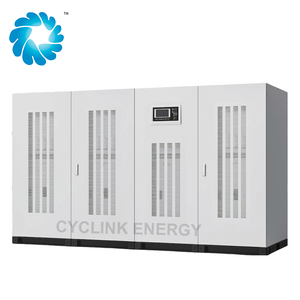
Industrial UPS for Energy for Transportation for Aviation for Metallurgy Socomec VERTIV Battery Backup UPS With Lithium Battery

Industrial UPS & Line Conditioner for Energy, Aviation & Metallurgy

Heavy-duty lithium battery backup line conditioner featuring active voltage regulation, zero transfer time, and industrial-grade galvanic isolation for harsh sub-station environments.

All-weather Rugged Power System Anti Salt Anti Mold Anti Corrosion IP68 Rugged Telecom Outdoor UPS

All-Weather IP68 Rugged Anti-Corrosion Outdoor Line Conditioner

Engineered for extreme coastal and outdoor telecom environments with anti-salt coating, mold resistance, and wide operating temperature range (-40°C to +75°C).

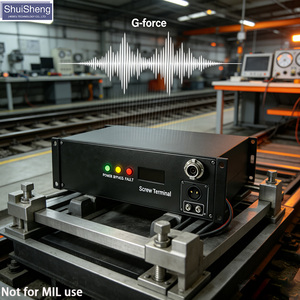
Rugged UPS System for Harsh Environment with Vibration Resistance and Shockproof Industrial Power Design

Vibration-Resistant Shockproof Harsh-Environment Line Conditioner

MIL-STD-810G vibration compliant power conditioning unit designed for heavy machinery, mining operations, and mobile military platforms.

Industrial UPS System Supplier For Railway Signaling Power And Communication Backup

Railway Signaling & Communication Line Conditioning System

EN 50155 certified rail rolling-stock power supply and clean line regulator, protecting critical railway signaling equipment against grid voltage transients.

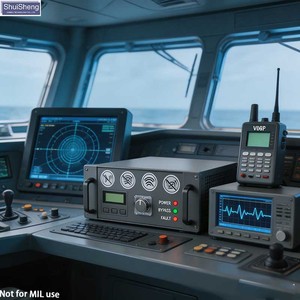
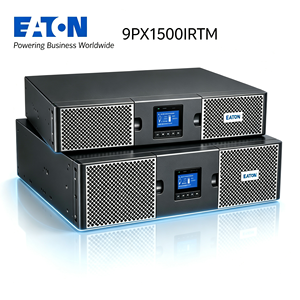
Eaton UPS Uninterruptible Power Supply 9PX1500IRTM 1500VA/1500W Rack-mounted Marine UPS

1500VA / 1500W Rack-Mounted Marine Power Line Conditioner

High-power density rackmount line conditioning UPS with active unity power factor (PF 1.0), tailored for naval vessel navigation systems and maritime electronics.

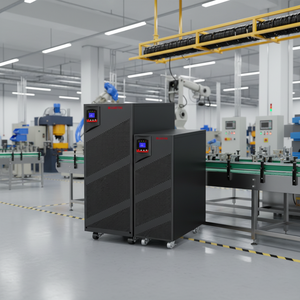
Santak Castle C10K 10kVA Online UPS 380/220VAC For Industrial Data Center & IDC Backup

10kVA Online 3-Phase Precision Line Conditioner & UPS

Double-conversion online power conditioner featuring wide input range (380/220VAC), low THDi, and high efficiency for industrial data centers and automated factories.

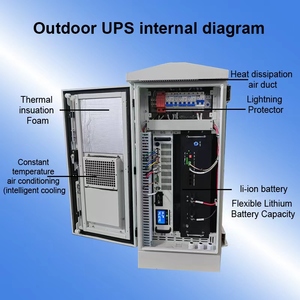
High-quality Outdoor Waterproof Dustproof Online UPS 1KVA with Lightning Protection 8000Wh Capacity for Communication Equipment

1KVA Outdoor Waterproof Line Conditioner with Surge Protection

Dustproof outdoor power regulator built with integrated 10kV lightning protection and high-density 8000Wh battery storage for continuous remote site operation.

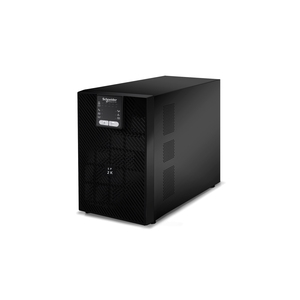
APCSingle Phase Online UPS Power Supply SP1K-W Wind Power Type Dedicated UPS Built-in Battery 800W/1KVA

Single-Phase Wind Power Dedicated Line Conditioner 800W / 1KVA

Specialized power conditioning unit optimized for renewable energy installations, handling sudden pitch control voltage variations and harmonic grid spikes.

25+
Years Industry Innovation
>98%
Peak Conversion Efficiency
ISO/AS
AS9100 & ISO-9001 Certified
80+
Global Export Markets

Industrial Line Conditioning: Architectural Framework & Technical Necessity

In modern industrial automation, precision manufacturing, medical electronics, and critical defense infrastructure, electrical power quality directly impacts operational longevity and system reliability. Grid fluctuations, high-frequency electromagnetic interference (EMI), radio-frequency interference (RFI), switching transients, and dynamic load-induced voltage sags represent major causes of premature equipment failure and operational downtime. As leading China top line conditioner suppliers and exporters, our engineering philosophy revolves around eradicating dirty power at its origin through multi-stage voltage stabilization, galvanic isolation, and high-frequency active power conditioning topologies.

A power line conditioner is fundamentally different from a simple voltage regulator or off-line surge suppressor. While conventional automatic voltage regulators (AVRs) utilize mechanical servo motors or relay-switched autotransformers with response times ranging from 100 milliseconds to several seconds, advanced solid-state line conditioners execute instantaneous voltage correction (<2 milliseconds) using static electronic topologies. Furthermore, enterprise line conditioners incorporate deep harmonic attenuation, common-mode noise suppression, and power factor correction to deliver a pure sinusoidal waveform under severe grid distortions.

Information Gain: Comparing Line Conditioning Topologies

Selecting the optimal power protection architecture requires understanding the trade-offs between dynamic response speed, efficiency, isolation capability, and total harmonic distortion (THD) performance. The matrix below outlines how Chinese export-grade line conditioning technologies compare across critical operational metrics:

Topological Architecture Correction Speed THD Mitigation Isolation Level Ideal Application Domain
Solid-State Active IGBT Line Conditioner < 2 ms Suppression to < 2% THD Galvanic Shielded Isolation Precision CNC, Semiconductor Fab, Robotics
Ferroresonant (Constant Voltage Trans.) Instantaneous (< 1 ms) Sinusoidal Resonant Waveform Complete Galvanic Separation Petrochemical Plants, Extreme Noise Zones
Double-Conversion Online Conditioning UPS 0 ms (Zero switchover) Regenerated Waveform (< 1% THD) Full Double-Isolated DC Bus Mission-Critical Datacenters, Telecommunications
Servo-Motor Industrial Voltage Stabilizer 15 ms – 50 ms / Volt No Waveform Modification Unisolated (Autotransformer) Heavy Metallurgy, High-Power Municipal Motors

Global B2B Procurement Trends in Industrial Line Conditioning (2026–2030)

The global demand for industrial-grade line conditioning systems is undergoing a structural transition driven by the rapid expansion of renewable energy microgrids, high-density AI data centers, electric vehicle (EV) gigafactories, and harsh-environment defense networks. Global procurement directors and system integrators are increasingly turning to top Chinese line conditioner manufacturers due to advanced power semiconductor adoption, integrated supply chain advantages, and rigorous adherence to international compliance frameworks.

Key procurement vectors currently reshaping the global market include:

  • Wide Bandgap Semiconductor Integration (SiC & GaN): Next-generation line conditioners utilize Silicon Carbide (SiC) MOSFETs and Gallium Nitride (GaN) switching components. This allows switching frequencies exceeding 100 kHz, shrinking magnetic components by 40% while elevating thermal power efficiency beyond 98.5%.
  • Wide Temperature & Environmental Ruggedization: Modern export contracts prioritize IP66 to IP68 enclosure ratings, salt-spray anti-corrosion treatments, and conformal board coatings capable of continuous operation in desert ambient heat (+55°C) or sub-zero arctic installations (-40°C).
  • Compliance with Multi-Industry Standards: Leading Chinese exporters now qualify single product lines concurrently against MIL-STD-704, MIL-STD-461, EN 50155 (Railway), IEC 60601-1 (Medical 4th Edition), and IEEE 519 harmonic standards.

Enterprise Core Competencies & Technical Capabilities

Our engineering facility combines over two decades of power conversion research with stringent manufacturing discipline to solve complex power quality challenges worldwide.

Synchronous Rectification & Low Loss

Pioneering the application of active synchronous rectification in isolated high-power modules, replacing conventional lossy rectifiers with active MOSFETs to drastically reduce internal heat dissipation and extend operational lifecycle.

Integrated EMI & Converter Design

Unlike third-party modular assemblies, our line conditioning stages and input EMI filter networks are co-designed and tested as a unified hardware chain, guaranteeing full compliance with MIL-STD-461 and FCC Class A/B requirements.

Strict AS9100 & ISO-9001 Manufacturing

Every line conditioner and power system undergoes 100% full-load thermal burn-in, full-parameter automated testing, and comprehensive component-level lot traceability, ensuring absolute field reliability for international buyers.

Future Development Trends in Power Conditioning Technologies (2026–2030)

As smart manufacturing, autonomous transportation, and distributed energy resources mature, the line conditioner is evolving from a passive power protection box into an intelligent, data-driven power conditioning hub. As top Chinese power electronics exporters, our R&D roadmap targets four major technological vectors:

  1. AI-Driven Edge Power Quality Analytics: Future line conditioners incorporate high-speed Digital Signal Processors (DSPs) embedded with predictive machine learning algorithms. By analyzing micro-second voltage distortion signatures, the system predicts incoming utility grid anomalies, motor bearing degradation, and harmonic resonance conditions before equipment trips occur.
  2. Bi-Directional Solid-State Power Conditioning: Integrating bidirectional power flow topologies enables line conditioners to act simultaneously as voltage stabilizers and localized energy buffers. Under grid surge conditions, excess energy is absorbed into ultra-capacitor arrays or high-rate lithium iron phosphate (LiFePO4) storage, returning stabilized power to the microgrid seamlessly.
  3. Ultra-High Temperature Operation: Utilizing wide bandgap GaN-on-SiC devices and non-liquid ceramic capacitors, line conditioning power density is expanding toward 50 Watts per cubic inch, permitting fanless operation in ambient environments up to +85°C without active derating.
  4. Zero-Carbon Manufacturing Traceability: Aligning with global ESG mandates, Chinese power equipment exporters are standardizing full product life-cycle carbon footprint accounting, high-recyclability aluminum housing designs, and lead-free RoHS/REACH compliant solder processes.

Frequently Asked Questions (FAQ) for Line Conditioner Procurement

Detailed technical answers to common questions asked by electrical engineers, system integrators, and global buyers when evaluating China-manufactured line conditioning solutions.

Q1: What is the fundamental difference between an Automatic Voltage Regulator (AVR) and an Industrial Line Conditioner?

While both devices regulate voltage, an Automatic Voltage Regulator (AVR) primarily corrects steady-state over-voltage or under-voltage conditions via slow tap-changing transformers or mechanical servo motors. An Industrial Line Conditioner is a comprehensive power quality solution: it provides ultra-fast active voltage regulation, eliminates high-frequency noise spikes (EMI/RFI), mitigates Total Harmonic Distortion (THD), and often incorporates a Faraday galvanic isolation shield to decouple load electronics completely from raw utility grid disturbances.

Q2: How do Chinese export line conditioners maintain voltage regulation accuracy under severe 3-phase load imbalance?

High-performance 3-phase line conditioners engineered for export utilize independent 3-phase phase-angle control and individual phase regulating topologies. Rather than averaging output across all three lines, discrete DSP-controlled power inverter bridges monitor and adjust Phase A, Phase B, and Phase C individually. This ensures strict voltage balance (typically within ±1% phase-to-phase regulation) even when operating into a 100% unbalanced load condition on shipboard or industrial sites.

Q3: What international compliance certificates should be verified when importing line conditioners from China?

For industrial, medical, and defense deployment, global buyers should verify compliance with ISO-9001 and AS9100 quality management systems. Product-level certifications include CE (LVD EN 62040-1, EMC EN 62040-2), IEC 60601-1 for medical safety, EN 50155 for railway rolling stock, MIL-STD-810G for environmental shock/vibration, MIL-STD-461 for electromagnetic compatibility, and RoHS/REACH environmental safety declarations.

Q4: How does galvanic isolation inside a line conditioner protect sensitive automated manufacturing equipment?

A galvanically isolated line conditioner incorporates an internal isolation transformer featuring physical copper electrostatic shielding between the primary input and secondary output windings. This mechanical isolation blocks common-mode voltage noise, neutral-to-ground noise potentials, and dangerous lightning-induced ground loops. It prevents electrical noise from cross-contaminating sensitive programmable logic controllers (PLCs), high-resolution sensors, and CNC drive units.

Q5: What derating factors must be applied when operating line conditioners in high-ambient-temperature regions?

Standard line conditioners are typically rated for nominal operation up to +40°C. In extreme environments such as the Middle East or enclosed industrial power rooms exceeding +40°C, a derating curve of approximately 1.5% to 2.5% load capacity per degree Celsius above +40°C should be applied. Alternatively, specifying custom high-temperature lines equipped with Silicon Carbide (SiC) power stages and forced convection heat pipes allows full rated operation up to +60°C without derating.

Q6: What lead times and customization options are typically available for B2B export orders?

Standard off-the-shelf single-phase and 3-phase line conditioner models typically carry production lead times of 2 to 3 weeks. Custom engineering projects—such as anti-corrosion IP68 enclosures, specific military-connector integration, custom voltage taps (e.g., 115V 400Hz airborne or 600V heavy industrial), or specialized lithium backup configurations—are designed, qualified, and manufactured within 4 to 8 weeks, supported by full factory acceptance testing (FAT) documentation prior to export shipment.

Ready to Secure Your Industrial Power Infrastructure?

Consult with our senior application engineers to specify voltage conditioning parameters, harmonic filtering requirements, or customized OEM/ODM export solutions for your platform.