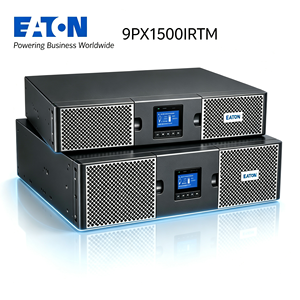
Engineered for extreme environments, heavy-duty industrial automation, railway communications, aviation, and utility-scale energy conversion.
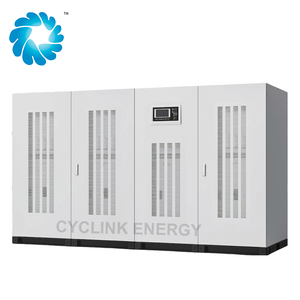
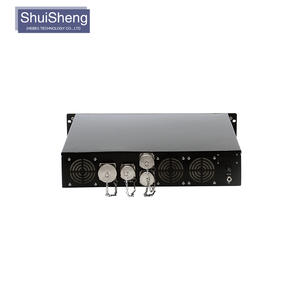
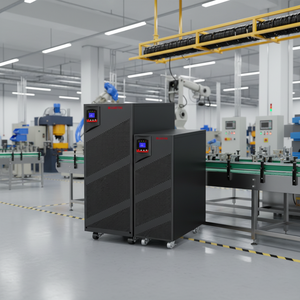
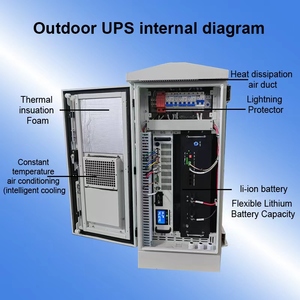
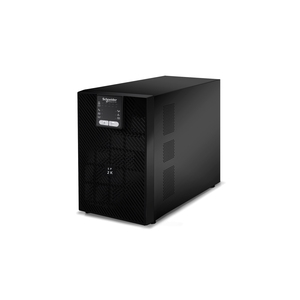
As global power grids undergo a seismic shift toward distributed renewable generation, energy storage integration, and digitized microgrids, selecting a tier-1 grid-tied inverter manufacturer is no longer merely a commercial procurement task—it is a critical engineering milestone.
Modern utility-scale solar installations, commercial & industrial (C&I) microgrids, railway electrification corridors, and marine defense platforms require power conversion topologies that balance high energy density with flawless grid-code compliance. China's top grid inverter manufacturers lead this global transformation by integrating Silicon Carbide (SiC) Wide Bandgap Semiconductors, advanced neutral-point clamped (NPC) 3-level conversion circuits, and dynamic active power factor correction (PFC).
By bridging high-efficiency synchronous rectification with ruggedized enclosure manufacturing (ranging from NEMA 4X to IP68 anti-salt corrosion standards), leading suppliers deliver power systems capable of sustaining continuous full-load operations under extreme thermal, mechanical, and electrical stresses.
Built upon rigorous defense-grade quality management and decades of technological pioneering in synchronous power conversion.
Our production facilities operate under strict AS9100 and ISO-9001 quality management systems. Every grid inverter unit undergoes Automated Optical Inspection (AOI), 100% full-load thermal stress burn-in testing, and dielectric withstand screening before dispatch, guaranteeing multi-decade operational reliability.
Pioneering the replacement of lossy diodes with actively driven MOSFETs and SiC switches, our two-stage converter topology slashes internal thermal losses. This enables sealed, conduction-cooled enclosures to operate in extreme ambient temperatures without vulnerable forced-air fans.
Our products are pre-qualified against demanding global standards including MIL-STD-704(A-F), MIL-STD-461 EMC, MIL-STD-810G shock/vibration, EN 50155 railway rolling stock compliance, IEC 62109 solar grid standards, and UL 1741 SB grid-support protocols.
The grid-tied inverter landscape is evolving rapidly from passive energy conversion to active grid-stabilizing intelligence. Industry-leading Chinese suppliers are setting technological benchmarks in five key architectural vectors:
Transitioning from silicon IGBTs to Silicon Carbide (SiC) MOSFETs reduces switching losses by up to 70%, allowing switching frequencies to exceed 100 kHz. This yields smaller magnetic components, higher power density (>2 kW/kg), and peak inverter efficiencies surpassing 99%.
As synchronous generators decommission, modern inverters must emulate physical inertia. Grid-forming algorithms allow inverters to act as voltage sources rather than current followers, providing synthetic inertia, black-start capabilities, and instantaneous voltage stability.
Migrating from 1000V DC to 1500V DC system voltages minimizes I²R cable transmission losses and reduces combiner box requirements. High-voltage central and string inverters lower Balance of System (BOS) costs by up to 5% for utility solar projects.
Advanced DSP microcontrollers integrated with machine learning models optimize multi-peak Maximum Power Point Tracking (MPPT) under complex partial shading conditions while performing real-time IV curve diagnostic scans to predict capacitor degradation.
Comparative hardware specifications across our top-tier industrial power conversion product series.
| Series Category | Nominal Input Voltage | Peak Efficiency | Protection Rating | Grid & EMC Compliance | Primary Application |
|---|---|---|---|---|---|
| Industrial Heavy-Duty UPS | 220V / 380V / 415V AC (3-Phase) | 96.5% (Online Mode) | IP54 / IP65 NEMA 4X | EN 62040-2, MIL-STD-1399 | Metallurgy, Oil & Gas, Aviation Ground Control |
| All-Weather Outdoor Telecom UPS | 85 V – 300 V AC Wide Input | 95.2% | IP68 (Anti-Salt Corrosion) | IEC 60950-22, GR-487-CORE | 5G Base Stations, Offshore Coastal Telecom |
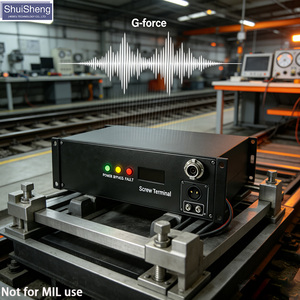
| Railway & Transit Power Converters | 24V, 48V, 110V DC (EN 50155) | 94.8% | Shockproof MIL-STD-810G | EN 50155, EN 50121-3-2 | Railway Signaling, Rolling Stock Electronics |
| Wind & Solar Grid-Tied Inverters | 200V – 1000V DC MPPT Range | 98.8% (CEC Efficiency) | IP66 Waterproof Enclosure | IEEE 1547, UL 1741 SB, VDE-AR-N 4105 | Renewable Energy Microgrids, Distributed Solar |
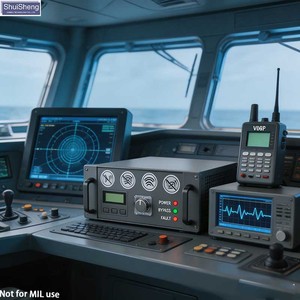
| Marine & Defense Grade UPS | 115V / 230V AC Single/3-Phase | 96.0% | Vibration Resistance Enclosure | MIL-STD-704(A-F), MIL-STD-461 | Shipboard Radar, Naval Systems, Submarines |
Procurement heads and system integrators face increasing regulatory, technical, and supply chain complexities. Sourcing grid-tied inverters and industrial UPS systems from premier Chinese suppliers now follows strategic procurement shifts:
Infrastructure projects operate over multi-decade spans. Global buyers prioritize suppliers offering standardized FFF drop-in module replacements to safeguard long-life platforms against unexpected component end-of-life (EOL) announcements.
International buyers require factory-certified compliance data for region-specific grid regulations (such as IEEE 1547.1 for North America, CEI 0-21 for Italy, and VDE-AR-N 4105 for Germany) before placing volume purchase orders.
Leading OEM procurement strategies bypass generic trading intermediaries. B2B buyers directly engage factory application engineers to optimize thermal management derating, custom pinout configurations, and EMI filter matching prior to layout commitment.
Addressing key technical, compliance, and logistics questions from system integrators and buyers.
Synchronous rectification replaces traditional lossy rectifying diodes with actively controlled, extremely low R_DS(on) MOSFETs or SiC switches. In high-power grid-tied inverters and industrial UPS systems, diode forward-voltage drop accounts for significant heat generation. By active switching, conduction losses drop dramatically—boosting full-load efficiency up to 99.2%, reducing internal enclosure temperatures, expanding component lifecycle margins, and eliminating heavy cooling heatsinks.
Our outdoor IP68 telecom UPS and grid power systems utilize a multi-layered defense architecture: hermetically sealed cast-aluminum enclosures, conformal anti-corrosion PCB coatings compliant with IPC-CC-830, hydrophobic breathers to prevent internal condensation, and stainless-steel hardware. The entire assembly passes rigorous salt-spray, anti-mold, and humidity testing certified under IEC 60068-2-52 and MIL-STD-810G standards.
Depending on the target deployment series, our products are engineered and characterized against:
Yes. We specialize in OEM/ODM design customization for specialized industrial applications. Our application engineering team provides complete support including thermal derating analysis, input filter integration for EMI compliance, custom mechanical enclosure tailoring, and guaranteed multi-decade product support agreements with form-fit-function replacement protection.
In power architecture design, electromagnetic interference (EMI) compliance failures often occur due to complex interactions between external line filters and switching converters. Our engineering design characterizes the EMI filter stage and converter stage together as a unified chain. This pre-verified design approach guarantees compliance with strict noise limits (such as MIL-STD-461 or CISPR 32 Class B) directly out of the box, saving months of costly compliance testing cycles.
Contact our application engineering team today to request complete CAD models, detailed derating curves, custom grid inverter specifications, or comprehensive product catalogs.