
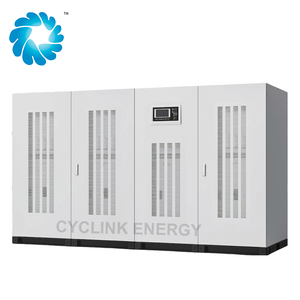
Industrial UPS for Energy, Transportation, Aviation & Metallurgy
- Lithium LiFePO4 Energy Storage
- Equivalent to Socomec / Vertiv Specs
- Wide Input Voltage Tolerance
- Galvanic Isolation Transformer
A Technical Procurement Framework & Market Intelligence Report on High-Reliability Industrial Uninterruptible Power Systems
Engineered for extreme ambient temperatures, high shock/vibration, airborne particulate isolation, and corrosive mission-critical environments.
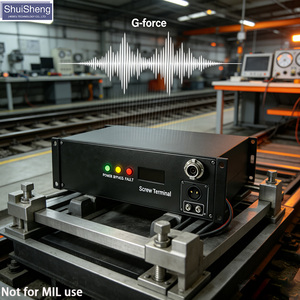
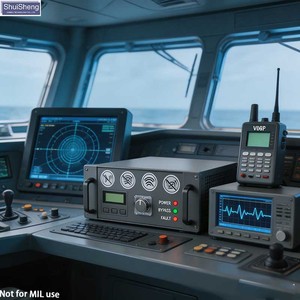
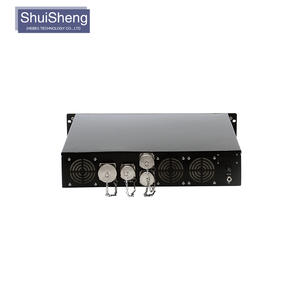
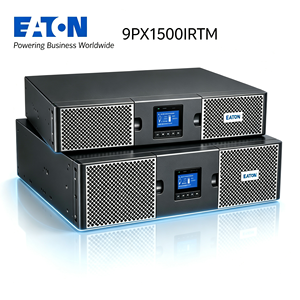
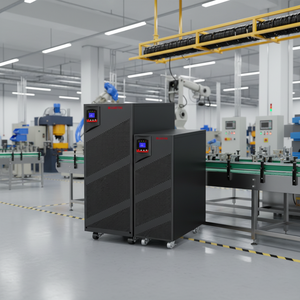
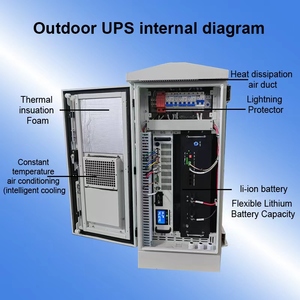
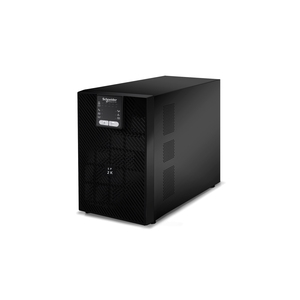
Modern industrial architectures, off-grid energy platforms, automated transport networks, and military operational sites demand continuous power continuity. Commercial-off-the-shelf (COTS) uninterruptible power systems designed for climate-controlled data centers fail rapidly when exposed to environmental stresses such as wide temperature swings, conductive dust, continuous mechanical vibration, salt-laden marine air, and unstable power grids. Sourcing true Rugged UPS Systems from China’s leading industrial manufacturing hubs requires a granular understanding of power electronics topology, thermal management physics, structural resilience standards, and rigorous supply chain quality control.
Technical Reality Check: Over 68% of field failures in industrial UPS deployments stem from inadequate thermal derating, electrolyte evaporation in standard VRLA batteries, component degradation due to non-conformally coated PCBs, and failure to suppress harmonic transients common in heavy manufacturing environments.
When evaluating China OEM/ODM capabilities, procurement officers and engineering directors must differentiate between standard commercial online double-conversion units and militarized/industrial ruggedized power platforms. A true rugged UPS is designed from the ground up to eliminate single points of failure across demanding electrical and environmental spectrums.
Utilizes wide-temperature LiFePO4 or Lithium Titanate (LTO) cell chemistries combined with conduction-cooled aluminium chassis, eliminating forced-air fan vulnerabilities in sealed IP65/IP68 enclosures.
Reinforced steel and extruded aluminum chassis built to comply with MIL-STD-810G Method 514.6 (vibration) and Method 516.6 (functional shock), featuring heavy-duty busbar connections instead of mechanical solder joints.
Built-in galvanic isolation transformers, active power factor correction (PFC > 0.99), and multi-stage transient voltage surge suppressors (TVSS) capable of handling severe voltage spikes and high inrush motor loads.
| Evaluation Parameter | Standard Commercial UPS | Hardened Industrial Rugged UPS |
|---|---|---|
| Operating Temperature | 0°C to 40°C (Drastic derating above 25°C) | -40°C to +75°C (Full continuous rated output) |
| Ingress Protection | IP20 / NEMA 1 (Open vent holes, dust susceptible) | IP65, IP66, IP68 / NEMA 4X Sealed Enclosures |
| PCB Coating & Protection | Uncoated or light single-layer solder mask | MIL-I-46058C / IPC-CC-830B Conformal Coating |
| Vibration & Shock Rating | Minimal (Office/Data center floor deployment) | EN 50155 (Rail), MIL-STD-810G (Defense/Naval) |
| Mean Time Between Failures (MTBF) | 30,000 to 50,000 Hours | > 150,000 to 250,000 Hours (Field-proven) |
The global landscape for industrial backup power systems is undergoing a technological revolution driven by decarbonization, electrification of heavy transport, distributed edge compute node expansion, and severe weather risks. Leading Chinese manufacturers are investing heavily in next-generation power topologies to provide tangible information gain for system integrators.
Traditional industrial UPS platforms relying on legacy Silicon (Si) IGBT topologies are constrained by thermal dissipation limits and switching frequency losses. China's top-tier rugged UPS factories are transitioning to Silicon Carbide (SiC) MOSFETs. This shift yields profound technical advantages:
VRLA batteries lose 50% of their operational life for every 10°C rise above 25°C. Top Chinese original equipment manufacturers (OEMs) are integrating advanced lithium chemistries directly managed by smart AI-driven Battery Management Systems (BMS):
Modern industrial applications—including high-speed rail signaling, offshore oil rigs, and telecom infrastructure—demand continuous hot-swappable power modules. Chinese factories are engineering modular rackmount frames where power modules, static bypass switches, and BMS control cards can be replaced in real-time under load without interrupting downstream critical equipment. Coupled with IoT-enabled MQTT, SNMPv3, and RS485 interfaces, these platforms deliver real-time predictive analytics, warning engineers of cell impedance degradation before a system blackout occurs.
Aviation support systems, mobile radar stations, and naval vessel command centers require clean power free from harmonic distortion. Systems deployed in these environments must conform to strict power input standards such as MIL-STD-704 (A-F) for aircraft electrical characteristics, MIL-STD-1399 for shipboard power systems, and MIL-STD-461 for electromagnetic compatibility (EMC). Hardened Rugged UPS units isolate sensitive avionics computers from severe voltage transients caused by heavy shipboard radar pulses or engine startup surges.
Trackside control cabinets and train locomotives experience continuous physical vibration, track dust, and unpredictable catenary line voltage variations. Complying with EN 50155 and EN 50121-3-2 standards, specialized railway UPS units utilize shock-mounted chassis, conformal-coated circuit boards, and wide-input DC converters (24V, 48V, 110V DC) to ensure trackside signals and emergency braking communication networks remain fully active regardless of catenary dropouts.
Power generation facilities, wind turbine hubs, and metallurgical refineries present extreme environments featuring airborne metallic dust, high ambient humidity, corrosive chemicals, and inductive motor loads. Standard UPS units instantly short-circuit under metallic dust accumulation. Sealed outdoor UPS architectures equipped with dual-chamber heat exchangers keep internal electronics isolated in a dust-free environment while transferring heat efficiently to the ambient surroundings.
When selecting a manufacturing partner in China for custom or contract production of Rugged UPS systems, buying teams should evaluate candidate factories against a rigorous technical audit checklist:
Verify that the factory enforces strict engineering design guidelines where power switches, magnetic cores, and capacitors operate at no more than 60-70% of their maximum rated voltage, current, and thermal capacity.
Confirm the facility owns full testing infrastructure including thermal walk-in chambers (-40°C to +85°C), dynamic vibration shaker tables, salt-fog corrosion chambers, and EMI/EMC compliance test benches.
Check for automated robotic conformal coating processes (UV-traceable acrylic, silicone, or polyurethane) to ensure complete pinhole-free coverage over high-voltage solder nodes and IC pinouts.
A rugged UPS is structurally and electrically engineered to withstand harsh environmental conditions that would instantly destroy standard office equipment. Key differences include wide operating temperature ranges (-40°C to +75°C), ingress protection ratings (IP65 to IP68), conformal-coated printed circuit boards to resist moisture and conductive dust, reinforced chassis to absorb mechanical shock and vibration (MIL-STD-810G), and heavy-duty electrical filtering to handle severe voltage surges and inductive motor loads.
Top-tier Chinese manufacturers hold ISO 9001 (Quality Management) and AS9100 (Aerospace Quality) certifications. Depending on your project scope, look for product-level compliance such as MIL-STD-810G/H for environmental engineering, MIL-STD-461 for electromagnetic interference, EN 50155 for railway rolling stock applications, IEC 60601-1 for medical electrical safety, and CE/UL 1778 for general industrial uninterruptible power systems.
Lead-acid (VRLA) batteries suffer severe chemical degradation at elevated temperatures (losing 50% lifespan per 10°C increase above 25°C) and freeze at sub-zero temperatures. Lithium Iron Phosphate (LiFePO4) and Lithium Titanate (LTO) offer wider temperature stability, up to 10 times the cycle life (3,500 to 20,000+ cycles), significantly higher energy density (reducing chassis footprint and weight), and faster recharge rates, making them far more cost-effective on a Total Cost of Ownership (TCO) basis.
Yes. Leading Chinese manufacturers specialize in custom ODM engineering. They can tailor input/output voltage profiles (e.g., 110V/220V AC, 28V/48V/110V DC, 3-phase 115V 400Hz airborne/naval power grids), engineer custom form factors (1U/2U ultra-dense rackmounts, wall-mounted IP66 enclosures, or rugged portable transit cases), and integrate specialized connectivity protocols like Modbus TCP, SNMPv3, and CANbus.
Conformal coating applies a protective polymeric film (such as acrylic, silicone, or polyurethane) over assembled PCBs. This barrier shields sensitive electronic components, surface-mount devices, and trace lines from atmospheric moisture, salt spray corrosion, conductive airborne particles (such as coal or metal dust), and chemical fumes. This process prevents electrical dendrite growth, short circuits, and premature component degradation.