
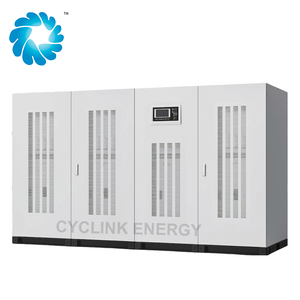
Field-proven, ruggedized uninterruptible power supplies and power conversion modules designed to deliver uninterruptible resilience across harsh aviation, defense, and industrial environments.
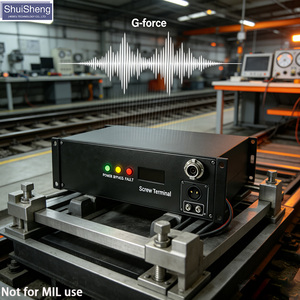
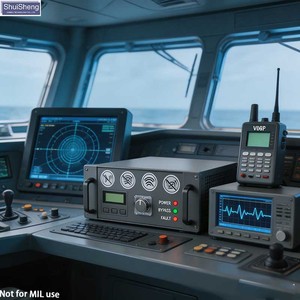
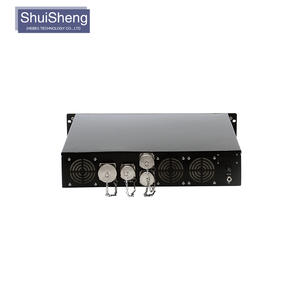

Leveraging decades of specialized power conversion expertise, our facilities synthesize low-dissipation topology, military-grade COTS (Mil-COTS) integration, and full lifecycle traceability.
In modern military, commercial aviation, and space platforms, electrical power conversion is no longer merely a secondary component—it is the foundational enabler of radar performance, avionics computing, electronic warfare (EW), and flight control safety. As a leading China airborne power manufacturer and exporter, our engineering philosophy mirrors international aerospace standardizations including AS9100D quality management and ISO-9001 frameworks.
Conventional power conversion topologies historically relied on lossy schottky diode rectification, causing severe thermal bottlenecks within sealed airborne Line Replaceable Units (LRUs). By pioneering full-bridge synchronous rectification (SR) technology coupled with active two-stage power factor correction (PFC), our airborne AC-DC and DC-DC converter series reduce thermal dissipation by up to 45% compared to legacy architectures.
Our manufacturing ecosystem in China operates under zero-defect quality control protocols. Every airborne power module undergoes 100% automated optical inspection (AOI), thermal stress screening (ESS), environmental vibration qualification, and full-load burn-in testing under wide ambient temperatures ranging from -55°C to +100°C baseplate temperatures.
Direct compatibility with 28V DC, 115V AC (400Hz), and 230V AC wide-frequency airborne buses without requiring complex external Snubber networks.
Designed for fanless, sealed enclosures. Low profile quarter-brick, half-brick, and full-brick modules delivering energy densities exceeding 100W/in³.
The convergence of Wide Bandgap (WBG) semiconductors, multi-phase active PFC topologies, and digital power management is redefining next-generation flight electronics.
Transitioning from silicon MOSFETs to Gallium Nitride (GaN) and Silicon Carbide (SiC) switches enables switching frequencies above 1MHz. This drastically shrinks passive magnetics and output capacitance, driving down total airborne system mass.
Modern aircraft generators employ variable frequency (360 Hz to 800 Hz) power generation to cut gearbox weight. Our active 3-phase power factor correction (MPFIC) algorithms maintain power factors >0.98 while suppressing total harmonic distortion (THD < 3%).
Integration of I2C / PMBus digital communication interfaces allows real-time health monitoring of thermal conditions, voltage rail health, input transient events, and predictive maintenance telemetry to central flight computers.
Navigating component obsolescence, supply chain resilience, and standard-compliant COTS strategies for long-lifecycle defense and commercial aerospace programs.
Global defense OEMs are rapidly transitioning away from custom-designed power supplies toward Commercial-Off-The-Shelf (Mil-COTS) isolated modules. Mil-COTS modules dramatically shorten non-recurring engineering (NRE) timelines, reduce initial program risk, and offer pre-qualified compliance against severe environmental shocks (MIL-STD-810G) and altitude pressure variations.
Aerospace platforms typically maintain active operational duty for 20 to 40 years. Procurement managers require Chinese manufacturing partners to provide strict Form-Fit-Function (FFF) replacement guarantees, proactive component Change Notifications (PCN), and extended component stockpiling strategies to guarantee multi-decade operational support.
Modern procurement specifications mandate that power systems survive environmental extremes beyond basic vibration. Systems must feature conformally coated PCBs, IP67/IP68 sealed enclosures, and anti-salt fog, anti-mold, and anti-corrosion barriers suitable for aircraft carrier decks, rotorcraft, and unpressurized avionics bays.
System designers frequently encounter late-stage program delays when discrete power converters interact unpredictably with line filters. Leading Chinese airborne exporters now supply combined converter-plus-filter chains certified together to meet MIL-STD-461 (C-F) conducted emissions and RTCA DO-160G lightning transient requirements.
In-depth technical answers curated by senior power electronics engineers for procurement directors, system architects, and defense prime contractors.
Connect directly with our application engineering team to obtain detailed datasheets, thermal derating curves, 3D CAD models, and custom Mil-COTS quotation support.