
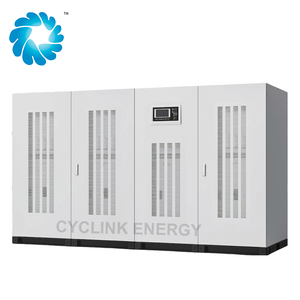
Industrial UPS for Energy, Aviation & Heavy Metallurgy
Heavy-duty industrial battery backup system designed for high-transient environments, power sub-stations, aviation controls, and metallurgical production lines.
Inquire NowExplore robust, high-efficiency uninterruptible power solutions engineered with synchronous rectification, wide thermal operational windows, and advanced anti-corrosion protection.
Heavy-duty industrial battery backup system designed for high-transient environments, power sub-stations, aviation controls, and metallurgical production lines.
Inquire Now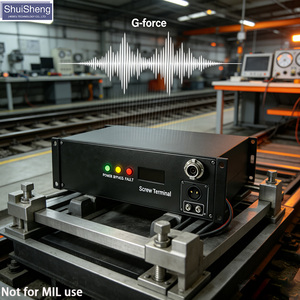
Ultra-rugged power system built for marine coastlines, remote outdoor base stations, and chemical plants requiring complete sealing against moisture and salt mist.
Inquire Now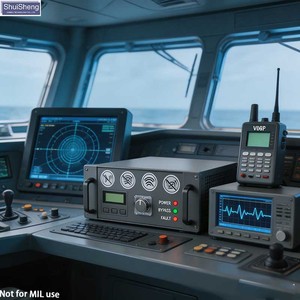
Engineered for mobile military command units, off-road defense vehicles, and high-vibration manufacturing equipment with internal mechanical decoupling.
Inquire Now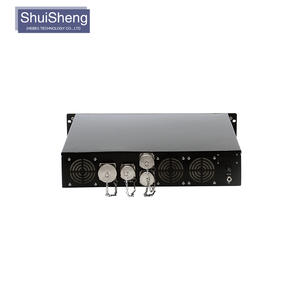
High-reliability uninterrupted power unit tailored for railway trackside signaling, automated switching gear, and critical passenger communication networks.
Inquire Now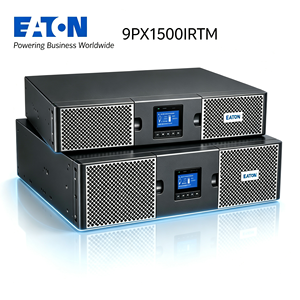
Commercial Off-The-Shelf (COTS) marine-certified rack unit delivering 1:1 real power output (1500W) for naval bridges, sonar racks, and vessel IT cabinets.
Inquire Now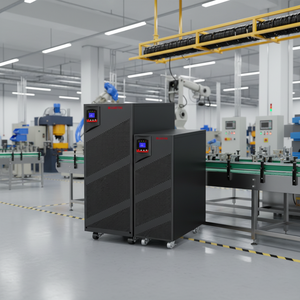
Double-conversion online power backbone featuring active power factor correction, digital signal processing, and high overload capability for server arrays.
Inquire Now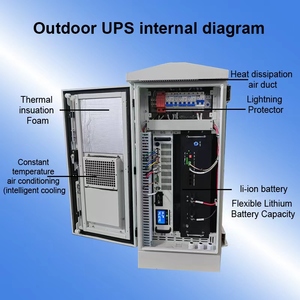
Integrated pole-mountable backup power station with multi-stage lightning surge arrestors, designed for remote surveillance cameras and border monitoring.
Inquire Now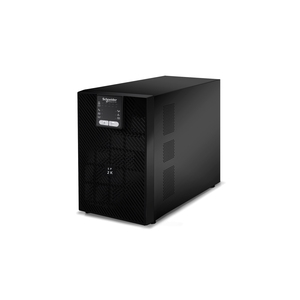
Specialized power conditioning unit optimized for wind turbine nacelles and renewable microgrids subject to wide frequency fluctuations and sudden voltage spikes.
Inquire NowLeveraging over 25 years of advanced synchronous-rectification innovation and process-centered quality management to power mission-critical programs globally.
Our manufacturing and engineering facilities exceed traditional commercial norms. With total batch traceability, rigorous derating verification, and extensive ESS (Environmental Stress Screening), every tactical UPS unit guarantees rock-solid reliability in battlefields or remote plants.
By replacing energy-wasting Schottky diodes with actively controlled MOSFETs in a specialized two-stage topology, our power architectures eliminate thermal bottlenecks, allowing conduction-cooled, sealed enclosures to operate continuously without fan failures.
Designed and factory tested against severe defense and industrial criteria, including MIL-STD-704(A-F), MIL-STD-461(C-F), MIL-STD-1275, MIL-STD-1399, MIL-STD-810G, RTCA DO-160G, EN 50155, and European CE Directives (LVD & EMC).
Uninterruptible Power Supply (UPS) systems deployed in tactical military settings, defense communication posts, naval vessels, and harsh industrial installations face operational challenges radically different from standard commercial IT data centers. While commercial UPS units prioritize maximum power density in temperature-controlled rooms, CE-certified tactical UPS systems are engineered for thermal survival, immunity to dirty generator power feeds, mechanical impact endurance, and ultra-strict electromagnetic interference (EMI) containment.
The transition toward modern tactical power management is driven by key technological breakthroughs across five core architectural layers:
Information Gain Key Insight: Traditional diode-bridge rectification in industrial UPS systems causes severe thermal dissipation, losing up to 8% of total power as waste heat. Next-generation Tactical UPS systems utilize dual-stage Active PFC paired with Synchronous MOSFET Rectification, driving system efficiency up to 96% and reducing heat dissipation by over 45% in sealed IP67/IP68 enclosures.
Procurement officers and systems integration engineers must accurately evaluate technical parameters to avoid catastrophic power failure in critical operational theaters. The table below details the design parameters separating commercial-grade units from CE-certified tactical power systems.
| Engineering Dimension | Standard Commercial UPS | CE Certified Tactical UPS | Strategic Operational Advantage |
|---|---|---|---|
| Operating Temperature | 0°C to 40°C (32°F to 104°F) | -40°C to +65°C (-40°F to 149°F) | Uncompromised deployment in arctic or desert combat theaters. |
| Ingress Protection (IP) | IP20 / IP30 (Open Vented) | IP65 / IP67 / IP68 (Fully Sealed) | Complete immunity against sandstorms, heavy rain, mold, and salt fog. |
| Vibration & Shock Rating | Basic office transport limits | MIL-STD-810G Method 514.6 / 516.6 | Withstands vehicle transport on rough terrain and naval explosive shock. |
| Input Frequency Handling | 50 Hz / 60 Hz (± 5%) | 45 Hz to 440 Hz (Continuous) | Seamlessly operates off tactical field diesel generators and aircraft power buses. |
| Electromagnetic Immunity | EN 62040-2 Commercial | MIL-STD-461G / CE Directive 2014/30/EU | Zero interference with tactical communications and electronic warfare equipment. |
| Transfer Time (Line to Battery) | 4 ms – 10 ms (Line Interactive) | 0 ms (True Double Conversion Online) | Prevents data corruption or rebooting in mission-critical mission computers. |
The global market for tactical uninterruptible power supplies is undergoing a profound structural shift. Defense procurement agencies, marine shipbuilders, energy operators, and telecom conglomerates are changing how they source, evaluate, and maintain field power electronics.
Key market vectors defining future procurement strategies include:
Detailed technical insights answering complex integration, certification, and application questions for project managers and electrical engineers.
CE Certification for tactical and industrial UPS systems requires strict verification against two primary directives: the Low Voltage Directive (LVD 2014/35/EU) under EN IEC 62040-1 for electrical safety, dielectric strength, and short-circuit protection; and the Electromagnetic Compatibility Directive (EMC 2014/30/EU) under EN 62040-2 (Category C1 to C3). For tactical use, testing extends to radiated immunity against high-power RF fields and fast transient burst immunity (IEC 61000-4-4).
In traditional rectifiers, output diodes incur a continuous forward voltage drop (~0.7V to 1.0V), resulting in significant conduction power loss (P = I × V). Synchronous rectification replaces diodes with ultra-low Rds(on) power MOSFETs controlled by high-speed gate drivers. This reduces internal conduction loss by up to 80%, dropping heat generation to a level easily dissipated through conduction chassis plates without requiring external cooling fans.
Yes. Tactical UPS systems designed for field use utilize a True Double-Conversion Online topology combined with active Power Factor Correction (PFC). This decouples the incoming generator AC waveform entirely from the output inverter. Frequency fluctuations (45 Hz to 65 Hz or 400 Hz) and voltage sags/surges from the generator are converted to stable DC, delivering a continuous pure sine wave output to sensitive electronics with zero transfer time.
VRLA lead-acid batteries experience exponential lifespan degradation above 25°C, with their cycle life cut in half for every 8°C rise. LiFePO4 chemistry tolerates ambient temperatures up to +65°C without thermal runaway, offers 3 to 5 times the cycle life (3,500+ cycles at 80% DOD), delivers 60% weight savings, and charges up to 4 times faster—vital for rapid tactical redeployment.
Factories achieve compliance with MIL-STD-810G/H by implementing structural ribbing on aluminum chasses, potting sensitive magnetic components in thermal conductive epoxy, applying conformal coating on all PCBs, and installing internal elastomeric or wire-rope shock isolators that dampen mechanical resonances caused by off-road transit or weapon launch shock impulses.
OEM custom options include multi-phase input/output configurations (e.g., 3-phase 115Vrms line-to-line for naval applications), custom circular MIL-DTL-38999 connectors, specialized cold-plate geometry for liquid-cooled chassis, customized SNMP/Modbus communication protocols, and extended battery runtime packs configured in rugged transit cases.
Consult directly with our senior power application engineers. We provide comprehensive design reviews, thermal analysis, custom enclosure engineering, and full CE / MIL-STD compliance documentation tailored to your contract requirements.