Engineered for extreme environments, critical transport networks, data backbones, and heavy industrial automation. CE certified and factory-tested under rigorous load profiles.
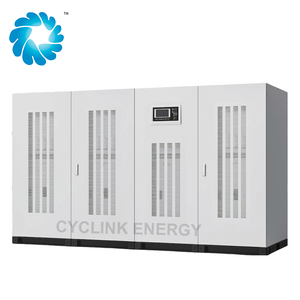
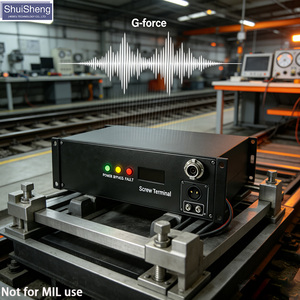
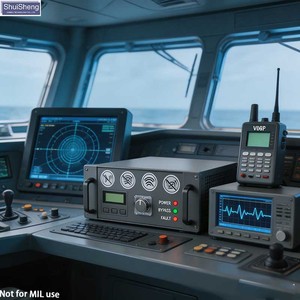
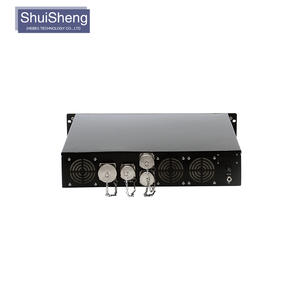
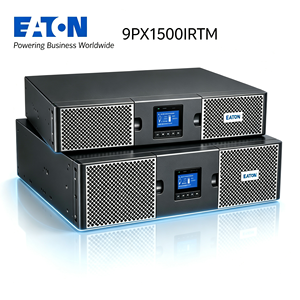
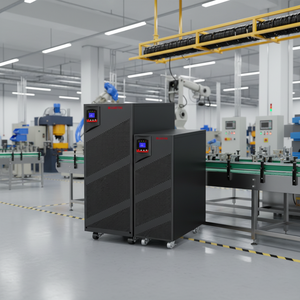
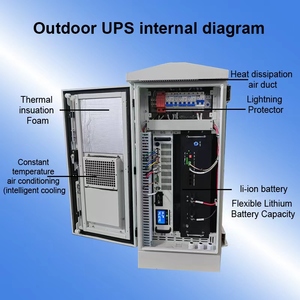
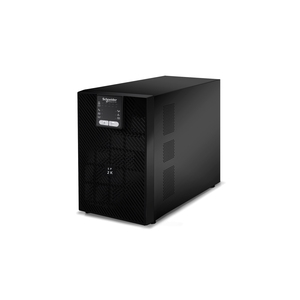
From state-of-the-art synchronous rectification topology to full compliance with global defense, rail, and industrial standards, our export facilities deliver zero-defect manufacturing.
By replacing legacy lossy diodes with actively driven MOSFETs and multi-stage power topologies, our CE certified power regulators minimize internal thermal stress, resulting in up to 98% conversion efficiency and extended component life in sealed enclosures.
Every power regulation unit and industrial UPS is engineered to clear stringent global standards including EN 50155 (Railway Rolling Stock), RTCA DO-160G (Airborne AC/DC Systems), MIL-STD-810G (Shock & Vibration), IEC 60601-1 (Medical Grade), and CE EMC/LVD Directives.
Operating under AS9100 and ISO-9001 quality systems, our manufacturing facilities enforce 100% component-level batch tracking, full qualification archiving, and multi-decade anti-obsolescence support for long-life critical infrastructure programs.
Modern industrial facilities, railway transportation networks, marine equipment, and communications backbones operate in harsh electrical environments characterized by wide input voltage swings, high harmonic distortion, phase imbalances, and intense transient voltage surges. Selecting a certified power regulator or online UPS requires an engineering-first evaluation of power conversion topology, thermal management, and transient protection dynamics.
Conventional passive voltage regulators often induce non-linear input currents, causing high Total Harmonic Distortion (THD) that degrades upstream transformers and triggers unwanted circuit breaker trips. Advanced CE-certified industrial power regulators utilize active 3-phase Power Factor Correction front-ends. By enforcing unity power factor (PF > 0.99) and maintaining input THDi below 3%, these systems ensure seamless generator compatibility and reduce energy losses across grid infrastructure.
To assist procurement managers and system architects in specifying the optimal power system, the following matrix compares standard industrial power regulator classifications against heavy-duty environmental and transportation parameters:
| Regulator / UPS Class | Input Voltage Window | Efficiency (Nominal) | Environmental Rating | Target Compliance Standards |
|---|---|---|---|---|
| Industrial Lithium Online UPS | 160V – 300V AC (Single/3-Phase) | 95.5% – 98.0% | IP31 / IP54 (NEMA 3R) | CE, IEC 62040-3, ISO 9001, UN38.3 |
| All-Weather Outdoor Telecom UPS | 90V – 300V AC Wide Input | 94.0% – 96.5% | IP68 Waterproof / Anti-Salt | CE, MIL-STD-810G, Anti-Corrosion Class C5 |
| Railway Signaling Power Backup | 24V – 110V DC / 115V AC 400Hz | 93.5% – 96.0% | Ruggedized Shockproof Base | EN 50155, EN 50121-3-2, RIA 12 |
| Marine & Offshore Rackmount UPS | 115V / 230V AC 50/60/400Hz | 94.8% – 97.2% | Vibration-Resistant Deck Frame | DNV-GL, CE, ABS Marine, MIL-STD-167 |
For outdoor telecom base stations, offshore oil rigs, wind farms, and transport corridors, thermal management cannot rely on open airflow that introduces moisture, salt aerosol, or conductive dust. Top-tier CE certified exporters employ sealed conduction-cooling topologies integrated with heavy-duty aluminum die-cast or stainless steel chassis rated up to IP68. Specialized conformal coatings protect internal PCBs against mold growth, acid rain, and electrolytic corrosion in salt-fog environments.
The global power conversion landscape is evolving rapidly driven by energy efficiency directives, microgrid integration, and advanced semiconductor technology.
Next-generation power regulators are replacing legacy silicon IGBTs with SiC MOSFETs. This transition doubles switching frequencies, reduces magnetics footprint by 40%, and slashes energy dissipation at elevated operating temperatures above 85°C.
Procurement is shifting toward smart power systems equipped with SNMP v3, Modbus RTU/TCP, and predictive AI telemetry. Facilities can monitor electrolytic capacitor degradation, fan life, and internal cell impedance in real time to eliminate unexpected downtime.
Exporters are rapidly replacing traditional VRLA lead-acid batteries with high-density LiFePO4 chemistry. Lithium batteries offer 3x the cycle life, faster recharge cycles (<2 hours to 90%), and superior thermal stability across -30°C to +65°C operating envelopes.
Navigating global supply chains for mission-critical electrical regulators requires balancing technical specifications against factory compliance and total cost of ownership (TCO). Procurement engineering teams should evaluate prospective manufacturing partners using the following structured framework:
Verify that CE mark documentation includes both Low Voltage Directive (LVD 2014/35/EU) and Electromagnetic Compatibility (EMC 2014/30/EU) test reports issued by accredited ISO/IEC 17025 laboratories. For specialized deployments, confirm EN 50155 or MIL-STD qualification test reports.
Always review the manufacturer's thermal derating curve. A superior power regulator maintains 100% continuous rated power output at 50°C ambient temperature without thermal shutdown. Request thermal imaging reports under full-load burn-in conditions.
Furthermore, evaluating total cost of ownership extends far beyond the initial FOB unit cost. High-efficiency synchronous regulators save thousands of kilowatt-hours annually per unit, minimizing HVAC cooling load in enclosed utility rooms and lowering continuous carbon footprint in compliance with ESG mandates.
Answers to common technical queries raised by electrical design engineers, facility procurement managers, and OEM integration partners.
CE certification ensures that the power regulator strictly complies with European safety and electromagnetic compatibility directives. In industrial automation, a CE-certified regulator prevents conducted and radiated electrical noise from interfering with sensitive PLC logic controllers, sensor loops, and robotic actuators while protecting equipment from grid transients.
An IP68 outdoor UPS provides complete ingress protection against high-pressure water submersion, fine dust particles, salt mist, and mold growth. Unlike standard ventilated NEMA enclosures, IP68 units utilize internal conduction cooling and hermetically sealed connectors, allowing continuous operation in severe marine, desert, or tropical telecom sites.
Yes. Our engineering factories support custom OEM power architectures, including 400Hz airborne AC inputs, wide railway DC inputs (24V to 110V DC nominal with Class S2 hold-up times), and custom isolated multi-output DC bus configurations compliant with MIL-STD-704 and EN 50155 standards.
Our industrial online UPS systems feature a Mean Time Between Failures (MTBF) exceeding 250,000 hours. Utilizing premium industrial-grade solid-state capacitors, heavy-duty planar magnetics, and long-life LiFePO4 batteries, system operational design life spans 10 to 15 years with minimal maintenance.
Every export shipment includes comprehensive Factory Acceptance Testing (FAT) certificates, 100% full-load burn-in test logs, CE Declaration of Conformity (DoC), material safety data sheets (MSDS) for lithium storage, and complete installation/user manuals in target languages.
Speak directly with our power electronics application engineers to review your input line conditions, load profiles, environmental constraints, and compliance requirements before placing your order.
Inquire Now