Explore our engineering-grade uninterruptible power supplies, ruggedized outdoor inverters, and high-frequency conversion modules engineered for zero downtime in critical operations.
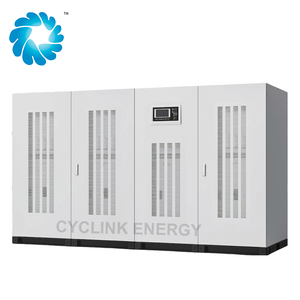
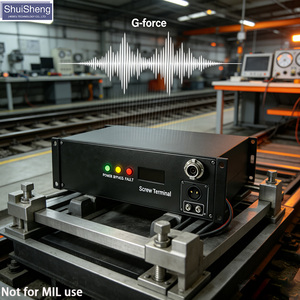
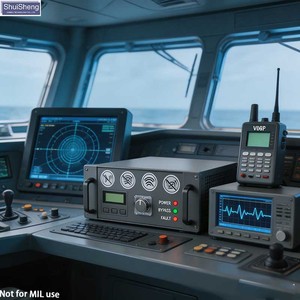
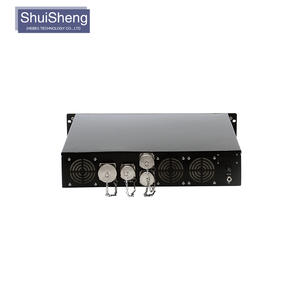
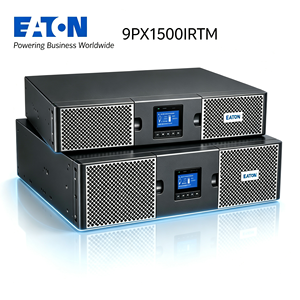
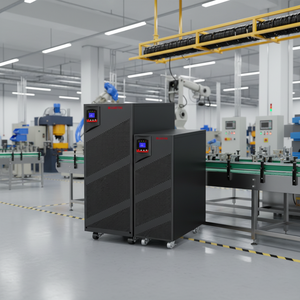
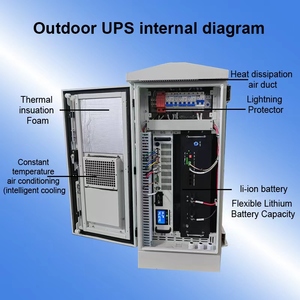
In modern industrial, telecommunication, and grid-scale energy architectures, pure power conversion quality determines system operational longevity and safety. As a premier CE certified power inverter manufacturer and exporter, our enterprise designs and mass-produces advanced DC-AC pure sine wave inverters, AC-DC power supplies, isolated DC-DC modules, and online double-conversion industrial UPS systems. Engineered with military-grade rigor and verified under stringent European Union conformity directives, our solutions resolve complex power quality challenges across harsh environments worldwide.
Compliance with the CE mark is far more than a statutory requirement for European Union market access—it represents an exhaustive commitment to electromagnetic compatibility (EMC), safety low voltage directives (LVD), and functional durability under extreme line dynamic variations. Every inverter series leaving our automated manufacturing facility undergoes rigourous multi-stage testing, fulfilling mandatory technical directives:
Verified against EN 62109-1/-2 and EN 62477-1 safety standards. Features reinforced insulation, high galvanic isolation (>3000VAC), and fault-tolerant arc protection.
Fully compliant with EN 61000-6-2 (Industrial Immunity) and EN 61000-6-4 (Emission Standards), mitigating high-frequency conducted EMI and radiated interference.
100% lead-free, eco-compliant component selection, eliminating hazardous heavy metals while utilizing halogen-free high-temperature PCB laminates.
Conventional industrial inverters rely on legacy IGBT modules and diode rectifiers, suffering from high thermal dissipation and lower conversion efficiencies (typically 85% to 89%). Our enterprise has commercialized next-generation power topologies by integrating Silicon Carbide (SiC) MOSFETs and Synchronous Rectification Technology across our inverter portfolio.
By replacing lossy flywheel diodes with actively driven, ultra-low Rds(on) MOSFETs, dynamic conduction losses are decreased by up to 65%. This breakthrough allows our pure sine wave inverters to reach peak thermal efficiency profiles up to 96.5%. Reduced energy loss directly translates to minimal internal heatsink dimensions, allowing sealed IP68 conduction-cooled enclosures to operate continuously under harsh +75°C ambient temperatures without requiring dust-prone cooling fans.
Rooted in process-centered quality control architectures matching aerospace and military protocols (exceeding standard ISO-9001 and AS9100 quality management systems), our production complex operates automated SMT lines, automated optical inspection (AOI), and environmental stress screening (ESS) chambers.
Every semi-conductor, transformer winding, and electrolytic capacitor is tracked via serial barcode systems. Electrical stress is derated to below 50% of maximum ratings to guarantee multi-decade operational reliability.
Each manufactured CE inverter undergoes 72 hours of full-load environmental stress screening inside high-temperature burn-in chambers, validating thermal stability before export shipping.
Unlike third-party modular assemblies, our EMI filter stages and inverter conversion topologies are designed and qualified as a single unified system, eliminating harmonic resonance risks.
We commit to multi-decade component availability and form-fit-function replacement strategies, safeguarding municipal infrastructure and defense programs from unplanned redesign cycles.
As international supply chains shift toward renewable energy integration, microgrid decentralization, and high-density industrial automation, B2B procurement teams must adapt their technical specifications. Based on empirical procurement data across European and North American engineering projects, five key procurement trends define the power inverter market:
Procurement specifications are rapidly abandoning traditional Silicon IGBT-based inverters in favor of Silicon Carbide (SiC) and Gallium Nitride (GaN) power architectures. Wide-bandgap devices operate at switching frequencies up to five times higher (above 100 kHz), dramatically reducing magnetic component sizes (inductors and transformers) while boosting efficiency above 96%. Buyers obtain higher power density per 1U rack slot, cutting freight and cabinet footprint costs.
Legacy lead-acid battery backup solutions are being systematically replaced by Lithium Iron Phosphate (LiFePO4) chemistries due to their 4x cycle life, higher power density, and wider operating temperature envelope. Modern CE certified inverters and UPS systems must incorporate native BMS (Battery Management System) communication protocols via CANbus, Modbus RTU, or RS485 to monitor real-time cell balancing, state of charge (SoC), and state of health (SoH).
Industrial installations—such as railway signaling along coastal corridors, offshore wind power nacelles, and remote telecom base stations—require heavy-duty protection against salt spray, high humidity, and airborne dust. The industry is moving away from ventilated fan enclosures toward IP65 / IP68 fully sealed, anti-corrosion, fanless conduction-cooled inverter chassis equipped with conformal-coated printed circuit boards.
To eliminate single points of failure in data centers, medical operating suites, and continuous industrial process lines, procurement teams mandate hot-swappable N+X parallel redundant inverter systems. Modular power blocks share load currents dynamically using digital signal processors (DSP) without requiring master-slave control units, allowing online maintenance without interrupting connected AC loads.
With utility grids introducing stricter harmonic limits (IEC 61000-3-2 / IEEE 519 standards), modern inverters must maintain Total Harmonic Distortion (THD) below 2% under full linear load and under 3% under complex non-linear switching loads. Active Power Factor Correction (PFC) front ends operating at power factor >0.99 are now standard prerequisites in enterprise tenders.
The rapid evolution of smart grids, electric vehicle infrastructure (V2G), and industrial IoT has catalyzed advanced technology roadmaps for power inverters and uninterruptible power systems. Key engineering vectors driving next-generation power conversion include:
Integration of dual-direction inverter/charger architectures allowing seamlessly reversible power flow between DC battery banks and AC grids for peak-shaving and microgrid stabilization.
High-speed 32-bit digital signal controllers execute space-vector pulse-width modulation (SVPWM) algorithms, maintaining instant voltage correction during step-load changes within 1 millisecond.
Embedded sensors continuously measure capacitor ESR degradation, thermal dissipation deltas, and switching jitter—transmitting telemetry via SNMP/MQTT to cloud platforms for zero-downtime maintenance.
Through our continuous R&D investment in high-density magnetics and soft-switching resonant tank topologies (such as LLC and DAB converters), our technical team continues to push output power density boundaries beyond 40 Watts per cubic inch, setting benchmark standards for international exporters.
Below are critical technical questions asked by system integrators, electrical procurement managers, and OEM design engineers evaluating CE certified power inverters and UPS systems:
For industrial deployment within the EU, a power inverter must fully comply with two primary mandatory directives: the Low Voltage Directive (LVD 2014/35/EU) evaluated under safety standards EN 62109-1/-2 or EN 62477-1, and the Electromagnetic Compatibility (EMC Directive 2014/30/EU) under EN 61000-6-2 (industrial immunity) and EN 61000-6-4 (industrial emissions). Additionally, compliance with RoHS Directive 2011/65/EU and REACH regulations is mandatory for hazardous substance restriction.
Pure Sine Wave inverters replicate the clean, smooth AC power waveform provided by commercial electrical utilities, maintaining Total Harmonic Distortion (THD) under 2-3%. This is essential for inductive loads (motors, compressors, transformers) and sensitive electronics (medical equipment, servers, railway signaling). Modified Sine Wave inverters produce stepped square waveforms with high THD (>20%), causing severe overheating in motors, audible electrical noise, reduced component lifespan, and functional failures in precise microcontrollers.
Power inverters experience thermal dissipation losses through semiconductor conduction and switching cycles. Above a specific temperature threshold (typically +50°C), internal component thermal limits dictate a derating factor of 2.5% to 3% per degree Celsius increase. High-efficiency synchronous rectifier inverters with wide-bandgap SiC components significantly shift this thermal curve, allowing full-rated power output up to +60°C or +70°C without requiring forced fan ventilation.
Galvanic isolation physically decouples the input DC circuit from the output AC circuit using internal high-frequency isolation transformers. This prevents direct DC current injection into AC loads, prevents ground loop currents, shields connected sensitive equipment from voltage spikes or lightning surges, and ensures compliance with naval/railway electrical safety standards (such as EN 50155 and MIL-STD-1399).
N+X parallel systems utilize high-speed Digital Signal Processing (DSP) and high-bandwidth bus communications (CANbus/fiber optic links) to synchronize frequency, phase angle, and output voltage amplitude in real time (within microsecond thresholds). Active wireless drop control algorithms can also be deployed to balance active (P) and reactive (Q) power sharing without single-point-of-failure communication cables.
Yes. Our industrial UPS and inverter models feature configurable multi-stage charging algorithms and integrated RS485/CANbus communication interfaces compatible with standard Lithium-ion Battery Management Systems (BMS). The inverter dynamically adjusts charge/discharge currents, voltage cutoffs, and thermal protection profiles based on real-time telemetry from the battery management system.
Consult with our engineering team today for detailed technical specifications, custom voltage topologies, thermal derating calculations, and comprehensive product catalogs.
Get Catalog