
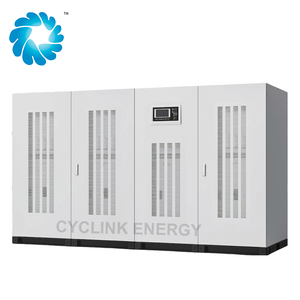
Industrial UPS for Energy, Transportation, Aviation & Metallurgy
Lithium Battery Integration
Vertiv & Socomec Topology Compatible
Engineered for mission-critical reliability, extreme thermal dissipation, vibration resistance, and seamless power factor correction (PFC) across defense, railway, marine, and datacom applications.
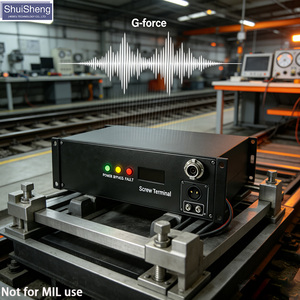
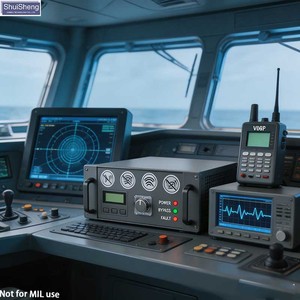
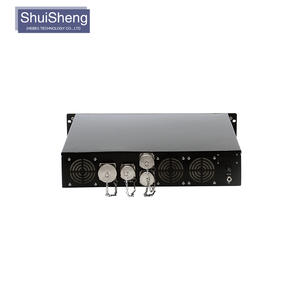
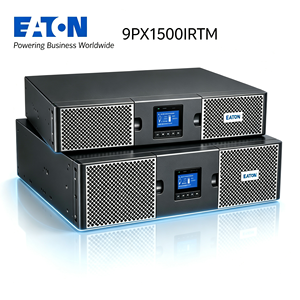
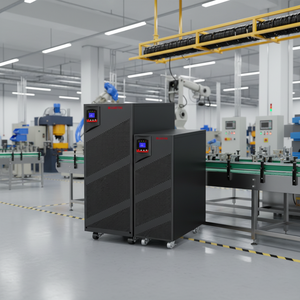
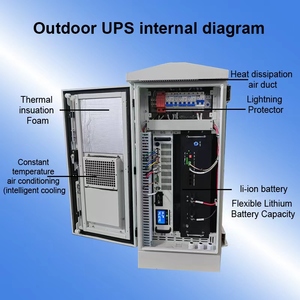
From commercializing synchronous-rectifier topology to manufacturing AS9100D-certified defense conversion systems, our factory delivers full supply-chain transparency and zero-defect execution.
By replacing conventional lossy Schottky diodes with actively controlled power MOSFETs in isolated DC-DC and AC-DC modules, we cut internal conduction losses by up to 60%, raising efficiency up to 96% while dramatically reducing heatsink volume.
Our U.S. and state-of-the-art global manufacturing facilities maintain rigorous process traceability, complete automated optical inspection (AOI), environmental stress screening (ESS), and multi-stage HALT/HASS testing for high-reliability programs.
Instead of forcing system engineers to source third-party EMI filters, we design input transient filters, active PFC front-ends, and isolated DC-DC converters to operate as a single qualified unit—ensuring full compliance with MIL-STD-461, DO-160, and EN 50155.
Modern industrial, defense, medical, and telecommunications architectures demand increasingly high power densities in ever-smaller form factors. As equipment enclosures transition to fully sealed, conduction-cooled IP67/IP68 chassis, thermal dissipation and power conversion efficiency become the definitive bottlenecks in system design. This white paper examines the technological evolution of CE certified embedded power systems, detailing how synchronous rectification, two-stage topology, active power factor correction (PFC), and transient suppression modules overcome these thermal and electromagnetic challenges.
Information Gain Key Takeaway: Transitioning from passive diode rectification to active synchronous rectifier switches reduces internal heat dissipation by 45–60% at nominal loads. This allows power supplies to operate without forced-air cooling, eliminating failure-prone mechanical fans and enabling multi-decade mean time between failures (MTBF > 1,500,000 hours).
In traditional isolated DC-DC converters, output rectification is performed by Schottky diodes. Even high-efficiency Schottky diodes exhibit a forward voltage drop ($V_F$) of 0.4V to 0.6V. In high-current applications—such as a 3.3V or 5V bus delivering 60 Amperes—power loss across the diode ($P = V_F \times I_{out}$) can exceed 24 to 36 Watts purely in conduction losses.
By replacing diode rectifiers with N-channel power MOSFETs featuring ultra-low drain-to-source on-resistance ($R_{DS(on)}$ down to a few milliohms) and driving them synchronously with the primary-side switching waveform, conduction losses drop dramatically to $P = I^2 \times R_{DS(on)}$. For the same 60A output, dissipation drops to under 5 Watts. This efficiency leap is the core engine behind our CE-certified quarter-brick, half-brick, and full-brick embedded power modules.
System designers operating in railway (EN 50155), military ground vehicles (MIL-STD-1275), or aviation (RTCA DO-160) face severe input line fluctuations, voltage sags, and high-energy transients (up to 210V for 100ms). Conventional single-stage power converters struggle to maintain high efficiency across a 4:1 or 8:1 input voltage range because the duty cycle variation forces extreme stress on switching components.
Our OEM embedded power architectures utilize a specialized two-stage power topology:
Selecting the optimal power conversion topology requires evaluating electrical, thermal, and compliance metrics against system operating environments:
| Topology / Parameter | Diode-Based Isolated Converter | Synchronous Rectifier Brick | 2-Stage Active PFC + Sync DC-DC | Rugged Field-Grade UPS Unit |
|---|---|---|---|---|
| Full-Load Efficiency | 82% – 87% | 92% – 96.5% | 91% – 95% | 90% – 94% |
| Thermal Cooling Method | Forced Air / Heatsink | Baseplate Conduction | Baseplate Conduction | Natural Convection / Cold Plate |
| Input Voltage Capability | Narrow (2:1 Range) | Ultra-Wide (4:1 to 12:1) | 85 – 264 VAC / 3-Phase 115V | Wide Range AC/DC Dual Input |
| EMC / EMI Compliance | Requires External Filter | Integrated Filter Match | EN 61000-3-2 & MIL-STD-461 | MIL-STD-461 / DO-160 Built-in |
| Target MTBF (Telcordia SR-332) | < 500,000 Hours | > 1,500,000 Hours | > 1,200,000 Hours | > 800,000 Hours |
CE certification (specifically compliance with the EMC Directive 2014/30/EU and Low Voltage Directive 2014/35/EU) requires stringent control over conducted noise (CISPR 32 / EN 55032 Class B) and radiated emissions. In switching supplies operating at high frequencies (300 kHz to 1 MHz), high $dV/dt$ and $dI/dt$ rates generate common-mode and differential-mode noise.
Our engineered EMI filter bricks incorporate multi-stage common-mode chokes, low-ESR ceramic capacitors, and damping networks specifically tuned to the differential input impedance of our DC-DC and AC-DC modules. This eliminates resonance peaks that frequently cause third-party filter-converter combinations to fail compliance testing during system qualification.
How global OEMs, system integrators, and procurement directors are adapting to next-generation semiconductor materials, digital power management, and supply chain resilience.
Wide Bandgap (WBG) Gallium Nitride (GaN) and Silicon Carbide (SiC) devices are quickly replacing legacy silicon MOSFETs. GaN switches enable 3x faster switching frequencies with negligible switching losses, shrinking inductor and transformer sizes by up to 50% while operating seamlessly at elevated thermal thresholds.
Industrial IoT and smart grid infrastructure now require real-time monitoring of power supply health. Procurement specifications increasingly mandate integrated PMBus or CANbus interfaces for remote voltage tuning, digital telemetry (current, temperature, input voltage), and predictive maintenance algorithms.
System downtime carries immense financial and operational penalties in signaling, data center, and naval operations. Sourcing managers are prioritizing N+1 redundant, hot-swappable power bricks and modular UPS chassis that permit live field maintenance without interrupting downstream loads.
Long-lifecycle military and industrial programs span 15 to 25 years. Leading buyers demand factory commitments for direct pin-compatible replacement paths, component derating analysis, and guaranteed supply chain longevity to avoid costly mid-program circuit redesigns.
Answers to common technical, compliance, and custom engineering inquiries from power design engineers and global procurement managers.
Our power converters and industrial UPS modules are tested to meet the EU Low Voltage Directive (2014/35/EU), EMC Directive (2014/30/EU), and RoHS/REACH environmental directives. For specific military, aviation, medical, and rail applications, products comply with MIL-STD-704(A-F), MIL-STD-461(C-F), MIL-STD-1275, RTCA DO-160G, EN 50155, and IEC 60601-1 4th Edition.
Synchronous rectification replaces standard diodes with low-resistance MOSFETs ($R_{DS(on)}$). This lowers conduction losses by over 50%. Reduced heat generation allows modules to operate via baseplate conduction cooling against a cold-plate or chassis wall, eliminating the need for cooling fans or vents in IP67/IP68 sealed enclosures.
Yes. Beyond our standard DOSA-compliant bricks and 19-inch rackmount UPS systems, our engineering team provides modified-standard and custom OEM solutions. We can tailor input voltage windows, output trim ranges, mechanical potting compounds, and custom connector interface boards to fit precise physical and electrical constraints.
Standard qualification samples ship in 1 to 2 weeks. Production volumes are supported with buffer-stock programs and long-term supply agreements. All components undergo strict incoming inspection and full batch lot-code tracking under AS9100 quality control, guaranteeing complete traceability from raw silicon to final burn-in test reports.
Whether you require isolated DC-DC bricks, active PFC front-ends, or custom ruggdedized outdoor UPS systems, our application engineers are standing by to review your power architecture, thermal envelope, and compliance specs.
Contact Us