Direct factory-grade power conversion hardware engineered for aerospace, defense, marine, rail, and critical infrastructure applications.
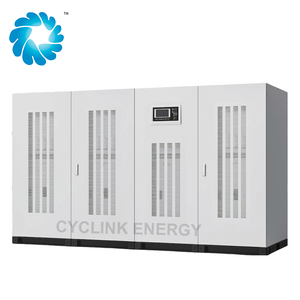
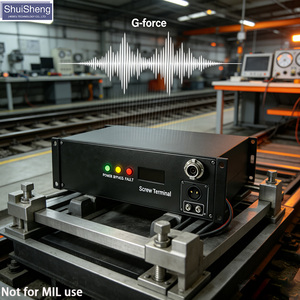
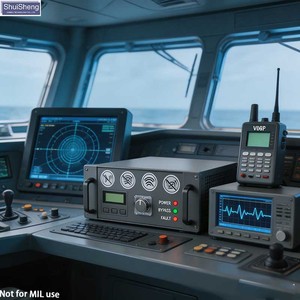
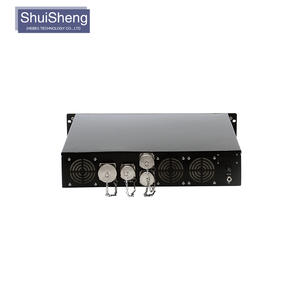
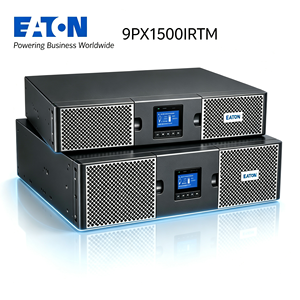
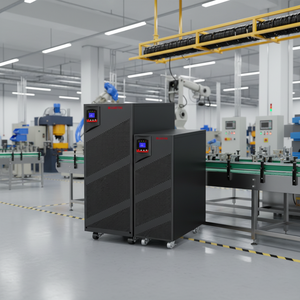
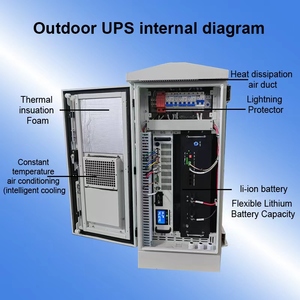
As a premier CE-certified avionics converter manufacturer and global supplier, our operational paradigm is rooted in high-efficiency power architecture, full supply-chain traceability, and stringent qualification standards. Engineered and manufactured within state-of-the-art facilities compliant with AS9100 and ISO-9001 quality management systems, our product lines bridge the gap between commercial off-the-shelf flexibility and mission-critical defense reliability.
Conventional power converters rely on traditional diode-based rectification, resulting in substantial thermal dissipation, reduced Mean Time Between Failures (MTBF), and increased cooling footprints. Our engineering methodology pioneered the commercial integration of synchronous-rectifier technology within isolated DC-DC and AC-DC modules. By replacing lossy diodes with actively driven, ultra-low RDS(on) MOSFETs arranged in a proprietary two-stage topology, internal conduction losses are dramatically reduced.
Information Gain Insight: Our synchronous rectification topology reduces internal heat generation by up to 45% compared to standard schottky-diode architectures. This thermal relief allows airborne line-replaceable units (LRUs) to operate reliably in sealed, conduction-cooled enclosures without forced-air cooling.
Every avionics converter family undergoes exhaustive environmental stress screening (ESS), thermal cycling, and continuous vibration testing aligned with MIL-STD-810G and RTCA DO-160G protocols. From multi-decade defense programs to next-generation commercial aircraft power distribution, our Salem, New Hampshire-based manufacturing heritage guarantees absolute form-fit-function replacement protection and comprehensive derating analysis.
Rigorous engineering benchmarks engineered into every isolated power module, PFC front end, and EMI filter.
| Standard / Regulation | Application Target | Engineering Compliance Details | System Benefit |
|---|---|---|---|
| RTCA DO-160G | Commercial & Military Avionics | Sections 16–22 (Power Input, Voltage Spikes, Lightning Transients) | Prevents flight computer resets during severe bus voltage transients. |
| MIL-STD-704 (A–F) | Airborne Electric Power | 28V DC, 115V AC 400Hz single/three-phase continuous & transient envelopes | Guarantees seamless operation across wide-frequency aircraft electrical grids. |
| MIL-STD-461 (C–F) | Electromagnetic Compatibility | CE101, CE102 conducted emissions paired with transient EMI filter modules | Shortens EMC testing cycles by providing pre-characterized converter-filter pairs. |
| MIL-STD-1275 / 1399 | Ground Vehicle & Shipboard | Surge withstand up to 100V / 500ms; low harmonic distortion for naval grids | Ensures high immunity against heavy inductive switching and load dumps. |
| EN 50155 / EN 50121 | Railway Rolling Stock | Wide input voltage ranges (24V–110V nominal), Class S2/C1 hold-up compliance | Vibration-proof, shock-resistant power for critical transport signaling. |
| CE Marking / IEC 60601 | Industrial & Medical Systems | Low leakage currents, active Power Factor Correction (PFC), 2xMOPP isolation | Ensures global regulatory acceptance across industrial and clinical deployments. |
Navigating SWaP-C optimization, Modular Open Systems Architecture (MOSA), and supply chain resilience.
Modern aerospace procurement prioritizes Size, Weight, Power, and Cost (SWaP-C) optimization. Next-generation unmanned aerial vehicles (UAVs), eVTOL urban air mobility platforms, and modern fighter aircraft demand power converters with power densities exceeding 100W/in³. High-efficiency synchronous buck and boost topologies combined with planar magnetics enable substantial volumetric reduction, directly extending payload capabilities and operational flight range.
Defense departments worldwide are mandating compliance with the Modular Open Systems Approach (MOSA) and SOSA (Sensor Open Systems Architecture) alignment. Procurement managers are shifting away from proprietary, single-source custom brick designs toward standardized Mil-COTS building blocks. Factory-standardized pinouts, standardized half-brick/quarter-brick dimensions, and pre-certified CE/DO-160 footprints ensure multi-vendor interoperability and rapid upgrading cycles.
Airborne and industrial platforms routinely maintain service lives ranging from 20 to 40 years. Commercial component obsolescence represents a severe operational vulnerability. Strategic sourcing now dictates long-term manufacturer commitments including guaranteed form-fit-function redesign support, archived qualification test records, and transparent component derating methodologies to avoid costly system re-certifications.
The power conversion landscape is undergoing a fundamental revolution fueled by Wide Bandgap (WBG) semiconductors, active power factor correction (PFC), and hybrid thermal topologies:
Gallium Nitride (GaN) and Silicon Carbide (SiC) FETs enable switching frequencies in the megahertz range. This drastically reduces the size of passive filtering inductors and capacitors while maintaining thermal efficiency above 95%.
Modern airborne power grids generate variable-frequency AC power (360Hz to 800Hz). Next-generation isolated 3-phase PFC modules deliver low harmonic distortion (THD < 3%) and active unity power factor correcting front-ends for shipboard and airborne platforms.
Advanced thermally conductive potting materials allow full-power operation under high vibration, humidity, and altitude environments (up to 70,000 ft), dissipating heat directly through baseplate-to-chassis conduction.
Answers to critical questions asked by aerospace systems engineers, power designers, and procurement managers.
CE certification confirms compliance with essential European health, safety, and environmental protection directives—specifically the Low Voltage Directive (LVD 2014/35/EU) and Electromagnetic Compatibility Directive (EMC 2014/30/EU). For avionics converters, CE marking validates that the module meets strict insulation resistance, dielectric withstand voltage, and conducted/radiated emission thresholds. When paired with RTCA DO-160G and MIL-STD-461 testing, CE certification provides dual-use compliance for commercial aviation, defense ground systems, and international industrial deployments.
Traditional converters utilize diode rectifiers on the secondary output side. Diodes exhibit a fixed forward voltage drop (typically 0.5V to 1.0V), which causes significant power loss (P = I × V) at higher currents. Synchronous rectification replaces these diodes with high-performance MOSFETs driven by precise timing circuits. The MOSFET's extremely low RDS(on) reduces conduction voltage drops to millivolts, drastically reducing thermal dissipation, raising total system efficiency up to 96%, and eliminating the requirement for large, heavy heat sinks in space-constrained avionics bays.
Our converters incorporate wide-input voltage handling alongside dedicated active transient suppression circuits and line filters. MIL-STD-704 specifies severe voltage surges (e.g., 50V for 50ms on 28V buses) and emergency operation down to 16V. Our modules feature wide dynamic input ranges, fast feedback loops, and robust internal clamping components that absorb transient energy without output voltage interruption, ensuring downstream flight instrumentation remains completely undisturbed.
All converters are designed following conservative component derating standards aligned with NAVMAT P-4855-1 and MIL-HDBK-1547 requirements. Semiconductor junction temperatures, capacitor voltage ratings, and magnetic insulation limits are operated well below their absolute maximum stress ratings (typically derated to 50–70% of nominal parameters). This disciplined derating strategy elevates MTBF figures to millions of hours under harsh thermal and mechanical operating envelopes.
Yes. While our standard Mil-COTS, AeroQor, RailQor, and industrial product lines cover extensive voltage choices (1.8V to 48V DC outputs from 28V, 270V, or 115V AC inputs), our U.S.-based engineering facility specializes in modified COTS and custom system packaging. We provide custom trim ranges, multi-output combinations, integrated EMI filter sub-assemblies, and specialized enclosure plating (e.g., anti-salt, anti-corrosion, IP68 waterproofing) tailored to OEM platform parameters.
Consult with our lead power architecture engineers. Receive complete datasheet matrices, thermal derating curves, EMI test report summaries, and fast turnaround catalog packages.
Get Catalog