0%

Choosing Medical Grade AC-DC Power Supplies in 2026 requires more than comparing wattage and price. A hospital bed, ultrasound console, or patient monitor may operate continuously beside vulnerable people. Its power supply must therefore support electrical safety, electromagnetic compatibility, thermal stability, and dependable service life. The World Health Organization reports more than two million medical device types worldwide, grouped into over 7,000 generic categories. That scale makes careful power selection essential, not optional.

This guide follows the practical requirements of IEC 60601-1 and IEC 60601-1-2, including protection against electric shock, leakage current, and electromagnetic disturbance. It also considers evidence from professional market research. MarketsandMarkets’ Medical Power Supply Market analysis identifies rising demand for compact, efficient, and highly reliable power solutions across diagnostic and monitoring equipment. However, market growth does not guarantee product quality. Specifications can look impressive.

A reliable evaluation should examine isolation voltage, 2 x MOPP or 2 x MOOP requirements, creepage distance, efficiency, standby power, cooling method, and load behavior. Engineers should also review test reports, component traceability, risk-management records, and the supplier’s manufacturing controls. A laboratory certificate is useful, but it does not replace application testing inside the finished device. That distinction is often missed.

No checklist is perfect. Real-world issues still appear, including cable heating, nuisance shutdowns, and unexpected noise near sensitive sensors. Buyers should test samples under maximum load, cold start, abnormal input voltage, and prolonged operation. The right choice is the supply that remains safe and stable when the clinical environment becomes demanding.
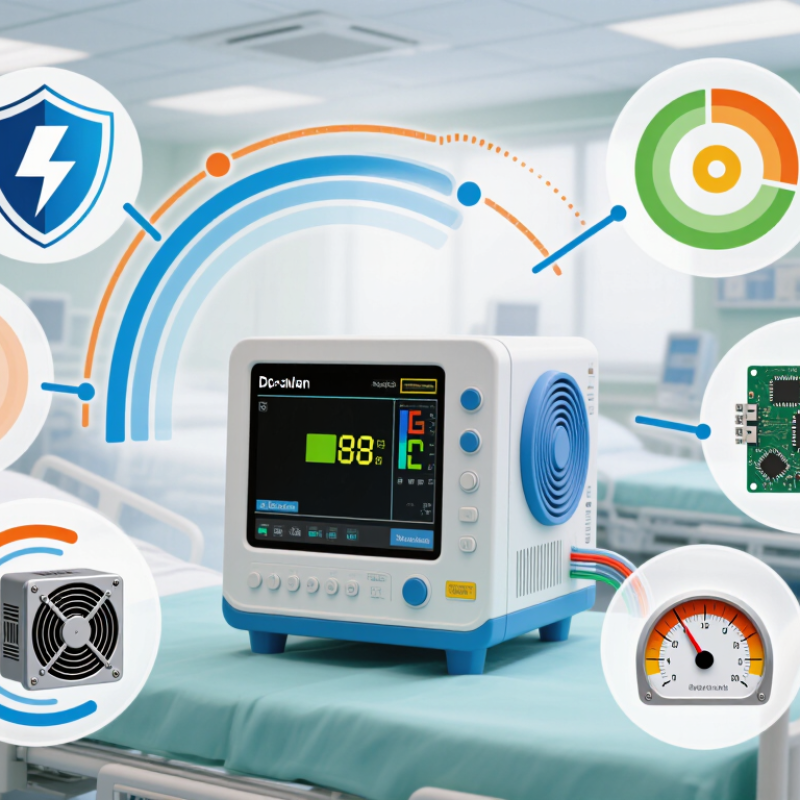
How to Choose Medical Grade AC DC Power Supplies in 2026?

Medical-Grade AC-DC Power Supply Basics and 2026 Selection Criteria

Medical-grade AC-DC power supplies convert mains electricity into stable, isolated DC power for diagnostic and life-support equipment. The design begins with IEC 60601-1, not with wattage alone. Two means of patient protection, controlled leakage current, reinforced insulation, and adequate creepage distances are essential. IEC 60601-1-2 also addresses electromagnetic compatibility, including immunity to nearby radio transmitters.

Field experience shows that thermal design is often underestimated. A supply running inside a sealed monitor may face 50°C ambient temperatures, restricted airflow, and continuous operation. Select a unit with documented derating curves, short-circuit protection, low standby consumption, and a realistic efficiency target above 90% where applicable. Grand View Research’s 2024 medical power supply report valued the global market at more than USD 1 billion and projected continued growth through 2030. That growth increases supply choices, but not necessarily quality.

For 2026 projects, verify 90–264 VAC input, output regulation during load changes, and 2 MOPP isolation when the application requires patient protection. Review IEC test reports, risk-management files, EMC results, and production traceability. MarketsandMarkets’ 2024 medical electronics analysis identifies connected monitoring and portable systems as major growth areas, increasing pressure for smaller, cooler supplies. Smaller is not always safer. Engineers should test acoustic noise, leakage current, thermal rise, and behavior after repeated mains interruptions. I would also question optimistic lifetime claims; capacitors, fans, and connectors age differently in real equipment.

How to Choose Medical-Grade AC-DC Power Supplies in 2026?

Medical-grade AC-DC power supplies should be evaluated against the complete medical electrical system. Patient leakage current limits depend on the applied-part classification defined by IEC 60601-1.

Selection note: Type CF equipment requires substantially lower patient leakage current than Type B or BF equipment. Confirm the power supply’s isolation, leakage-current, creepage, clearance, EMC, efficiency, and thermal specifications within the final system design. The limits shown are system-level patient leakage-current limits and are not standalone power-supply ratings.

Identify Electrical, Medical, and Application-Specific Requirements

How to Choose Medical Grade AC DC Power Supplies in 2026?

Choosing a medical AC DC power supply starts with the equipment’s electrical requirements. Check input voltage, frequency, output voltage, current, ripple, and regulation. A unit may fit the voltage range but fail during startup. Calculate continuous and peak loads separately. Leave practical headroom, not excessive capacity. Oversizing can reduce efficiency and increase cost.

Medical requirements need closer review. Verify isolation, patient leakage current, dielectric strength, and protection against electric shock. The required means of operator protection and patient protection may differ. Confirm compliance with applicable medical safety and EMC standards, such as IEC 60601-1. Review certificates and test reports from qualified laboratories. Do not rely on a product label alone. In real projects, documentation is often less clear than expected. That uncertainty deserves attention.

Tips: Match the supply to the application environment. A portable monitor may need low weight, quiet operation, and battery compatibility. An imaging system may require stable output under changing loads. Check operating temperature, humidity, altitude, cleaning exposure, and expected service life. Ask for abnormal-operation data, not only typical performance. Test the complete system, including cables and enclosure. Small details matter. A missed connector limit can delay validation. Recheck assumptions with engineers, clinicians, and safety specialists before approval.

How to Choose Medical Grade AC DC Power Supplies in 2026? - Identify Electrical, Medical, and Application-Specific Requirements

Requirement Area Selection Dimension Practical Requirement or Screening Value Why It Matters Verification Method
Electrical AC input voltage and frequency Select an input range that covers the intended market, commonly 100–240 VAC and 50/60 Hz for global equipment. Prevents undervoltage, overvoltage, and frequency-related malfunction during installation or international deployment. Compare the power-supply input rating with the equipment specification and local mains conditions.
Electrical Output voltage and current Match the required DC voltage exactly. Choose continuous current capacity above the maximum operating load, with documented transient capability where needed. Incorrect voltage can damage circuitry; insufficient current can cause voltage drop, shutdown, or overheating. Measure the highest steady-state and startup load, then review regulation, overload, and short-circuit behavior.
Electrical Power rating and derating Calculate power as voltage × current and confirm the rating at the actual ambient temperature, orientation, airflow, and enclosure conditions. Rated output may be reduced at high temperature or with restricted airflow. Use the manufacturer’s derating curve and test the complete product under worst-case thermal conditions.
Electrical Output ripple and noise Set a maximum ripple/noise limit based on the most sensitive load, such as an imaging sensor, analog front end, or precision measurement circuit. Excessive switching noise can affect measurement accuracy, displays, communication, and diagnostic signals. Check the test bandwidth and measurement method; verify performance in the final system, not only at the power-supply output.
Electrical Inrush current and startup behavior Review inrush current, startup delay, hold-up time, soft-start behavior, and compatibility with the upstream circuit protection. High inrush may trip breakers or interfere with multiple devices connected to the same circuit. Test cold start, repeated start, low-line start, and simultaneous startup with the intended system.
Medical Safety IEC 60601-1 compliance and means of protection Use a power supply evaluated for medical electrical equipment under IEC 60601-1, with the required MOOP/MOPP insulation level determined by the equipment architecture. Protection against electric shock depends on the complete equipment, applied parts, accessible parts, and number of required means of protection. Review the safety certificate, insulation diagram, working voltage, creepage, clearance, and system-level risk assessment.
Medical Safety Patient leakage and touch current Select leakage-current performance appropriate to the equipment type, patient connection, applied part classification, and intended use environment. Leakage limits are safety-critical and become more stringent when current can reach a patient through an applied part. Perform IEC 60601-1 leakage-current tests on the finished medical electrical system.
Medical Safety EMC immunity and emissions Require suitability for IEC 60601-1-2 testing and define the intended electromagnetic environment, such as professional healthcare or home healthcare. Medical equipment must continue to operate safely when exposed to electromagnetic disturbances and must not create unacceptable interference. Evaluate conducted and radiated emissions, electrostatic discharge, electrical fast transients, surges, and radiated RF immunity in the final enclosure.
Medical Safety Risk management and documentation Obtain safety reports, EMC reports, installation instructions, revision-controlled datasheets, and relevant risk information before design freeze. Traceable evidence supports regulatory submissions, change control, supplier qualification, and production audits. Confirm document scope, model number, revision, test conditions, and applicability to the final product.
Application Portability and mechanical integration For portable equipment, prioritize low mass, compact dimensions, secure connectors, strain relief, and resistance to repeated handling. The power supply must withstand transport, cable movement, and limited installation space without compromising safety. Check dimensional drawings, connector retention, cable bend radius, drop/handling requirements, and enclosure clearances.
Application Thermal and acoustic performance Choose convection cooling where low acoustic noise is important; otherwise verify fan life, airflow, temperature rise, and service access. Heat reduces component life, while fan noise may be unacceptable in examination, sleep, or intensive-care environments. Measure temperature rise and sound level in the assembled product at maximum rated load.
Application Battery and backup compatibility For battery-backed systems, verify output voltage range, charging requirements, reverse-current protection, power-path behavior, and transition timing. An unsuitable supply can interrupt operation, overcharge the battery, or cause unstable switching between mains and backup power. Test mains failure, restoration, battery-low conditions, maximum load, and repeated transfer cycles.
Application Environmental conditions Define operating temperature, storage temperature, humidity, altitude, vibration, shock, dust, and liquid exposure before selection. Environmental stress affects insulation, cooling, corrosion resistance, mechanical integrity, and long-term reliability. Compare the rated environmental limits with the use scenario and conduct product-level environmental testing.
Application Efficiency and standby consumption Compare average efficiency across the actual load profile, including standby and light-load operation, rather than relying only on peak efficiency. Higher efficiency reduces heat, operating cost, cooling demand, and energy use over the product lifetime. Measure input power at representative loads and check applicable energy-efficiency requirements for the target market.
Application Service life and supply continuity Assess expected operating hours, component stress, availability period, approved alternatives, change-notification policy, and repair or replacement strategy. Medical products may remain in service for many years, making obsolescence and controlled changes important design risks. Include lifecycle commitments and requalification triggers in the supplier quality agreement.

Note: Final requirements depend on the complete medical electrical equipment, applied parts, intended use environment, national regulations, and the applicable edition of each standard.

Compare Safety Standards, Isolation, Leakage Current, and EMC Performance

How to Choose Medical Grade AC DC Power Supplies in 2026?

A medical power supply must do more than deliver stable voltage. It must protect patients during normal operation and a single fault. IEC 60601-1 requires two means of patient protection, known as 2 MOPP, for critical circuits. It also limits patient leakage current to 100 µA in normal condition and 500 µA under a single fault. These figures should appear in the supplier’s test documentation, not only in marketing material.

Isolation deserves close inspection. Check working voltage, reinforced insulation, creepage distance, and dielectric strength at the intended altitude. A compact 24 V supply may fit inside a device, yet still create unsafe thermal stress. IEC 60601-1-2:2014+A1:2020 also sets electromagnetic compatibility requirements. Immunity testing covers electrostatic discharge, radiated radio-frequency fields, and electrical fast transients. Emissions matter too. A quiet supply reduces interference near ECG, infusion, and monitoring circuits. The FDA’s annual medical-device recall reports continue to identify electrical failures as a recurring safety concern, although they rarely isolate the power supply as the only cause.

Tips: Request IEC 60601-1 and IEC 60601-1-2 certificates, leakage-current test results, and EMC test conditions. Ask whether results cover the complete system. Do not assume a certified module remains compliant after adding cables, filters, or a metal enclosure. Thermal tests at full load are useful. I have seen “pass” results change after a small wiring revision. That detail is easy to miss.

Evaluate Reliability, Efficiency, Thermal Design, and Long-Term Operation

How to Choose Medical Grade AC DC Power Supplies in 2026?

Evaluate Reliability, Efficiency, Thermal Design, and Long-Term Operation

Choosing a medical-grade AC DC power supply in 2026 requires more than checking output voltage. Reliability starts with verified insulation, leakage current, protection circuits, and documented testing. Ask for evidence aligned with IEC 60601-1 and relevant regional requirements. Review operating temperature, humidity limits, vibration resistance, and overload behavior. MTBF figures help, but they are not promises. Real duty cycles matter more. A certified laboratory report is stronger than a polished product sheet.

Efficiency directly affects heat, noise, and service life. Check performance at low, typical, and peak loads, not only at the rated output. A supply running at 40% load may behave differently from one operating near its limit. Thermal design deserves close inspection. Look for controlled airflow, sufficient spacing, low-temperature components, and stable operation inside a sealed enclosure. Small vents can collect dust. That detail is easy to miss.

Long-term operation depends on derating and maintenance access. Select capacity with practical headroom, especially for pumps, motors, displays, or battery charging circuits. Engineers should examine start-up surge and repeated power cycling. In field evaluations, connectors and cooling components often deserve more attention than expected. A spreadsheet can still mislead. Test the complete system under worst-case temperature and load conditions. One uncomfortable finding is valuable: a supply that passes laboratory checks may still fail when installation conditions are poorly understood.

Verify Certification, Compatibility, Supplier Support, and Total Cost

How to Choose Medical Grade AC DC Power Supplies in 2026?

Certification should be verified before comparing prices. Request the IEC 60601-1 test report, CB certificate, and current EMC evidence under IEC 60601-1-2. Check the exact model, revision, output range, and factory address. A certificate for a similar unit is not enough. ISO 13485-certified manufacturing can strengthen traceability, although it does not replace product testing. The FDA’s 2023 Medical Device Recalls report recorded more than 1,000 recalls, showing why documented risk control matters. Numbers can change by reporting method, so verify the source and date.

Compatibility requires bench testing, not only datasheet review. Measure leakage current, inrush current, load transients, grounding, creepage distance, and behavior at minimum and maximum input voltage. Confirm connector polarity and insulation requirements. EMC performance may change inside the final enclosure. It happened in our evaluation. The supply passed alone but failed after cable routing changed. Supplier support should include samples, failure analysis, change-notification procedures, repair data, and realistic lead-time commitments. Grand View Research valued the global medical device market at USD 512.29 billion in 2022, with projected growth through 2030. That scale increases pressure on stable, documented supply chains.

Total cost includes qualification labor, redesign risk, inventory, testing, warranty handling, and downtime. A cheaper unit may become expensive after one unexpected revision. Compare five-year ownership costs, not purchase price alone. Ask for lifecycle guarantees, minimum order quantities, spare-unit policies, and response times. I would still challenge every forecast. “Guaranteed availability” is vague without written terms. Select the unit that remains compliant, compatible, and supportable under real clinical conditions.

FAQS

What should be checked before selecting a medical-grade AC DC power supply?

Check insulation, leakage current, protection circuits, and documented safety testing. Request evidence for IEC 60601-1 and applicable regional requirements. A polished datasheet is not enough.

How important is efficiency in medical equipment power supplies?

Efficiency affects heat, noise, and operating life. Measure performance at low, typical, and peak loads. A supply at 40% load may behave differently near its limit. Test real usage conditions.

How can thermal performance be evaluated?

Inspect airflow, component spacing, temperature ratings, and sealed-enclosure performance. Small vents collect dust. Check operation inside the finished equipment, not only on a laboratory bench. Thermal assumptions can be wrong.

How much capacity headroom should the power supply have?

Leave practical capacity for pumps, motors, displays, and battery charging circuits. Measure start-up surges and repeated power cycling. Operating continuously near the limit may shorten service life. More capacity is not automatically better.

Which certification documents should suppliers provide?

Request the exact model’s IEC 60601-1 test report and current EMC evidence. Check the model revision, output range, and manufacturing location. A certificate for a similar unit does not prove compliance. Verify the date.

Why is system-level compatibility testing necessary?

Datasheet compatibility does not guarantee reliable operation. Measure leakage, inrush current, load transients, grounding, and input-voltage behavior. Confirm connector polarity and insulation requirements. Cable routing can change EMC results. It happened in evaluation.

What support should a power supply supplier provide?

Useful support includes samples, failure analysis, change notifications, repair information, and realistic lead times. Ask about spare units and response times. Written commitments matter more than reassuring forecasts. Availability claims can be vague.

How should the total cost be compared?

Compare five-year ownership costs, including qualification labor, inventory, testing, redesign risk, warranty work, and downtime. A cheaper unit may become expensive after one unexpected revision. Review minimum orders and lifecycle policies. I would challenge every forecast.

Conclusion

Choosing Medical Grade AC-DC Power Supplies in 2026 requires more than comparing output voltage and price. Start by defining the equipment’s electrical requirements, including input range, output stability, power capacity, connector type, and operating environment. Then consider medical safety factors such as isolation, leakage current, grounding, EMC performance, and applicable certification requirements. These elements help reduce electrical risks and support reliable operation near patients and sensitive clinical equipment.

Long-term performance is equally important. Evaluate efficiency, thermal management, overload protection, expected service life, and reliability under continuous use. Confirm that the power supply is compatible with the complete system and that documentation, testing, replacement options, and technical support are available. A careful comparison should also include total cost, covering installation, maintenance, energy consumption, and potential downtime. By balancing safety, performance, compatibility, certification, and supplier support, organizations can select Medical Grade AC-DC Power Supplies that meet application needs while providing dependable operation throughout their service life.


Olivia

Olivia

Olivia is a highly experienced marketing professional dedicated to helping businesses communicate their value with clarity, credibility, and purpose. With a strong understanding of the company’s products, services, and target markets, she creates practical, insightful content that supports informed......