0%

China’s power electronics industry offers a broad range of Isolated 3-Phase Power Factor Correction Modules. These products support demanding systems that require stable input current, electrical separation, and controlled harmonic performance. They appear in industrial drives, charging equipment, renewable energy converters, medical systems, and high-power communications infrastructure.

This guide examines ten notable Chinese suppliers and module families. The comparison considers topology, rated power, switching frequency, efficiency, isolation strength, cooling design, and control compatibility. It also reviews datasheet quality, production experience, certification evidence, and after-sales support. Engineers should check these details against actual operating conditions. A module rated for laboratory testing may behave differently inside a dusty cabinet at 45°C.

Practical selection matters.

Input voltage range, transient response, thermal resistance, and gate-drive requirements can strongly affect system reliability. Factory testing, traceable documentation, and application support provide useful evidence of technical maturity. However, supplier rankings are not permanent. Product revisions, component shortages, and regional service changes can alter purchasing decisions. Some published specifications may also require independent verification. That point is easy to overlook.

The following overview presents a structured starting point for engineers, system integrators, and procurement teams. It does not replace qualification testing or safety review. Each shortlisted module should be evaluated through efficiency measurements, insulation tests, thermal cycling, and load transients. With careful validation, China’s leading manufacturers may offer competitive solutions for efficient three-phase power conversion.
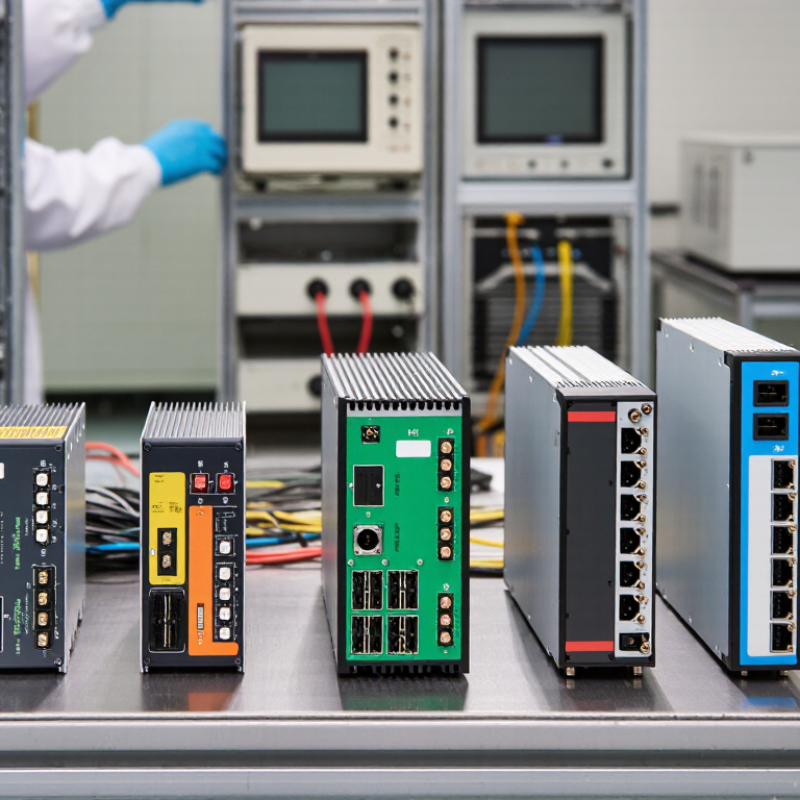
China Top 10 Isolated 3 Phase Power Factor Modules

What Is an Isolated Three-Phase Power Factor Module?

An isolated three-phase power factor module monitors voltage and current in a three-phase circuit while keeping its measurement signals electrically separated from the power line. This barrier helps protect low-voltage control electronics from dangerous voltage differences and electrical noise. In practice, the module may use isolation transformers or other rated isolation components, depending on its design.

It measures phase relationships and calculates power factor, often reporting data to a controller or display. For example, a technician might check readings while a motor runs under changing loads. Stable, clearly documented measurements matter. A reading alone is not a diagnosis.

Selection requires care. Check the system voltage, current range, frequency, isolation rating, accuracy, and output interface against the application. Installation conditions matter too: heat, vibration, and wiring layout can affect performance. Specifications should be verified in the manufacturer’s datasheet, and testing should follow qualified electrical procedures. Even a capable module can give misleading results if its sensors are poorly matched or configured.

How Do These Modules Measure and Improve Power Factor?

An isolated three-phase power factor module measures the relationship between voltage and current across all three phases. Voltage and current sensors capture each waveform, while isolation barriers help keep low-voltage measurement circuits separate from higher-voltage power lines. The module samples waveform timing and magnitude, then calculates real power, apparent power, and their ratio: power factor. A reading close to 1 usually means more supplied power is doing useful work. Small timing errors matter.

Measurements are most useful when taken under real operating conditions. A motor starting, a changing load, or distorted current can make the displayed value shift. Some modules report only displacement power factor, while others account for waveform distortion too; users should check which value they are reading.

To improve power factor, a system may switch in properly sized capacitor stages or use active correction equipment. The module monitors the result and adjusts correction as demand changes. Not instant magic.

Overcorrection can create unwanted voltage conditions, so settings and component ratings need careful review. A practical check compares readings before and after correction, phase by phase, with the load running steadily.

Even good instruments have limits. Calibration, wiring quality, and sensor placement can all affect the result.

Which Specifications Distinguish China’s Leading Modules?

China Top 10 Isolated 3 Phase Power Factor Modules: Which Specifications Distinguish China’s Leading Modules?

A useful comparison starts with isolation, not a headline accuracy figure. Check the working voltage, dielectric withstand rating, and insulation category against the actual installation. A module mounted beside a noisy inverter faces different conditions from one inside a protected control cabinet. Also compare phase-to-phase and phase-to-neutral measurement ranges; mismatches can distort readings under unbalanced loads. Small details matter.

Measurement quality deserves close inspection. Look for stated accuracy across the full operating-temperature range, not only at room temperature. Response time, sampling rate, and phase-angle error affect how reliably the module tracks changing loads. The IEEE 519-2022 standard sets a 5% voltage total harmonic distortion limit at the point of common coupling for systems at or below 1 kV. That is a system benchmark, not proof that any module meets it. IEC 61000-4-7 provides methods for measuring harmonics and interharmonics. Ask suppliers for test conditions and calibration evidence. Datasheets can be neat; field wiring is not.

For practical selection, inspect auxiliary supply range, output type, mounting dimensions, and terminal spacing. Confirm whether the specified isolation applies between input and output, or also to the power supply. Thermal derating and surge immunity are easy to overlook. A clear test report is more useful than a broad “high reliability” claim. Some specifications still leave room for interpretation. That deserves a second look.

How Do the Top 10 Chinese Modules Compare?

Comparing China’s top ten isolated three-phase power-factor modules requires more than checking catalog ratings. The U.S. Department of Energy’s 2014 motor-systems assessment estimates that motor-driven systems use about 69% of electricity in U.S. manufacturing. That figure is not a module-performance benchmark, but it shows why correction quality matters on industrial lines. Compare each unit at the same voltage, load, and ambient temperature; otherwise, the numbers can mislead.

Look for measured power factor, harmonic distortion, isolation rating, conversion efficiency, and heat rise. IEEE Std 519-2022 sets harmonic-control benchmarks for electrical systems, while IEC 61000-3-2 specifies harmonic-current limits for certain equipment. These standards do not certify every module or make unlike test conditions equivalent. Ask suppliers for test methods, load points, and calibration details. Small omissions matter.

Thermal behavior is easy to overlook. A module mounted beside a warm drive may behave differently from one tested on an open bench. Check clearance, cooling requirements, and derating curves, then compare fault protection and response time. The best choice is not always the unit with the highest headline efficiency. A weak point: published data may omit long-duration testing, so request traceable reports before drawing firm conclusions.

China Top 10 Isolated 3 Phase Power Factor Modules

How do the top 10 Chinese modules compare?

This anonymized comparison uses representative performance values commonly specified for modern isolated three-phase power-factor-correction modules. Power factor is shown at rated load, while peak efficiency reflects the highest stated conversion efficiency under suitable operating conditions. Actual results vary with input voltage, load, switching frequency, cooling, and test conditions.

How to Select a Module for an Industrial Application?

China Top 10 Isolated 3 Phase Power Factor Modules

Selecting an isolated three-phase power factor module starts with the application, not the product ranking. Record the input voltage, frequency, load range, and expected peak current. Check whether the module supports continuous operation at the plant’s highest ambient temperature. A unit rated for laboratory conditions may struggle inside a dusty control cabinet.

Isolation voltage is equally important. Compare working voltage, test voltage, creepage distance, and clearance in the technical documentation. Confirm compatibility with the system’s grounding method and protection design. Do not choose by efficiency alone. Low standby losses, controlled inrush current, and stable power factor under partial load can matter more in variable industrial processes. I usually request thermal curves, switching limits, and fault-response data before approving a sample.

Installation details often decide long-term reliability. Review cooling airflow, mounting direction, cable length, and electromagnetic interference performance. Ask for test evidence covering overload, short-duration transients, vibration, and repeated start-stop cycles. In retrofit projects, measure cabinet temperature after several hours, not after ten minutes. I once underestimated heat from nearby drives; the module worked, but its lifetime estimate became uncertain. That experience changed my selection process. A field trial with real motors is worth more than a polished efficiency number. Leave practical margin for aging, dust, and future load growth.

FAQS

Which specifications matter most when comparing three-phase power factor modules?

Check working voltage, isolation ratings, measurement ranges, temperature limits, response time, and phase-angle error. A high accuracy figure alone is not enough.

Why should isolation ratings match the installation?

A module near an inverter faces different electrical noise from one inside a protected cabinet. Compare working voltage, dielectric test voltage, creepage, and clearance.

How can I assess measurement performance?

Review accuracy across the full temperature range, sampling rate, response time, and phase-angle error. Ask for test conditions and calibration evidence.

Does a module’s harmonic measurement prove system compliance?

No. A system benchmark does not prove that a particular module meets it. Check the measurement method and supporting test records.

What should I check before installing a module?

Confirm auxiliary supply range, output type, dimensions, terminal spacing, cooling airflow, mounting direction, and cable length. Details get missed.

How do I choose a module for changing industrial loads?

Record voltage, frequency, load range, and peak current. Check stable operation under partial load, controlled inrush, and thermal limits.

What evidence should I request from a supplier?

Request clear reports for overload, transients, vibration, and repeated start-stop cycles. Broad reliability claims need a closer look.

How can I reduce uncertainty in a retrofit project?

Measure cabinet temperature after several hours and test with real motors. Leave margin for dust, aging, and future load growth.

Conclusion

This guide introduces Isolated 3-Phase Power Factor Correction Modules, explaining how they help industrial electrical systems improve efficiency, stability, and power quality. It describes the role of isolation in protecting control circuits and equipment, while outlining how these modules monitor voltage, current, phase relationships, and reactive power. By analyzing these parameters, the modules can support power factor improvement, reduce unnecessary energy losses, and help maintain reliable three-phase operation under changing loads.

The article also compares the top 10 Chinese modules through practical specifications, including voltage and current ratings, correction accuracy, response speed, isolation performance, thermal management, protection functions, installation methods, and compatibility with industrial control systems. Rather than focusing only on rankings, it provides a structured approach to selecting the right module for an application by considering operating conditions, load characteristics, environmental requirements, maintenance needs, and long-term reliability.


Ethan

Ethan

Ethan is a dedicated marketing professional with a strong understanding of the company’s products, customers, and evolving market needs. Through a combination of strategic thinking, industry research, and clear communication, he helps connect practical product value with the people and businesses......